
Reviewed · GOBUSTAN TOURS
Qobustan rock arts, Mud Volcanoes, Fire temple Ateshgah, Yanardag
Azerbaijan’s strangest sights fit into one long day: flames fed by underground gas, bubbling mud volcanoes, and thousands of prehistoric rock drawings. This private tour links them with the story of Zoroastrian fire worship and the ancient people who lived around Baku.
I like the private format, which lets your group travel in an air-conditioned vehicle instead of following a large coach. I also like the mix of stops: Qobustan gives the day archaeological weight, while Yanar Dag and the volcanoes add the odd, memorable moments. The drawback is the amount of road time, and the $250 price is much better for a full group of seven than for one or two people.
Key points to know before booking
- Four major sights in about nine hours: Ateshgah, Yanar Dag, the mud volcanoes, and Qobustan.
- Private transportation for up to seven: The $250 group price becomes good value when shared by a larger party.
- A local multilingual guide: You get context about ancient people, petroglyphs, fire worship, oil, and gas.
- Qobustan is the main cultural stop: More than 6,000 drawings appear across about 1,000 rocks.
- The mud volcano visit adds uncertainty: The terrain and weather can affect the experience.
- Budget extra for entry tickets and lunch: Museum tickets total about $15 per person, and lunch is not included.
Four unusual sights outside Baku
This is a day for connecting the dots. Azerbaijan is often called the land of fire because natural gas has reached the surface in places around the Absheron Peninsula and beyond. Ancient Zoroastrians treated those flames as signs of divine power, while modern Azerbaijan is also known for oil and gas fields.
You will see both sides of that story. Ateshgah explains the religious meaning of fire. Yanar Dag shows a natural flame on a hillside. The mud volcanoes point toward the country’s geology and oilfields. Qobustan then takes you much further back, to hunters, dancers, animals, boats, and other scenes carved into stone.
The order can make for a long day, but the range is the point. You are not spending nine hours at a single museum or ruin. You are moving through different parts of Azerbaijan and seeing why the country’s past is tied so closely to fire, earth, and survival.
More trips out to the Gobustan petroglyphs:
- Baku: Gobustan, Mud Volcano, Fire Mount, Temple Lunch Entry
★ 4.9 · 3,246 reviews - BEST Gobustan, Volcanoes & Absheron Fire Tour (Group or Private)
★ 5.0 · 1,254 reviews - Gobustan and Absheron tour (All inclusive)
★ 5.0 · 1,014 reviews
Ateshgah Fire Temple and the old fire cult
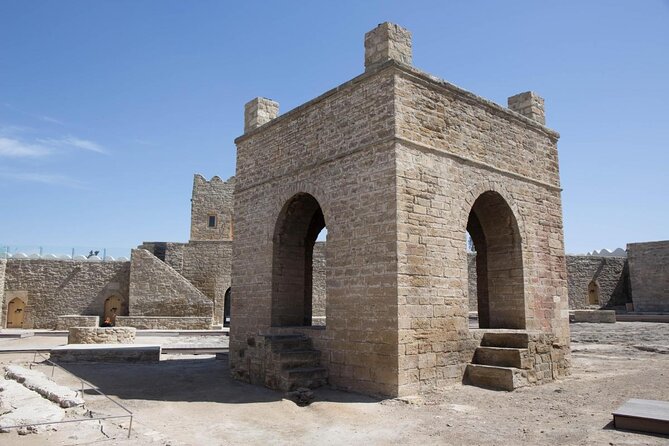
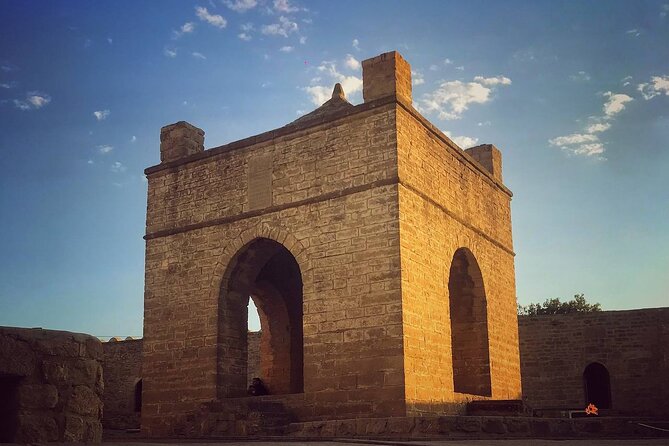
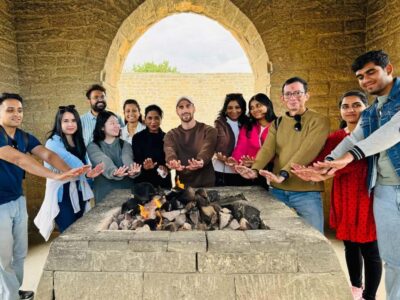
Ateshgah is the best place to begin the story of sacred fire. The temple you see today was built in the 17th and 18th centuries by a Hindu community based in Baku and connected with Sikhs. It has a courtyard and cells arranged around the central fire area, giving it a distinct architectural character rather than the look of a simple shrine.
The site’s religious story reaches further back. Fire worshippers associated with Zoroastrianism came here because natural gas rose from underground and caught fire when it met oxygen. To them, an apparently endless flame was not just a geological curiosity. It had spiritual meaning.
Your guide can help separate the older Zoroastrian connection from the later Hindu and Sikh presence. That is useful because Ateshgah is sometimes reduced to a simple story about an eternal flame. The site is more interesting when you see the layers of belief and pilgrimage that gathered around it.
The stop is scheduled for about 30 minutes. That is enough for a focused visit, especially with a guide explaining what you are looking at. It is not enough for a leisurely architectural study or a long, quiet wander. If you enjoy religious history, you may wish the stop were longer.
Museum admission is not included in the tour price. The supplied cost information gives the total for museum tickets as about $15 per person, so keep that amount aside in your budget. The stop is accessible to most participants, and service animals are allowed according to the tour details.
Yanar Dag, a flame on the hillside
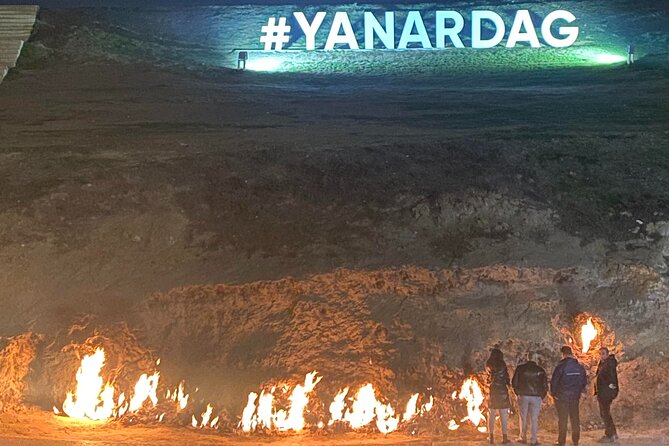
Yanar Dag means burning mountain, and the sight is exactly the sort of thing that makes this day memorable. A natural gas outlet feeds a flame along the hillside, tying a present-day geological feature to Azerbaijan’s old identity as a country of fire worshippers.
The visit lasts about 15 minutes. That sounds brief, but Yanar Dag is a compact stop. You are there to see the flame, feel the heat if conditions allow, and hear why fire became such a powerful symbol in this part of the world.
Do not expect a large archaeological complex. Yanar Dag is mainly a natural feature with a strong visual effect. Its value comes from the connection between what you see and the story explained at Ateshgah. Together, the two fire stops make more sense than either one alone.
The short visit also helps the nine-hour schedule. You get the sight without spending too much of the day at a single flame. Still, if you want a long photography session or a slow picnic-style stop, this tour is not designed for that.
Mud volcanoes and Azerbaijan’s restless ground
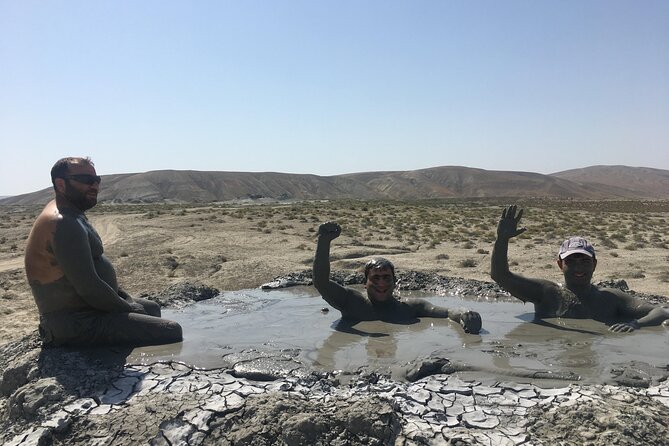
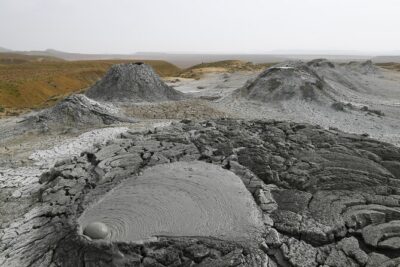
The mud volcanoes are the most unusual part of the route. Azerbaijan has about 350 of the world’s roughly 800 mud volcanoes, giving it an unusually large share of these formations. The country’s volcanoes are spread widely, and the tour takes you to one of the areas near Baku.
A mud volcano is not the same as a lava volcano. It pushes up mud, gases, and liquid material from below the ground. Activity in Azerbaijan is linked with oil and gas fields, including areas such as Lokbatan, Garadgh, Neft Dashlari, and Mishovdagh.
The tour information places the beginning of mud volcano activity in Azerbaijan about 25 million years ago. That number gives you a sense of the scale of the geological story, even though your visit lasts only about an hour.
You may see cones, cracked earth, and small pools or eruptions, depending on the particular site and conditions. I would keep expectations sensible. This is not a polished attraction with a set show every few minutes. The appeal comes from the raw ground and the chance to see a strange geological process in an open setting.
The terrain and weather matter here. Wear shoes you do not mind using on uneven ground, and avoid assuming that every part of the site will be easy to walk across. The tour requires good weather, and poor conditions can lead to a different date or a full refund.
The connection with oil and gas adds another layer. Mud volcanoes are not simply odd natural monuments. Their presence can point toward underground petroleum deposits, and their mud, lava, and liquid material have been used as raw material in chemical, construction, and pharmaceutical industries.
This is also the stop most likely to divide opinion. If you enjoy geology and unusual natural features, you may consider it the day’s highlight. If you prefer polished monuments, indoor displays, or a clear historical narrative, the volcanoes may feel short and rough around the edges.
More mud volcano runs across the Absheron:
- Baku:Gobustan Mud Volcanoes Temple & Entry tickets included
★ 4.8 · 178 reviews - Baku: Half-Day Gobustan and Mud Volcanoes Tour with Entry
★ 4.7 · 144 reviews - Mud Volcanoes & Gobustan tour (Group & Private)
★ 4.5 · 59 reviews - Gobustan & Mud Volcanoes Tour (tickets included)
★ 5.0 · 58 reviews
Qobustan’s petroglyphs and open-air museum
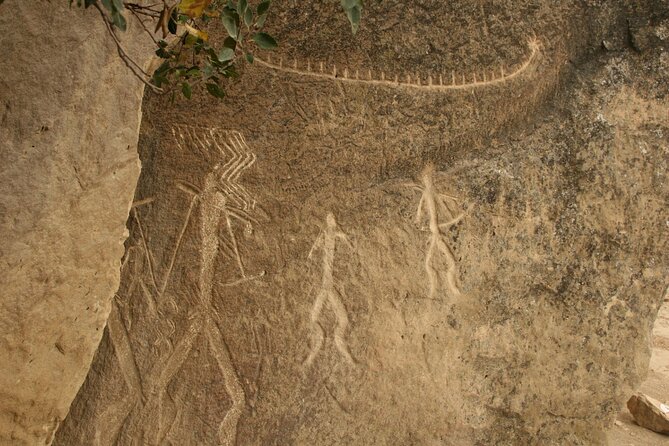
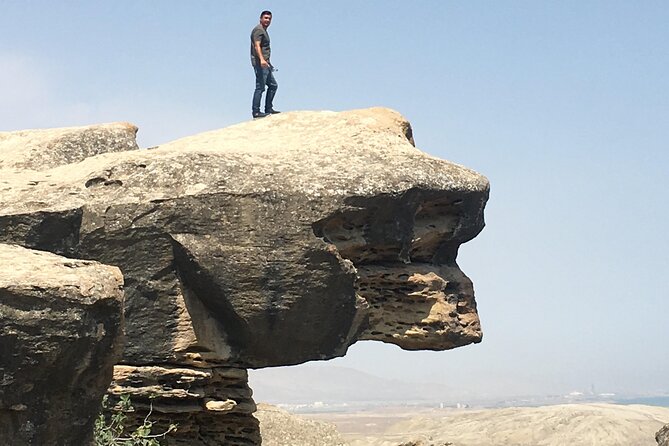
Qobustan is the cultural anchor of the tour. The reserve lies about 60 kilometers from Baku and is protected as a UNESCO World Heritage Site because of the quality and concentration of its rock art.
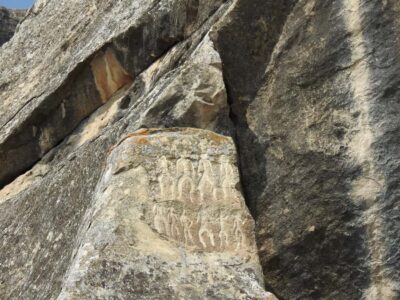
The figures were carved across about 1,000 rocks, with more than 6,000 drawings recorded. The wider reserve has more than 100,000 artifacts and related finds. Those numbers matter because Qobustan is not just one famous carving beside a road. It is a large record of human activity spread across a broad area.
You may see images of animals, people, hunting scenes, boats, and dancing figures, though the exact details you focus on will depend on the route and your guide’s explanation. The carvings are valuable not only as pictures but also as clues about how people understood their surroundings and recorded meaningful events.
The museum helps set the scene before or alongside the outdoor portion. That is important because rock art can be hard to interpret on your own. A faint line on a stone may look like a scratch until someone points out the body, legs, or movement represented.
The stop is scheduled for about one hour. That gives you a useful introduction but does not turn Qobustan into a full archaeological study. I would pay close attention to the guide here, since the visual details can be subtle and the historical context is what turns a collection of markings into a worthwhile visit.
Qobustan also changes the rhythm of the day. After the fire temples and mud volcanoes, you get a stronger sense of human history. The site is one reason this tour works well for someone visiting Baku for a short time: it takes you beyond the city and introduces one of Azerbaijan’s most important ancient sites in a single outing.
What the private price really buys you
The tour costs $250 per group of up to seven people. For a full group, that is about $35.70 per person before museum tickets and lunch. For two people, it works out to $125 each, and for a solo visitor it is a costly day.
That pricing makes the private format the key value question. If you are traveling with family or friends, the cost can be reasonable for a full day of private transportation, a guide, and several sights outside Baku. You avoid paying separate transport costs and do not have to fit into someone else’s group schedule.
The package includes an air-conditioned vehicle, private transportation, a professional multilingual guide, WiFi on board, and pickup. Since the route covers several distant stops and lasts about nine hours, air conditioning matters, especially in warmer weather.
Lunch is not included. You should plan for that expense, although no specific restaurant or meal arrangement is provided. Museum tickets are also extra, with a stated total of about $15 per person.
The tour is booked, on average, 11 days ahead. That is useful planning information if your Baku stay is short. It does not mean you must book exactly 11 days out, but it is sensible to reserve early if your dates are fixed.
Who will enjoy this day most
I would choose this tour if you want to see several of Azerbaijan’s signature sights without arranging a car, driver, and guide separately. It suits first-time visitors to Baku who have only a few days and want both cultural sites and unusual natural features.
It is also a good fit for a group of friends or relatives. The private vehicle lets your group stay together, and the $250 cost becomes much easier to justify when divided among six or seven people.
You should be comfortable with a long day and substantial driving. The four stops are spread out, and the total duration is about nine hours. This is not the right choice if you want a slow day with long meals, extended museum time, or a single site explored in depth.
The tour can work for families because most participants can take part, and service animals are allowed. Still, the mud volcano area may be less comfortable for anyone who has difficulty with uneven outdoor ground. The provided information does not give a detailed accessibility description, so ask the operator if your group has specific mobility needs.
The guide is central to the experience. The tour is offered with a local professional multilingual guide, and the strongest praise attached to the experience focuses on clear explanations and a kind manner. No guide name is provided, so you cannot request a particular person from the available details.
Practical timing, tickets, and weather
The listed operating hours are Monday through Sunday, 9 a.m. to 6 p.m., for the stated operating period ending June 17, 2026. Pickup is offered, but the details do not specify a single universal pickup location, so confirm the meeting point when booking.
The tour uses a mobile ticket and confirmation is provided at booking. It is a private activity, meaning only your own group takes part.
Plan for about $15 per person in museum admission, in addition to the group tour price. Lunch is separate. Since the day is long, bring water and a little spending money, although the tour details do not specify what food or drink stops are available.
Weather is an important condition. If poor weather causes cancellation, you are offered another date or a full refund. You can also cancel for a full refund if you do so at least 24 hours before the start time. Changes or cancellations inside that 24-hour window are not accepted.
The tour has a five-star rating based on 30 reviews, with 100 percent recommending it. The most useful part of that record is the repeated focus on the guide’s kindness and clear explanations. Those qualities matter here because the sights are spread out and several require context to make sense.
Should you book this Baku excursion?
Book it if you want a private, efficient introduction to Azerbaijan beyond central Baku, especially if you are splitting the $250 cost among a group. You will see the country’s fire-worship history, a natural hillside flame, mud volcanoes, and one of its best archaeological sites in one day.
Think twice if you are traveling alone, dislike long road days, or want extensive time at each museum and archaeological area. The short stops are designed for coverage rather than slow study.
For most first-time visitors with limited time, I think the route offers a strong range of experiences. Qobustan gives the day substance, while Ateshgah, Yanar Dag, and the mud volcanoes provide the unusual sights you are unlikely to find together elsewhere.
FAQ
How long does the tour last?
The tour lasts approximately nine hours.
How much does the private tour cost?
The price is $250 per group, with up to seven people included.
What is included in the tour price?
An air-conditioned vehicle, private transportation, a professional multilingual guide, WiFi on board, and pickup are included.
Are museum tickets included?
No. Museum tickets are not included. The stated total cost is about $15 per person.
Is lunch included?
No. Lunch is not included in the tour price.
What happens if bad weather cancels the tour?
Because the tour requires good weather, you can be offered a different date or a full refund if poor weather causes cancellation.
More Ateshgah and Yanar Dag Trips
- Baku: Gobustan, Volcanoes, Fire Temple and Yanardag Day Trip
★ 4.7 · 433 reviews - Gobustan & Mud, Fire Temple, Burning Mountain (Group & Private)
★ 4.5 · 418 reviews - Gobustan-Mud Volcan-Fire Temple and Mountain Tour/Entrance inc
★ 5.0 · 267 reviews - Gobustan, Mud volcanoes, Fire temple, Fire mountain PRIVATE TOUR
★ 5.0 · 47 reviews
Just added around Baku
- Wine Tour Baku★ 5.0 · 4 reviews
- Baku Sightseing Tour★ 5.0 · 12 reviews
- Traditional Azerbaijani Cuisine Workshop★ 5.0 · 5 reviews
- The Magnificent Baku Night Tour★ 5.0 · 3 reviews
- Day Trip in Baku★ 5.0 · 6 reviews
- Baku Old City Tour★ 4.5 · 12 reviews
- Guided Old City Tour on Baku’s Timeless Charm★ 5.0 · 4 reviews
- Old City Walking Tour★ 5.0 · 6 reviews
Gobustan Tours, compared.
Gobustan, Mud Volcano, Fire Mount, Temple Lunch Entry
Read our review →
BEST Gobustan, Volcanoes & Absheron Fire Tour (Group or Private)
Read our review →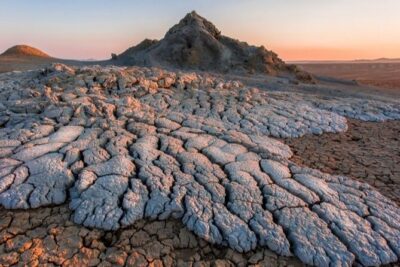
Gobustan, Volcanoes, Fire Temple and Yanardag Day Trip
Read our review →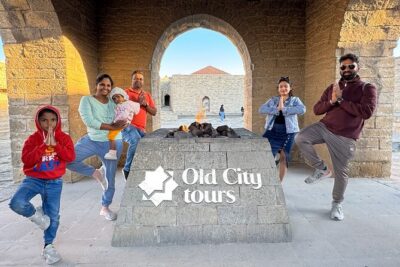
Gobustan & Mud, Fire Temple, Burning Mountain (Group & Private)
Read our review →
Mud Volcan-Fire Temple and Mountain Tour/Entrance inc
Read our review →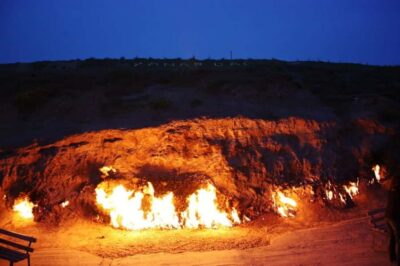
Gobustan Mud Volcanoes Temple & Entry tickets included
Read our review →Browse the lists this tour appears in