
Reviewed · GOBUSTAN TOURS
Gobustan and Absheron tour (All inclusive)
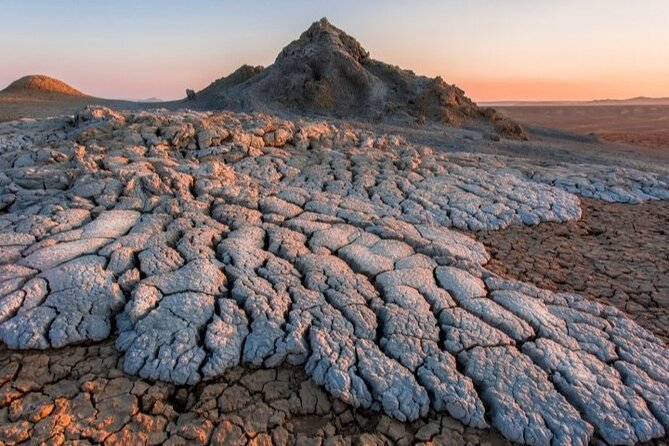
Gobustan’s mud volcanoes are the hook here: blue-gray clay, bubbling craters, and a rough ride across the desert in an old Soviet Lada. I like that one full day also brings you to prehistoric rock carvings and Absheron’s fire sites, giving you a useful picture of Azerbaijan beyond Baku’s handsome center.
I also like the simple pricing. At $85 per person, transport, admissions, lunch, and a guide are included, and the group is capped at 17. The strongest guides, including Sayid, Zeyneb, and Vusala, turn a long day into a lively one.
The catch is the pace and the distance. Gobustan lies about 70 kilometers south of Baku, while Ateshgah and Yanardag sit in the opposite direction on the Absheron Peninsula. A few poor departures have involved late pickup, cramped vehicles, weak guiding, or a missed mud-volcano stop, so this tour depends heavily on the guide and day’s operations.
Key points to know before booking
- Mud volcanoes require an off-road ride: The approach uses rough dirt roads and may involve old Soviet-era Lada cars, which can be the most memorable part of the day.
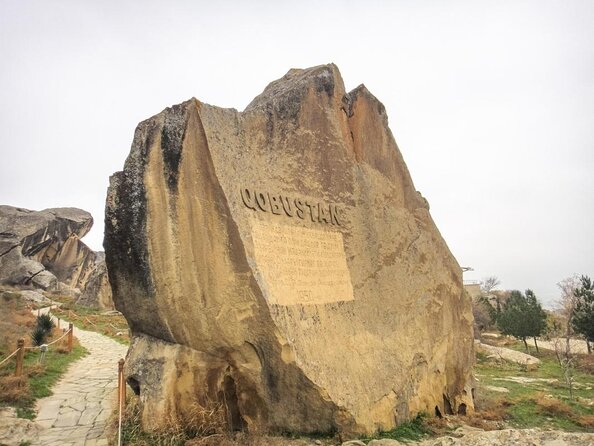
- Gobustan combines museum and open-air archaeology: You see a modern exhibition first, then walk among petroglyphs overlooking the Caspian Sea.
- The itinerary covers a lot of ground: Expect roughly 8 to 9 hours, with long drives between southern Gobustan and northern Absheron.
- Lunch and entrance fees are included: The meal is meant to include qutabs, kebabs, pilaf, salad, a drink, and tea, though food quality has not been consistent.
- Guide quality matters: English and Russian service is offered, and guides such as Sayid, Zeyneb, and Vusala have been praised for warmth and clear explanations.
- This is best for first-time visitors: You see the main sights in one day, but you give up the freedom and slower pace of a private trip.
Why this day trip works for a first look at Azerbaijan
Baku is polished, modern, and easy to enjoy on foot. But the country makes more sense once you leave the city and see its strange geology, ancient carvings, old fire-worship sites, and working industrial coast. This excursion links those pieces in one long circuit.
You begin in the morning and return to Baku after about nine hours. That is a full day, but the route has a clear purpose. Gobustan gives you mud volcanoes and prehistoric art. Lunch brings you back toward the capital. The afternoon then turns to the Absheron Peninsula, where Ateshgah and Yanardag explain why fire became such a powerful part of local belief.
The group limit of 17 is a reasonable middle ground. You get organized transport and a guide without the feel of a huge coach tour. Still, the actual vehicle can vary. Some groups have had a clean, comfortable, air-conditioned bus, while others found the van cramped or poorly maintained. If comfort matters greatly to you, a private tour may be worth the extra cost.
More trips out to the Gobustan petroglyphs:
- Baku: Gobustan, Mud Volcano, Fire Mount, Temple Lunch Entry
★ 4.9 · 3,246 reviews - BEST Gobustan, Volcanoes & Absheron Fire Tour (Group or Private)
★ 5.0 · 1,254 reviews - Baku: Gobustan, Volcanoes, Fire Temple and Yanardag Day Trip
★ 4.7 · 433 reviews
The rough road to Gobustan’s mud volcanoes
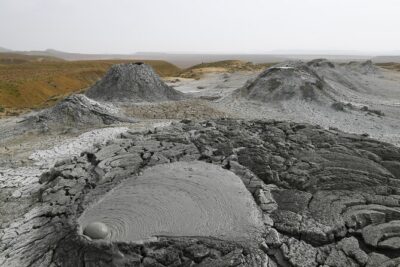
The first major stop is the mud-volcano area, reached along a dirt road outside Baku. This is not a lava volcano experience. The craters release mud and gases, creating low, lumpy cones in shades of gray and brown. The clay-based ground can look almost lunar, especially under strong sun.
The ride is part of the attraction. The final approach may use an old Russian Lada, and the rough track adds a little theater to what would otherwise be a quiet geological stop. The ride has been described as thrilling and high-adrenaline, though it is not designed for people seeking a smooth, polished outing.
You usually have about an hour here. That is enough to see the active craters, take photographs, and hear how local legends connect these places with djinn. It is not enough for a long geological walk or a wide exploration of the region. Some departures have spent too little time here or skipped the volcanoes entirely, which is a serious problem because this is the main reason many people book the tour.
If you care most about the volcanoes, confirm at the start that the stop is operating and included that day. Conditions, road access, vehicle arrangements, or timing may affect what you see. The tour description includes the Mud Volcanoes Complex, but the actual experience can vary more here than at the formal museums.
Gobustan’s museum and 6,000-year-old-looking silence
After the volcanoes, the tour moves to Gobustan National Reserve. The modern museum gives you the background needed for the outdoor site. Exhibits explain prehistoric life, early human activity, local geology, and the importance of the rock carvings.
The museum is useful because the petroglyphs can be hard to read without context. A guide can point out hunting scenes, animals, people, boats, and symbols, then explain what the images suggest about daily life and belief. The displays also include natural-history material, including large animal skeletons.
The museum visit is scheduled for about an hour. Some guides give it proper attention, while others have shortened or skipped it to protect the rest of the timetable. That choice changes the character of the day. If you are interested in archaeology, tell your guide you want the museum included rather than treating it as optional filler.
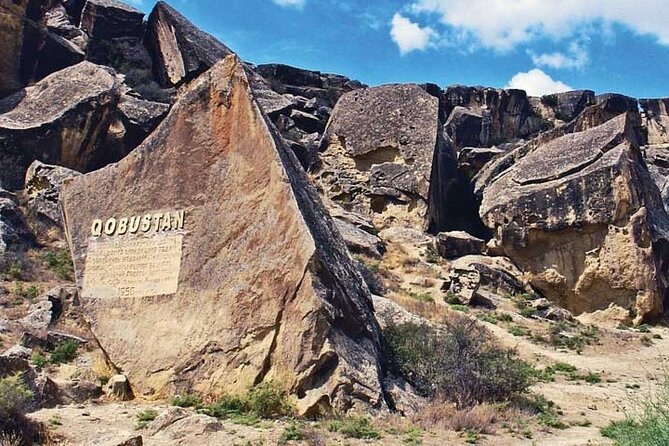
The outdoor rock-art area follows. You walk along an excursion trail among weathered rocks, with views toward the Caspian coast. The carvings are not displayed like paintings in a gallery. You need to look closely, listen carefully, and let the guide identify the markings.
I find this stop more rewarding when you focus on the human scale. These are not grand palaces or decorated tombs. They are marks left by people dealing with food, animals, movement, family, and survival. The setting gives the carvings their force, but the walking surface and sun can make the hour tiring in hot weather.
Bibi-Heybat Mosque and the return toward Baku
On the way back toward the city, the route may include Bibi-Heybat Mosque. The mosque was built by Shirvanshah Abu-l-Fath Farrukhzad in the 13th century, and its position near the Caspian gives the visit a strong visual setting.
The building’s colorful interior and tall facade provide a sharp contrast to the spare rocks of Gobustan. From the area, you can also see the sea and the cranes of the nearby cargo port. That mix of religious architecture, working industry, and open water is a useful reminder that Baku is not just an old town wrapped in modern towers.
This stop appears in the route description but does not have a separate timed block. That means the exact length can depend on traffic and the guide’s schedule. If you want time inside the mosque, ask how long you will have before lunch.
More days on the Absheron Peninsula:
- Baku: Gobustan Absheron Tour Entry Tickets included
★ 4.9 · 329 reviews - Baku: Gobustan-Absheron Tour with Hotel PICK UP and DROP OFF
★ 4.8 · 170 reviews - Baku: Gobustan/Absheron guided tour with lunch and tickets
★ 4.8 · 158 reviews - Gobustan and Absheron peninsula ( Group or Private ) TOUR ( All inclusive )
★ 5.0 · 130 reviews
Lunch in Baku: convenient, but keep expectations sensible
Lunch is served in a Baku restaurant after the Gobustan section. The included meal is listed as a substantial Azerbaijani spread: two qutabs, one filled with greens and one with meat, assorted chicken, lamb, and lula kebabs, pilaf, choban salad, ayran or cola, and tea.
On paper, this is a good arrangement. You do not need to search for a restaurant during a tightly planned day, and you get to try several familiar local dishes in one sitting. Qutabs are thin stuffed flatbreads, while lula-kebab is seasoned minced meat cooked on a skewer. Tea gives the meal a traditional finish.
The meal has been inconsistent. Some groups have had plentiful, good-quality food. Others found the rice undercooked, the kebabs cold, or the service rushed. A separate complaint described portions as too small, while another found the restaurant excellent. I would treat lunch as a useful inclusion, not a reason to book the tour.
The restaurant name may vary, and the listed plan refers to a Baku restaurant in Narimanov. Bring a snack if you have a large appetite or dietary needs. Personal expenses are not included, and the tour does not promise a special menu for every preference.
Ateshgah, where trade and fire once met
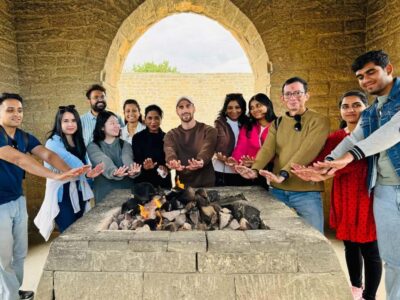
The afternoon begins at Ateshgah Fire Temple in Surakhany Village. The site is tied to the natural flames that once rose from gas-rich ground on the Absheron Peninsula. Zoroastrians and Hindu fire worshippers used the location, and the complex also served people traveling the Silk Road.
The temple’s shape makes that old connection clear. It includes a central fire area surrounded by rooms and arcades that housed worshippers and merchants. Installations help explain the daily life of hermits, the beliefs surrounding fire, and the practical role of the caravanserai.
You have about 90 minutes here, the longest formal stop of the afternoon. That is enough time to inspect the rooms and listen to the guide’s explanation without racing through every corner. The present flames are controlled rather than the broad natural fires that once burned across Absheron, but the site still makes the peninsula’s religious past easier to understand.
I like Ateshgah because it is not simply a pretty old building. Its importance comes from the meeting of faith, natural gas, and trade. The stop works best when your guide explains how travelers and worshippers shared the same complex.
Yanardag and the final fire of the day
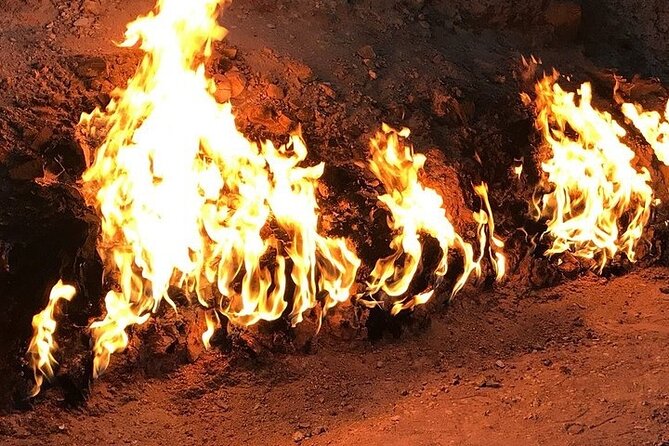
The final stop is Yanardag, or Burning Mountain. Gas rises through the ground here and feeds flames along the slope. The fire has continued for many years, making this one of Absheron’s most unusual natural sights.
The visit takes about an hour. A viewing area lets you watch the flames and look across part of the peninsula from higher ground. The fire is most striking in dimmer light, but the schedule does not guarantee an evening arrival. You should think of Yanardag as a short, focused stop rather than a mountain hike.
Compared with Ateshgah, Yanardag is less about buildings and more about the physical oddity of the place. Together, the two stops make sense: one shows how people built beliefs and rituals around fire, and the other shows the natural force that helped inspire them.
The day ends with the return to Baku. Traffic can stretch the schedule, so avoid booking an evening flight or a fixed appointment too close to the expected arrival. One departure returned around 6:45 p.m. after a roughly 10-hour day, while the advertised duration is 8 to 9 hours.
What $85 includes, and where the value lies
At $85, the tour is not the cheapest way to see these sights. Local operators in Baku may offer similar routes for less, and a private car could give you more control over timing. Still, the price includes several costs that add up: an air-conditioned vehicle, a professional guide, admission to the mud-volcano complex, the open-air museum, Ateshgah, Yanardag, and the natural-history exhibition, plus lunch.
The value is strongest if you want a single booking with the main logistics handled. You avoid arranging a vehicle for remote Gobustan, finding the off-road connection, buying several tickets, and locating lunch between two large sections of the route.
The value weakens if you want depth. You will spend much of the day driving, and the schedule leaves little room for an unplanned stop. A private trip may suit you better if you want to stay longer at the petroglyphs, insist on the mud volcanoes, or move at a slower pace.
The tour is usually booked about three weeks ahead, with an average advance booking time of 23 days. That suggests planning ahead during busy periods, though confirmation is issued at booking.
Guides, vehicles, and the details that can make or break the day
The guide is the most important variable. Sayid has been praised for energy, care, and his ability to keep people engaged. Zeyneb has been described as funny and organized, while Vusala has earned strong marks for her clear explanations and enthusiasm for Azerbaijan. Nazperi and Fidah have also been praised for their grasp of local culture and history.
That is the good side. Other departures have had guides who spoke little, gave weak explanations, rushed stops, or failed to manage the schedule. One group had trouble when several languages were used and parts of the explanation were not translated. English and Russian are offered, but ask how the language arrangement will work if you need detailed commentary.
Pickup communication has also varied. The official start point is 1 Azərbaycan Prospekti in Baku, and the activity ends back there. The tour information describes round-trip transfer, but some departures have received pickup details only the evening before. Confirm the meeting time and location before the morning of the trip.
The vehicle should have air conditioning, but comfort has not been equal on every departure. Check the van when you board, keep water with you, and do not assume the advertised return time is exact.
Who should book this Gobustan and Absheron tour?
I would choose it for a first visit to Baku when I wanted to see the main sights outside the city without renting a car. It suits curious sightseers, history fans, families who prefer an organized day, and anyone who wants mud volcanoes, petroglyphs, fire worship, and Yanardag in one sweep.
It is less suitable if you dislike long drives, rough roads, group schedules, or uncertain meal quality. It is also a poor match if the mud volcanoes are your only priority, since a missed or shortened stop would undermine the whole day.
The free cancellation policy allows a full refund when you cancel at least 24 hours before the start time. Changes or cancellations made later are not accepted, and the minimum-group requirement means the operator can offer a different date or a full refund if the trip does not run.
My booking advice
I would book this tour if I wanted an efficient overview and could accept that one day cannot give every site equal time. The strongest version of the trip has a lively guide, a clean vehicle, a real mud-volcano visit, and enough time at Gobustan to connect the museum with the carvings.
Before paying, confirm the pickup details, language, mud-volcano access, and lunch arrangements. If you receive Sayid, Zeyneb, Vusala, Nazperi, or Fidah, you may get the kind of informed, warm guiding this route needs. If your schedule is tight, your group includes older family members, or you want a slower archaeological visit, spend more on a private option instead.
FAQ
How long does the Gobustan and Absheron tour last?
The advertised duration is about 8 to 9 hours. Some departures have taken around 10 hours, depending on traffic, group delays, and the time spent at each stop.
What is included in the $85 price?
The price includes an air-conditioned vehicle, guide service in English and Russian, facility and landing fees, entrance tickets listed for the mud-volcano complex, open-air museum, fire temple, Yanardag, and natural-history exhibition, plus lunch.
Is lunch included?
Yes. The listed meal includes two qutabs, assorted chicken, lamb and lula kebab, pilaf, choban salad, ayran or cola, and tea.
Where does the tour start and finish?
The stated meeting point is 1 Azərbaycan Prospekti, Baku 1005, Azerbaijan. The activity ends back at the meeting point.
Is transportation included?
Yes. Transportation is provided in an air-conditioned vehicle. The route also includes an off-road approach to the mud volcanoes, which may use old Soviet Lada cars.
What languages does the guide speak?
Professional guide service is offered in English and Russian. The quality and amount of translation can vary when more than one language group joins the tour.
How many people can join the group?
The maximum group size is 17 people.
Can I cancel for a full refund?
Yes, if you cancel at least 24 hours before the experience start time. Cancellations or changes made less than 24 hours in advance are not refunded or accepted.
Is the tour suitable for most people?
The tour information says most people can participate and notes access to public transportation. The day does include long drives, walking at Gobustan, and a rough off-road ride, so consider your comfort with those conditions before booking.
Just added around Baku
- Wine Tour Baku★ 5.0 · 4 reviews
- Baku Sightseing Tour★ 5.0 · 12 reviews
- Traditional Azerbaijani Cuisine Workshop★ 5.0 · 5 reviews
- The Magnificent Baku Night Tour★ 5.0 · 3 reviews
- Day Trip in Baku★ 5.0 · 6 reviews
- Baku Old City Tour★ 4.5 · 12 reviews
- Guided Old City Tour on Baku’s Timeless Charm★ 5.0 · 4 reviews
- Old City Walking Tour★ 5.0 · 6 reviews
Gobustan Tours, compared.
Gobustan, Mud Volcano, Fire Mount, Temple Lunch Entry
Read our review →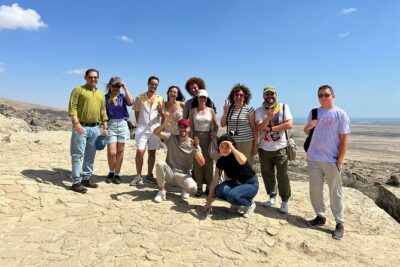
BEST Gobustan, Volcanoes & Absheron Fire Tour (Group or Private)
Read our review →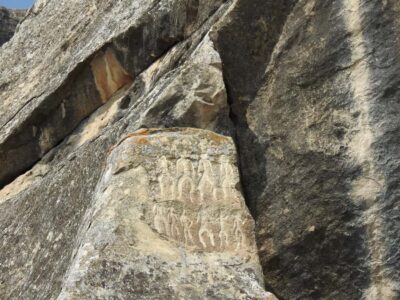
Gobustan, Volcanoes, Fire Temple and Yanardag Day Trip
Read our review →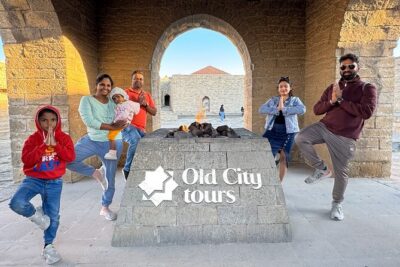
Gobustan & Mud, Fire Temple, Burning Mountain (Group & Private)
Read our review →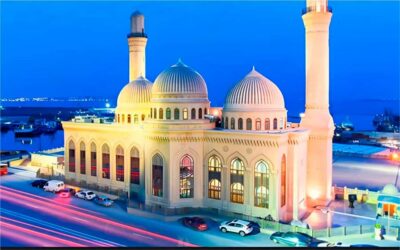
Mud Volcan-Fire Temple and Mountain Tour/Entrance inc
Read our review →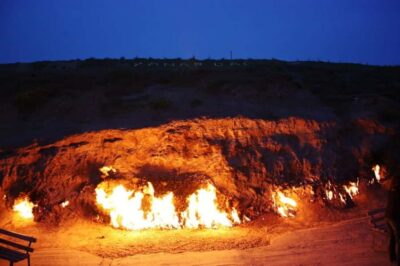
Gobustan Mud Volcanoes Temple & Entry tickets included
Read our review →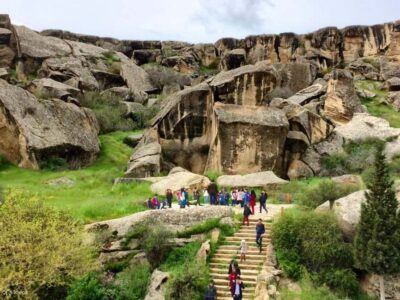
Gobustan-Absheron Tour with Hotel PICK UP and DROP OFF
Read our review →Browse the lists this tour appears in