
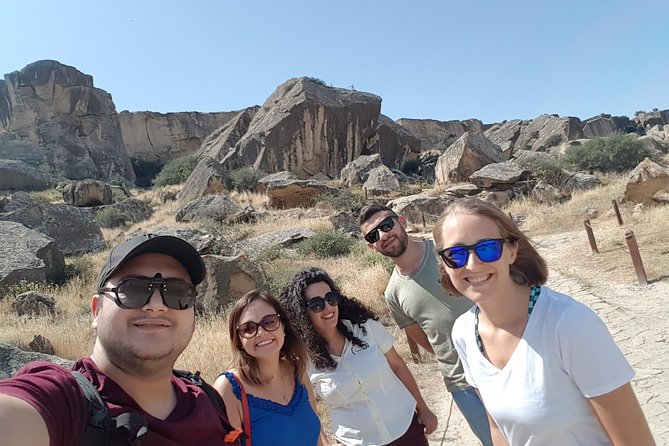
Reviewed · GOBUSTAN TOURS
Gobustan Tour and Mad Volcanoes – tour to stone age
Gobustan’s ancient carvings are the main event here: hunters, animals, boats, and daily life cut into rock over thousands of years. You also get one of Azerbaijan’s strangest natural sights, mud volcanoes that bubble and burp from the earth.
I like the strong contrast between the two stops. The petroglyphs connect you with prehistoric people, while the volcanoes feel almost otherworldly. I also like that a local guide is included, since the carvings can be easy to miss without someone pointing out what matters.
The main consideration is the amount of driving. You spend about two hours on the road during this five-hour trip, and hotel pickup and drop-off are not included, so you need to arrange your way to the meeting point.
Key points
- Ancient rock art: See carvings connected with hunting, animals, plants, boats, and prehistoric daily life.
- UNESCO-listed site: Gobustan was added to the UNESCO World Heritage list in 2007 for its rock art and long cultural continuity.
- Bubbling mud volcanoes: Azerbaijan has roughly 400 of the world’s known mud volcanoes, many near its Caspian coast.
- Short half-day format: The tour lasts about five hours, including roughly 120 kilometers of driving.
- Optional mosque stop: The route back can include Bibi Heybet Mosque, a modern recreation of a 13th-century mosque destroyed in 1936.
- Small enough to manage: The group limit is 30 people, with a local guide and bottled water included.
Gobustan’s Stone Age carvings are the real reason to go
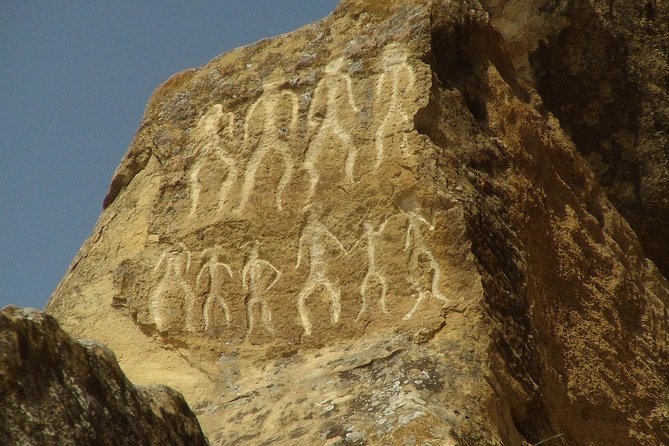
Gobustan National Park sits about 64 kilometers southwest of central Baku, on the Caspian side of Azerbaijan. Its bare hills and rocky ground hold one of the country’s most important archaeological sites: ancient carvings cut into rock faces by people who lived, hunted, traveled, and worshipped here long before written records.
The carvings are linked to the 12th through 8th centuries B.C., although the wider area preserves signs of human activity across a much longer period. That span gives Gobustan its force. You are not simply looking at old pictures on a wall. You are seeing messages and images left in the open by people who used these hills as part of daily life.
The art includes human figures, animals, hunting scenes, plants, and boats. Some images are simple and weathered. That is part of the point. Gobustan does not feel polished or staged. It asks you to slow down, study the rock, and let the guide help you read what is there.
The site was named a UNESCO World Heritage Site in 2007 for the value of its rock art, its record of prehistoric life, and the way cultural activity continued from prehistoric times into the medieval period. That recognition matters because it places Gobustan among the world’s major archaeological sites, even though it receives less attention than famous ruins in Europe or Egypt.
More trips out to the Gobustan petroglyphs:
- Baku: Gobustan, Mud Volcano, Fire Mount, Temple Lunch Entry
★ 4.9 · 3,246 reviews - BEST Gobustan, Volcanoes & Absheron Fire Tour (Group or Private)
★ 5.0 · 1,254 reviews - Gobustan and Absheron tour (All inclusive)
★ 5.0 · 1,014 reviews
Start at the museum before walking among the rocks
The Gobustan Petroglyphs Museum is the sensible first stop. It gives you the basic setting before you reach the carvings, helping you understand what you are looking at once you are outside.
I find this order useful because the rock art can seem cryptic at first. A figure cut into stone may look like a scratch until you know to look for a hunting scene, an animal shape, or an arrangement that reflects a particular way of life. The museum provides the background that makes the outdoor visit more rewarding.
You should expect the museum and rock site to be closely tied together rather than two unrelated attractions. The museum introduces the archaeological setting, while the outdoor area lets you see the engravings in their original surroundings.
Bring your attention, not just your camera. The carvings are the kind of attraction that rewards a guide who knows where to look. A local guide is included, and one guide named in the tour’s operating details is Nurlan. If he is assigned to your departure, you can expect a guide who has led both morning and afternoon visits. Guide assignments can change, so confirm the name when booking if that matters to you.
What the petroglyphs tell you about prehistoric life
The most valuable part of Gobustan is not one famous carving. It is the collection. Taken together, the images show people concerned with food, movement, animals, nature, and community.
Hunting scenes help you picture how people depended on the surrounding environment. Animal figures point to the wildlife known in the area. Boats and other images suggest that the Caspian setting mattered to local life, not just as a distant body of water but as part of movement and survival.
The carvings also offer a rare sense of continuity. People returned to the same general area and continued marking it over generations. You can see why the site is described as important for the connection between prehistoric and medieval culture.
This is not a tour for someone who wants a long list of intact buildings. Gobustan offers fragments, symbols, and rock surfaces. I would choose it if you enjoy archaeology, early human history, or places where the setting matters as much as the object. If your main interest is grand architecture, the mosque stop may appeal more than the petroglyphs.
Mud volcanoes add an odd and memorable second act
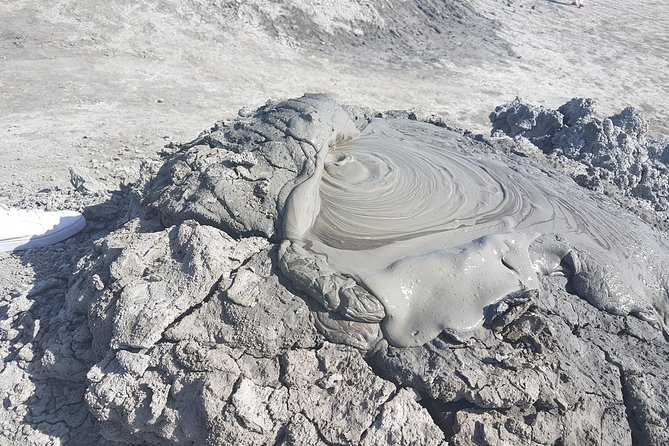
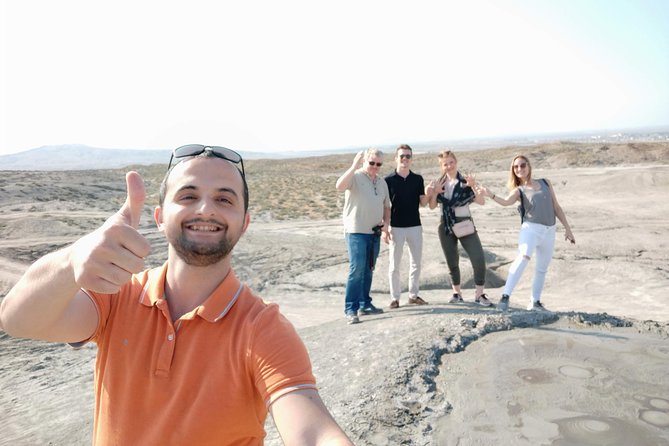
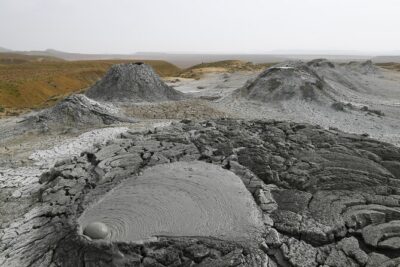
Azerbaijan is known for its mud volcanoes, and this trip pairs them naturally with Gobustan. More than 1,000 mud volcanoes are known around the world, with roughly 400 in Azerbaijan’s coastal area.
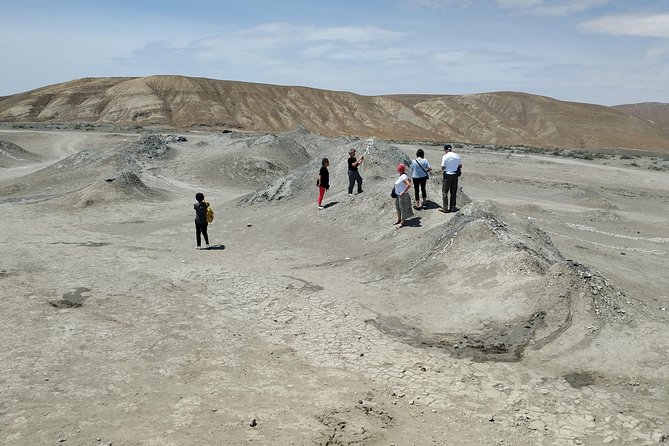
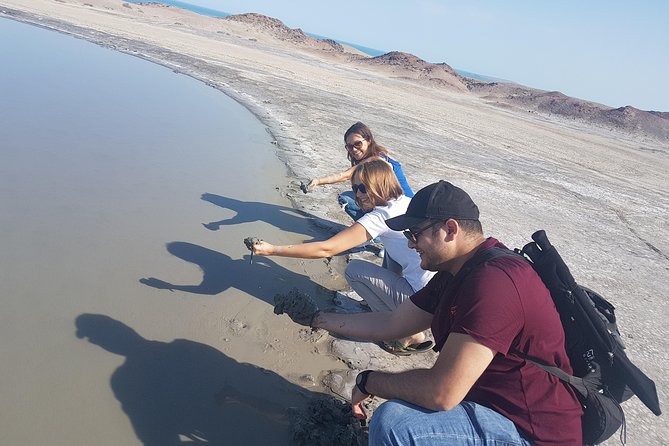
These are not fiery volcanoes throwing lava into the air. They are low earth formations that push mud and gas upward, sometimes producing bubbling pools and small eruptions. The result is quieter than a conventional volcano but no less strange. You may see mud moving and bubbling rather than molten rock.
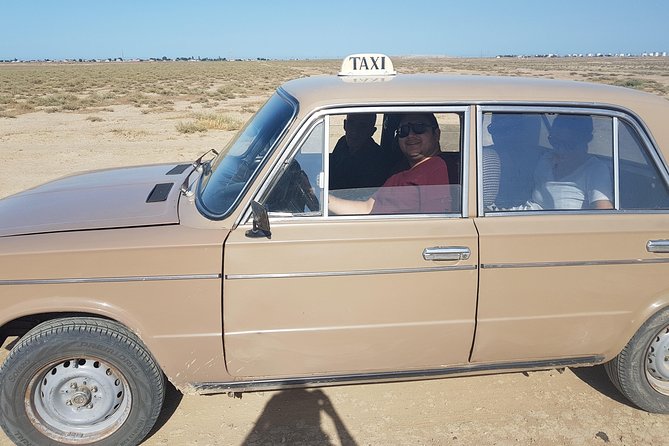
The visit usually involves a rougher approach than the main road to the park. One account of the experience describes a Russian Lada being used for the mud-volcano section, while the main transfer was made in a comfortable Mercedes van. That tells you something useful: transport may vary by road section and by departure. A rugged vehicle can be practical here, but do not expect the same comfort throughout the whole outing.
The volcanoes are worth including because they show a different side of Azerbaijan. Gobustan connects you to early human culture. The mud fields show active geological forces still at work. Together, they make a better half-day than either stop would provide on its own.
Wear shoes and clothing you can live with getting dusty. The tour operates in all weather, so check the forecast and dress for sun, wind, or wet ground. The supplied information does not promise protective footwear or special equipment, so come prepared for an outdoor stop rather than a paved attraction.
A few more Baku days to weigh up
- Baku: Gobustan, Volcanoes, Fire Temple and Yanardag Day Trip
★ 4.7 · 433 reviews - Gobustan & Mud, Fire Temple, Burning Mountain (Group & Private)
★ 4.5 · 418 reviews - Baku: Gobustan Absheron Tour Entry Tickets included
★ 4.9 · 329 reviews - Gobustan-Mud Volcan-Fire Temple and Mountain Tour/Entrance inc
★ 5.0 · 267 reviews
The optional Bibi Heybet Mosque stop
On the return route, the trip can include Bibi Heybet Mosque. The present mosque is a recreation of a building first constructed in the 13th century and later completely destroyed by the Bolsheviks in 1936.
That history gives the stop a different character from Gobustan. You are not seeing an untouched medieval mosque. You are seeing a later reconstruction that preserves the name and religious importance of the earlier building.
The mosque works best as an added cultural stop if time allows. It breaks up the return drive and gives you a chance to see a place connected with Baku’s Islamic heritage. Still, it should not replace the main Gobustan visit in your expectations. The ancient carvings and mud volcanoes are the core of the day.
Ask your guide early about the mosque stop. The supplied tour details say it can be visited on the way back, but the exact timing and inclusion may depend on the day’s route and conditions.
Two hours of driving is a fair trade for this outing
The total driving distance is about 120 kilometers, with roughly two hours spent in the vehicle. That leaves about three hours for the museum, rock carvings, mud volcanoes, and possible mosque visit, though the exact balance can change.
I see the driving as reasonable for a half-day trip from Baku. Gobustan is far enough from the city that visiting independently requires more planning, and a guide helps connect the separate stops. You can sit back between sites instead of sorting out every turn and entrance fee yourself.
The tradeoff is that this is not a slow, leisurely day in one place. You will move on after each stop. If you want long walks, extended photography, or time to study every carving, a private or custom trip may suit you better. The group can reach as many as 30 people, so the pace may be set for the whole group rather than for your personal interests.
A reported afternoon departure began around 2 p.m. and included home pickup, but the standard details list a 10 a.m. start and say hotel pickup and drop-off are not included. Treat the 10 a.m. meeting time as the reliable plan unless your booking confirmation says otherwise. The difference between departures may reflect a separate arrangement, so confirm the meeting point and transport before the day begins.
What the $130 price means
At $130 per person, this is not the cheapest way to see Gobustan. The value depends on what you want handled for you.
The price includes national park fees, bottled water, and a local guide. Those inclusions remove some of the small costs and planning tasks, but lunch is not included. You should plan to eat before or after the excursion, since the five-hour schedule does not promise a meal stop.
The tour becomes more attractive if you want one organized outing that combines archaeology and geology. A self-arranged visit may cost less in some circumstances, but you would need to sort out transport to a site 64 kilometers from central Baku, understand the park access, and arrange a way to reach the mud volcanoes. The guide is especially useful at the petroglyphs, where interpretation makes a major difference.
There is an important price point to confirm before paying. One afternoon booking was described at $55 per person, while the stated price for this experience is $130. Prices can differ by departure, arrangement, season, or booking channel, but the gap is large enough to check carefully. Confirm the final price, what transport is included, and whether any pickup arrangement changes the cost.
Who will get the most from this half-day trip
I would recommend this outing to you if you want to step beyond Baku’s city center and see places that explain Azerbaijan through both people and geology.
It suits:
- First-time visitors who want a compact introduction to Gobustan without planning a full day.
- History fans who enjoy ancient markings more than reconstructed monuments.
- Geology fans who want to see bubbling mud volcanoes in a real outdoor setting.
- Families with older children who can handle two hours of driving and outdoor conditions.
- Photographers looking for stark rock formations, unusual mud fields, and carved surfaces.
It may be less suitable if you dislike driving, need a very predictable paved route, or want a relaxed meal-centered excursion. The outdoor stops operate in all weather, and the volcano section may involve a less comfortable vehicle.
Most people can participate, and service animals are allowed. The tour is also near public transportation, but the supplied details do not state the exact meeting point, so ask for precise instructions before departure.
How to prepare for Gobustan and the volcanoes
Wear practical clothes suited to the forecast. Since the tour runs in all weather, bring a light rain layer or sun protection as needed. Shoes should be comfortable for outdoor ground and suitable for dust or mud.
Carry water beyond the included bottle if you usually drink often, especially in warm conditions. Pack a snack too, since lunch is not included and the schedule may not provide a full meal break.
Keep your camera ready, but do not let it replace looking closely. At Gobustan, the marks can be subtle. Listen when the guide identifies a scene, then take time to study the rock yourself.
Finally, confirm three details the day before: the 10 a.m. start, the meeting point, and the transport plan for the volcanoes. Hotel pickup and drop-off are listed as not included, despite pickup wording in the general tour summary. That small check can prevent the only real logistical surprise.
Should you book the Gobustan tour?
Book it if you want a practical half-day from Baku that combines UNESCO-listed rock art with bubbling mud volcanoes. The pairing is unusual, the guide adds needed context, and the route gives you a clear look at two very different sides of Azerbaijan.
I would hesitate only if $130 feels high for a five-hour trip or if you want extensive time at each site. Before booking, confirm the current price, meeting point, transport type, and whether Bibi Heybet Mosque is included that day. If those details work for you, this is a worthwhile choice for seeing Gobustan without taking on the transport planning yourself.
Free cancellation is available when you cancel at least 24 hours before the start time. Changes or cancellations made within 24 hours are not accepted for a refund.
FAQ
How long does the Gobustan tour last?
The tour lasts approximately five hours.
How far is Gobustan from central Baku?
Gobustan National Park is about 40 miles, or 64 kilometers, southwest of central Baku.
How much driving is involved?
The total driving distance is about 120 kilometers, with approximately two hours of driving time.
What time does the tour start?
The stated start time is 10 a.m.
Are hotel pickup and drop-off included?
No. Hotel pickup and drop-off are listed as not included. Confirm the exact meeting point before departure.
What does the price include?
The price includes national park fees, bottled water, and a local guide.
Is lunch included?
No. Lunch is not included.
Are the mud volcanoes active?
The tour visits an active bubbling mud-volcano site. These volcanoes release mud and gas rather than lava.
How many people can join the tour?
The group can have a maximum of 30 travelers.
Just added around Baku
- Wine Tour Baku★ 5.0 · 4 reviews
- Baku Sightseing Tour★ 5.0 · 12 reviews
- Traditional Azerbaijani Cuisine Workshop★ 5.0 · 5 reviews
- The Magnificent Baku Night Tour★ 5.0 · 3 reviews
- Day Trip in Baku★ 5.0 · 6 reviews
- Baku Old City Tour★ 4.5 · 12 reviews
- Guided Old City Tour on Baku’s Timeless Charm★ 5.0 · 4 reviews
- Old City Walking Tour★ 5.0 · 6 reviews
Gobustan Tours, compared.
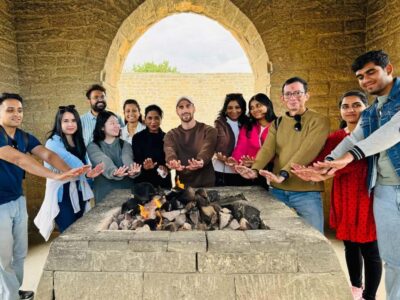
Gobustan, Mud Volcano, Fire Mount, Temple Lunch Entry
Read our review →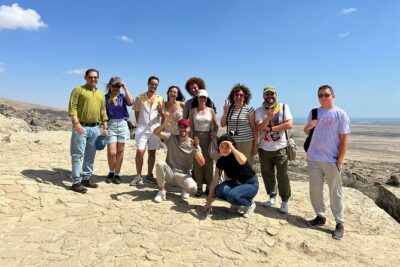
BEST Gobustan, Volcanoes & Absheron Fire Tour (Group or Private)
Read our review →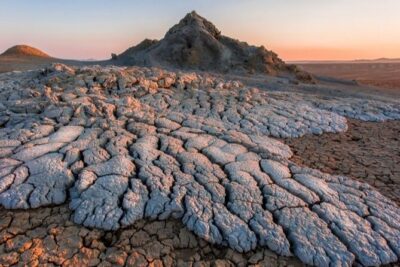
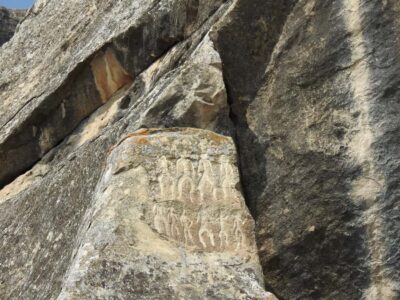
Gobustan, Volcanoes, Fire Temple and Yanardag Day Trip
Read our review →
Gobustan & Mud, Fire Temple, Burning Mountain (Group & Private)
Read our review →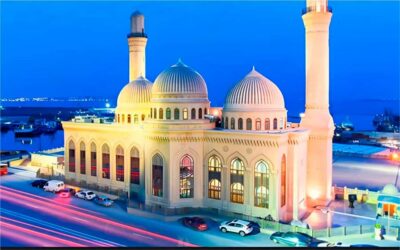
Mud Volcan-Fire Temple and Mountain Tour/Entrance inc
Read our review →
Gobustan Mud Volcanoes Temple & Entry tickets included
Read our review →Browse the lists this tour appears in