
Reviewed · GOBUSTAN TOURS
Gobustan and Fire temple Tour with Polish speaking guide
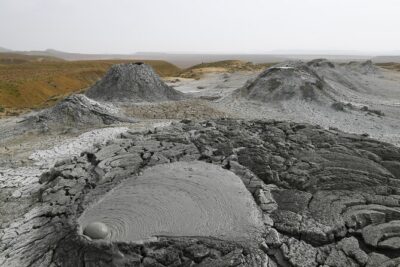
The strangest sight comes first: Gobustan’s mud volcanoes, where gray mud bubbles and oozes from the ground. I like that this trip links natural oddities with human history, moving from prehistoric rock drawings to the oil well that helped shape modern Azerbaijan. The visit to Bibiheybat Mosque adds a graceful architectural pause between the rough volcanic ground and the fiery sites of Absheron.
The main thing to watch is the extra admission cost. Gobustan, Ateshgah, and Yanardagh require another 30 AZN if tickets are not included, and the schedule is full enough that the Heydar Aliyev Center is only a photo stop from outside. Still, hotel pickup, return transport, a Polish-speaking guide, and a bottle of water make the $65 price easy to understand.
Key points at a glance
- Gobustan’s mud volcanoes: See rare, bubbling mud formations in a stark setting outside Baku.
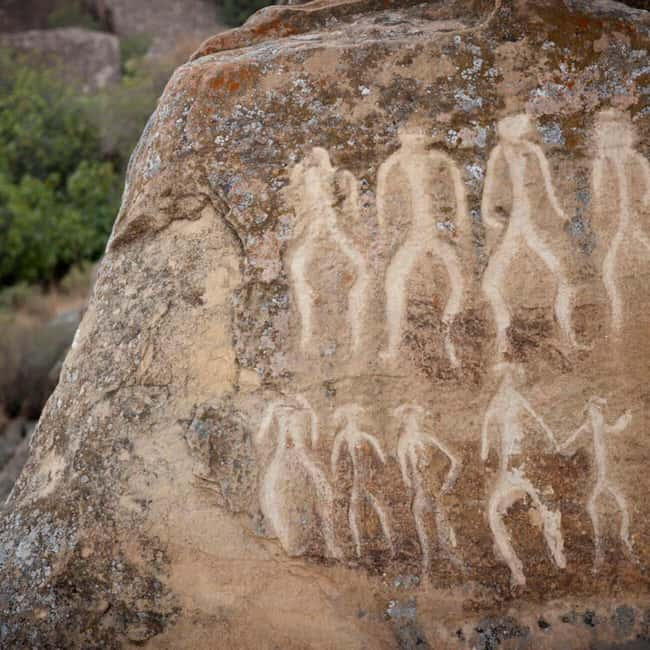
- Ancient petroglyphs: Study rock art made thousands of years ago and consider what it reveals about early settlement.
- Bibiheybat Mosque: Visit one of the area’s most striking religious buildings and hear about its place in local culture.
- Azerbaijan’s oil story: Stop at the site identified as the world’s first drilled oil well.
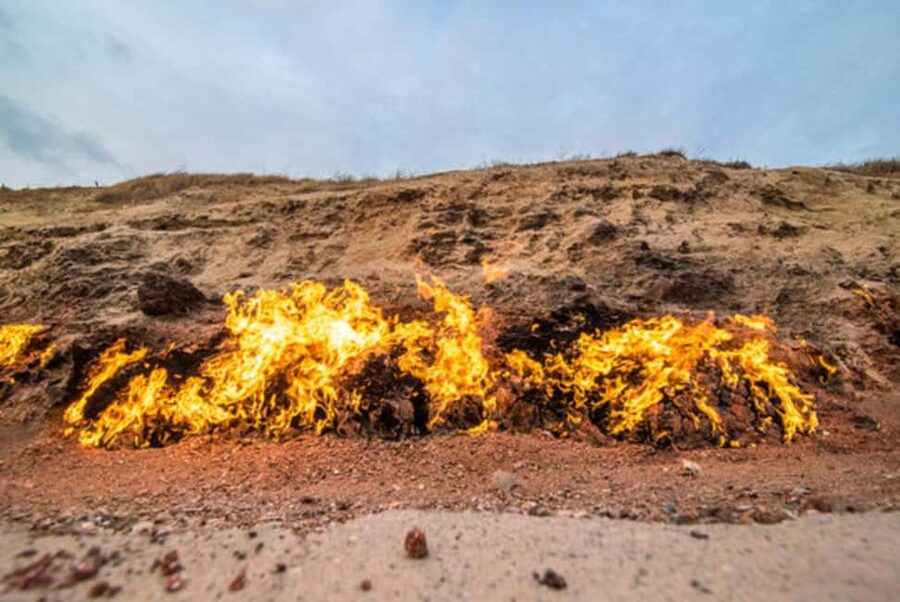
- Ateshgah and Yanardagh: Compare a historic fire temple with a natural gas flame burning on a hillside.
- Polish-language support: A Polish-speaking guide explains the sites while roundtrip transport and hotel pickup keep the day simple.
Why this tour works as a full-day introduction to Azerbaijan
This is not a single-theme outing. You get geology, archaeology, religion, industry, and modern Baku in one day. That variety is the best reason to choose it, especially if you have limited time in the capital and want more than city sights.
The route also shows how closely Azerbaijan’s identity is tied to fire and fuel. Natural gas burns at Yanardagh. Worshippers once gathered at Ateshgah. Oil later brought industrial power and international attention. Gobustan adds an older layer, with traces of people who lived in the region thousands of years ago.
I would choose this tour if you want a guided overview rather than a slow visit to one museum or archaeological site. You should expect a busy program, though. Each stop has a different character, and the day is designed to give you a useful first look rather than long, unhurried time everywhere.
More trips out to the Gobustan petroglyphs:
- Baku: Gobustan, Mud Volcano, Fire Mount, Temple Lunch Entry
★ 4.9 · 3,246 reviews - BEST Gobustan, Volcanoes & Absheron Fire Tour (Group or Private)
★ 5.0 · 1,254 reviews - Gobustan and Absheron tour (All inclusive)
★ 5.0 · 1,014 reviews
Gobustan mud volcanoes: an odd start in the open country
The Gobustan section begins with one of Azerbaijan’s most unusual natural features. Mud volcanoes are not lava volcanoes. They push cold or relatively cool mud, gases, and mineral material toward the surface, creating small cones, pools, and bubbling patches.
The sight can feel almost otherworldly because the ground is bare and the mud formations have an uneven, raw appearance. You will see the earth moving in a quiet, low-key way rather than with the drama of a hot eruption. That is part of the appeal. This is a place for looking closely, not waiting for a spectacular blast.
The tour description does not give a precise walking route or the amount of time spent at the volcanoes, so bring sensible footwear and be ready for uneven outdoor ground. Keep your attention on where you step. The value here is the rare setting itself, not a developed visitor attraction with lots of facilities.
The mud volcanoes also give the day a strong opening. Instead of beginning with a standard monument, you start with a natural feature that many first-time visitors do not expect to find near Baku. The guide can place it in the wider story of the Absheron region, where underground gas and oil have long shaped both nature and daily life.
Gobustan rock art and the lives behind the drawings
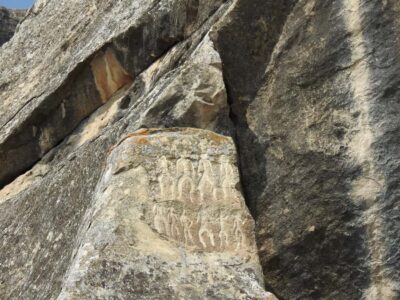
The nearby rock art changes the mood. At Gobustan, you can see petroglyphs made thousands of years ago. These carved images offer a direct link to people who lived in the area long before written records could describe their lives.
Look for the way the carvings are arranged on the rock surfaces. Their importance is not only artistic. They can suggest what mattered to early communities, from animals and hunting to movement, ritual, or group life. You will get more from the stop if you listen to the guide’s explanation instead of treating the carvings as simple pictures on stone.
This is one of the places where a Polish-speaking guide adds real value. Rock art rarely explains itself. Without context, you may see lines and shapes but miss why the site matters. The commentary helps connect the marks to the people who made them and to the long human presence in this part of Azerbaijan.
The extra admission charge covers Gobustan rock art and the mud volcanoes together at 15 AZN, according to the tour information. If you choose the version without entry tickets, remember that this amount is separate from the $65 tour price.
Bibiheybat Mosque offers a change of pace
Bibiheybat Mosque brings you back from prehistoric stone and bubbling mud to a major religious building. Its architectural beauty makes it a useful contrast to Gobustan. You are no longer looking at traces left by anonymous early communities. You are visiting a place that remains closely tied to Azerbaijan’s religious and cultural life.
The tour presents the mosque as an important local landmark and gives you time to appreciate its design. Pay attention to the building’s overall form, decorative details, and setting rather than rushing through it as just another photo stop. The change from rugged open ground to carefully shaped architecture helps give the itinerary rhythm.
The supplied details do not specify dress rules, interior access, or how long the stop lasts. I would treat it as a respectful religious-site visit and follow the guide’s instructions once you arrive. If entering the mosque is part of the visit, modest clothing is the sensible choice.
Bibiheybat is also valuable because it prevents the trip from becoming only a collection of strange geological and fire-related sights. It gives the day a human and spiritual center before the route turns toward Azerbaijan’s oil industry and older fire worship traditions.
More Ateshgah and Yanar Dag trips:
- Baku: Gobustan, Volcanoes, Fire Temple and Yanardag Day Trip
★ 4.7 · 433 reviews - Gobustan & Mud, Fire Temple, Burning Mountain (Group & Private)
★ 4.5 · 418 reviews - Gobustan-Mud Volcan-Fire Temple and Mountain Tour/Entrance inc
★ 5.0 · 267 reviews - Gobustan, Mud volcanoes, Fire temple, Fire mountain PRIVATE TOUR
★ 5.0 · 47 reviews
The first drilled oil well and Azerbaijan’s industrial story
The stop at the site identified as the world’s first drilled oil well explains why oil is so important to Azerbaijan’s modern story. This is not just an industrial curiosity. It points to the moment when the region’s natural resources began to shape its economy and its place in the wider world.
You will learn about the oil boom and the significance of early drilling. The stop is likely to appeal most to readers who enjoy seeing how geography affects politics, business, and city growth. Baku’s development cannot be understood fully without knowing about the oil beneath and around the Absheron Peninsula.
Do not expect this part of the tour to feel like a large oil museum unless the guide provides additional context on site. The supplied information describes it as a stop where you can learn the story of the first drilled well. Its strength is the connection to place: you are seeing the location tied to the beginning of a major industry.
I like the way this fits between the mosque and the fire sites. It shows that fire in Azerbaijan is not only a religious symbol or a natural spectacle. It also became a source of wealth, work, and rapid change.
Ateshgah Fire Temple and the old meaning of natural flame
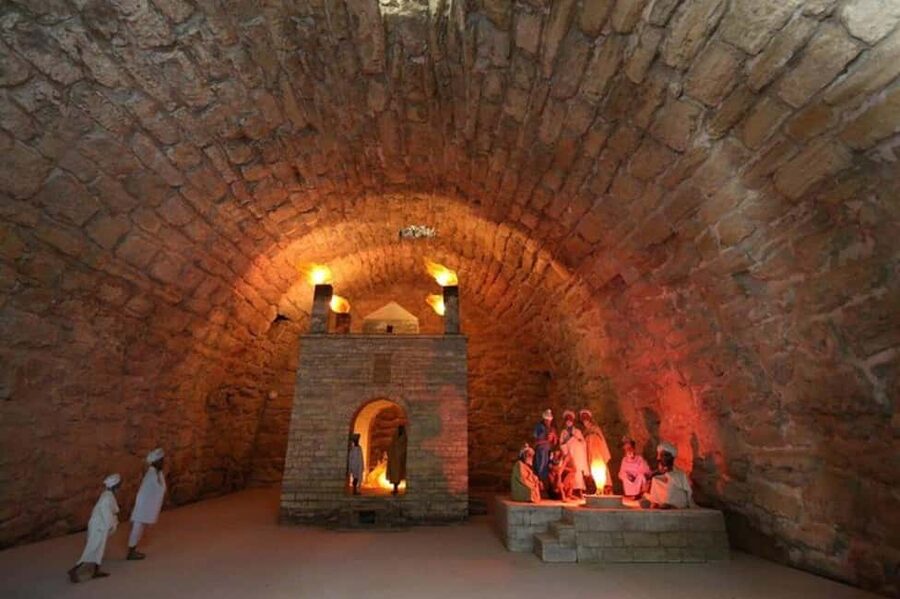
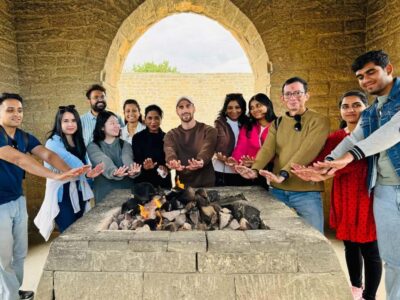
Ateshgah, known as the Fire Temple of Baku, is one of the most distinctive visits on the route. The site was used by Zoroastrians, Hindus, and Sikhs, and it is associated with natural gas-fueled flames. That mix of religious traditions gives the temple a wider story than its name alone suggests.
The temple helps you see why fire became such a powerful feature of local belief. When gas rose from the ground and burned, it could appear permanent and supernatural. At Ateshgah, the physical presence of fire and the history of worship come together in one place.
Your guide’s commentary matters here. The site can be easy to reduce to a quick photograph of a flame, but the religious background gives the visit substance. Listen for the explanation of the different communities connected with the temple and how the natural gas shaped its use.
Admission to Ateshgah and Yanardagh is listed together at 15 AZN when tickets are not selected in advance. The tour description does not say how long you remain at the temple or whether every interior area is included, so keep your expectations flexible. This is a scheduled sightseeing visit, not a private archaeological study.
Yanardagh, where the hillside keeps burning
Yanardagh, or Burning Mountain, is the final major natural spectacle. A natural gas fire burns continuously on a hillside, creating a simple but memorable sight. Unlike the mud volcanoes, which bubble and shift, Yanardagh gives you a steady flame against the slope.
I find the contrast useful. At Gobustan, you watch the ground push mud upward. At Yanardagh, gas escapes and burns in the open air. Together, the sites show two visible effects of the same broader geological forces that have helped define the Absheron region.
The flame is the main event, so this is a short, focused stop by nature. You do not need a complicated explanation to understand what you are seeing, but the guide can connect it to the region’s older fire traditions and to Ateshgah. Visiting both makes each one more meaningful.
Weather and daylight may affect how dramatic the fire looks, but no specific season or timing is supplied. I would bring water and protect yourself from the elements. One bottle is included, which is helpful, though you may want more for a full day outside.
The Heydar Aliyev Center is a final photo stop
The Heydar Aliyev Center is included at the end as a sightseeing and photography point. Groups do not enter the building because of time limits. That detail matters, especially if you are hoping to see its interior exhibitions or spend time studying the architecture from inside.
You can still use the stop to take photographs of the building’s famous modern form. Think of it as a closing view of contemporary Baku after a day focused mostly on ancient sites, religion, geology, and early industry.
This is also where the tour’s packed schedule becomes most visible. The route covers a lot, but not every location receives a long visit. If the Heydar Aliyev Center is high on your personal list, plan a separate visit during your time in Baku.
What the $65 price includes, and what it does not
At $65 per person, the tour offers solid value if you want transportation and a guide for several sites outside central Baku. Hotel pickup and drop-off remove the work of arranging separate rides to Gobustan and Absheron. Roundtrip transport is included, along with a multilingual guide and bottled water.
The important catch is admission. If you do not choose an option with tickets included, the listed extra cost is 30 AZN: 15 AZN for Gobustan rock art and mud volcanoes, plus 15 AZN for Ateshgah and Yanardagh.
That makes the real cost higher than the headline price, so compare the options carefully before booking. The extra fee is not a surprise if you read the conditions, but it can affect your budget. I would also carry a little additional money in case you need it during the day, though no other extra costs are specified.
The value is strongest for solo visitors, couples, and small groups who would otherwise need to hire a car or arrange several separate journeys. If you already have a vehicle and prefer to set your own pace, a private plan might give you more time at each stop. This tour earns its price through convenience and the range of places covered.
The Polish-speaking guide and practical comfort
The tour is designed for Polish-speaking visitors, and the guide is the key to making the varied route easy to follow. You will hear explanations of ancient rock art, religious traditions, oil history, and natural gas formations in Polish rather than trying to piece everything together from signs.
Hotel pickup and drop-off are included, or you can use a central meeting location. The exact pickup procedure is not detailed, so make sure your reservation information clearly shows where and when to meet. Comfortable transport is provided for the route.
The tour includes one bottle of water. That is a thoughtful basic provision, but it is still wise to plan for a full day away from your hotel. The itinerary moves between outdoor sites, religious architecture, and city viewpoints, so simple layers and practical shoes make sense.
You can reserve now and pay later, which helps if your Baku plans are still shifting. Cancellation is allowed up to 24 hours before the tour for a full refund. Those terms are useful if you are building a flexible Azerbaijan itinerary.
Who should book this Gobustan and Fire Temple tour?
I would recommend it to you if you want a broad introduction to the area around Baku and prefer having the route explained in Polish. It suits first-time visitors who want to combine major sights without arranging transport to each one.
It is especially good for readers interested in unusual geology, early human history, religious sites, and the oil industry. The mix is far more interesting than a standard city-only excursion, and the mud volcanoes and burning hillside give you sights that are difficult to reproduce elsewhere.
You may want a different plan if you dislike packed sightseeing days, need long periods at each site, or want to enter the Heydar Aliyev Center. The tour gives you an exterior photo stop there, not an indoor visit. Also, check the ticket option carefully so the extra 30 AZN does not catch you off guard.
Should you book it?
Book this tour if you want convenience, Polish-language guidance, and a wide sample of Azerbaijan beyond Baku’s central streets. The strongest parts are the unusual Gobustan geology, the ancient petroglyphs, and the pairing of Ateshgah with Yanardagh.
I would not choose it for a slow, specialist visit. For most first-time visitors, though, $65 plus the required entry fees is a fair price for hotel transfers, transport, a guide, and a full route through Azerbaijan’s natural, religious, and industrial past.
FAQ
Is hotel pickup and drop-off included?
Yes. Hotel pickup and drop-off are included, with the option to use a central location if needed.
What language is the tour conducted in?
The tour includes a Polish-speaking guide. The guide service is also described as multilingual.
Are entrance tickets included in the $65 price?
Not necessarily. Entry tickets are extra unless you select an option that includes them.
How much do the entry tickets cost if they are not included?
The listed total is 30 AZN: 15 AZN for Gobustan rock art and mud volcanoes, and 15 AZN for Ateshgah and Yanardagh.
Which sites require an entry ticket?
Gobustan National Park, the Fire Temple, and Burning Mountain require admission. These correspond to Gobustan, Ateshgah, and Yanardagh on the route.
Is the Heydar Aliyev Center included as an indoor visit?
No. It is the last sightseeing and photo point, and groups do not enter the center because of time limits.
Is transportation provided during the tour?
Yes. Roundtrip transportation is included, with comfortable transport to and from the sites.
Can I cancel the booking for a refund?
Yes. You can cancel up to 24 hours in advance for a full refund. You can also reserve and pay later, so no payment is required at the time of booking.
Just added around Baku
- Wine Tour Baku★ 5.0 · 4 reviews
- Baku Sightseing Tour★ 5.0 · 12 reviews
- Traditional Azerbaijani Cuisine Workshop★ 5.0 · 5 reviews
- The Magnificent Baku Night Tour★ 5.0 · 3 reviews
- Day Trip in Baku★ 5.0 · 6 reviews
- Guided Old City Tour on Baku’s Timeless Charm★ 5.0 · 4 reviews
- Baku Old City Tour★ 4.5 · 12 reviews
- Old City Walking Tour★ 5.0 · 6 reviews
Gobustan Tours, compared.
Gobustan, Mud Volcano, Fire Mount, Temple Lunch Entry
Read our review →
BEST Gobustan, Volcanoes & Absheron Fire Tour (Group or Private)
Read our review →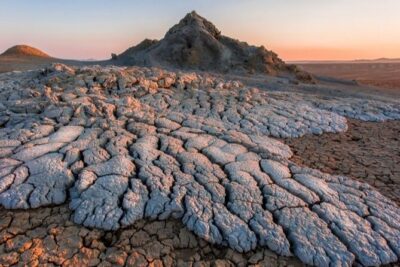
Gobustan, Volcanoes, Fire Temple and Yanardag Day Trip
Read our review →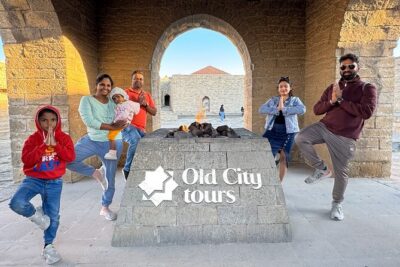
Gobustan & Mud, Fire Temple, Burning Mountain (Group & Private)
Read our review →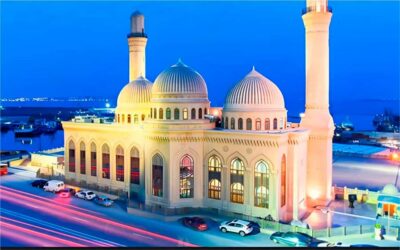
Mud Volcan-Fire Temple and Mountain Tour/Entrance inc
Read our review →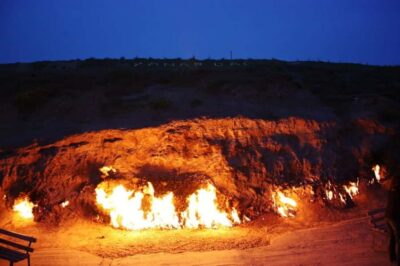
Gobustan Mud Volcanoes Temple & Entry tickets included
Read our review →Browse the lists this tour appears in