
Reviewed · OLD CITY TOURS
Baku’s Ancient Heart
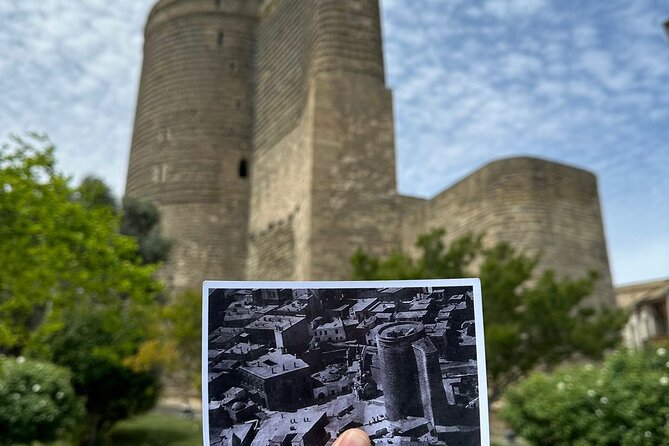
Baku’s ancient center packs centuries of stories into a walkable maze of stone lanes. The tour begins at the gates of Icherisheher, the walled Old City, then leads you to the Maiden Tower and the Shirvanshahs’ Palace, the two big sights that give this district its shape.
I like the mix of famous monuments and smaller stops, including the 15th-century Hadji Bani hammam and the old Silk Road caravanserais. I also like the chance to see working crafts, Azerbaijani tea, and local places such as Ali Shamsi’s art gallery rather than spending the whole walk inside formal museums.
The main consideration is physical comfort. You’ll walk on uneven cobbles and climb at the Maiden Tower, and the tour is not suitable for people over 70. The meeting point can also vary with the option booked, so check your confirmation carefully.
Key points to know before booking

- Maiden Tower and Shirvanshahs’ Palace anchor the walk: You get Baku’s two essential Old City sights in one guided route.
- The route goes beyond the headline monuments: Look for the Hadji Bani underground hammam, old walls, caravanserais, chapel remains, and the khans’ residence.
- You’ll explore on foot: Comfortable shoes matter on cobbled lanes, stone steps, and the Maiden Tower’s spiral staircase.
- The local details are part of the appeal: Artisan shops, Azerbaijani tea, the Ali Shamsi art gallery, and the Mugam Club add everyday culture to the history.
- Guide Heydar leads the experience: The tour is available in English or Russian, and Heydar is described as friendly and expert.
- The $25 price is easy to justify: For a walking tour covering this many landmarks, it offers good value, especially if you want context rather than a quick look.
Entering Icherisheher through Baku’s double gates
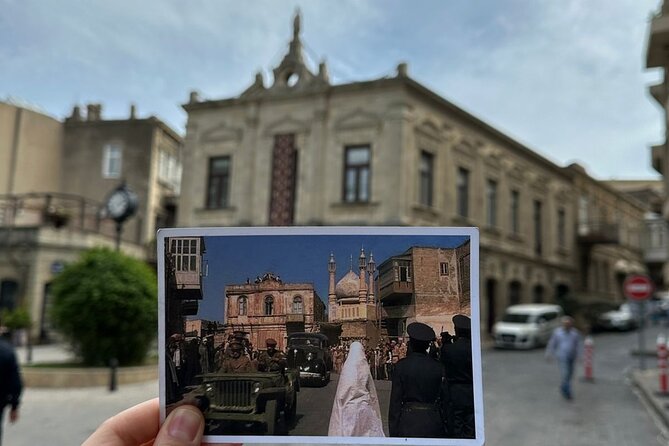
The Old City begins at the Double Gates, the main entrance into Icherisheher. Passing through them gives you a useful sense of place: modern Baku is outside, while the older stone quarter unfolds inside a compact defensive wall.
This is a good starting point because the district is not laid out like a modern open-air museum. Its lanes turn, narrow, and open again without much warning. A guide helps you understand what you are looking at and keeps the walk from becoming a simple search for the next famous building.
The Baku City Walls once protected the settlement from invaders. You’ll see sections of these defenses as you move through the quarter, and they help explain why the Old City feels enclosed and separate from the broad streets beyond it.
I would pay attention to the small changes in the stonework and street width. The value here is not only in one perfect view. It is in seeing how a fortified center, trading district, religious quarter, and residential area fit together.
More ways to walk the Old City:
- Baku Oil Heritage & Old Town Walking Tour
★ 5.0 · 232 reviews - Baku Walking Tour (Old City)
★ 5.0 · 127 reviews - Baku Old Town Walking Tour with a Local
★ 5.0 · 64 reviews
Climbing the Maiden Tower
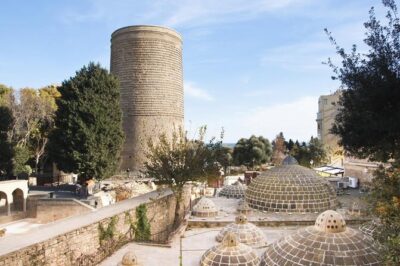
The Maiden Tower is the tour’s most recognizable stop. Dating from the 12th century, this round stone structure remains one of Baku’s most puzzling landmarks. Its original purpose has been debated, and the building’s unusual shape gives the guide plenty to explain.
Inside, you’ll climb a spiral staircase. The climb is part of the attraction, but it also means the stop may be tiring for anyone with limited mobility. The supplied information does not specify how long you spend inside, so expect the guide to shape the visit around the route and conditions on the day.
At the top, the reward is a broad view over Baku, the Caspian Sea, and the surrounding city. The contrast is striking: old stone walls and tiled roofs below, with the larger modern city spreading beyond them.
I like this stop because it gives you both an object to study and a way to understand Baku’s layout. From street level, the Old City can feel like a maze. From above, the relationship between the walls, the sea, and the newer city becomes much clearer.
Reading the Shirvanshahs’ Palace
The Shirvanshahs’ Palace is the grand architectural stop. This was the home of the ruling Shirvanshah dynasty, and its courtyards, carvings, and religious buildings show a more formal side of Baku’s past.
You’ll see a blend of Islamic and Persian architectural styles, with stone details that reward a slower look. The complex includes courtyards and museum displays containing artifacts connected with the royal past.
This is where a guide adds real value. Without explanation, a palace complex can become a series of handsome rooms and walls. With context, you can better understand how the ruling family, religious life, and administration were connected within the same fortified district.
Give yourself time to notice the shift from the tight lanes outside to the more ordered spaces inside. That change is part of the story. The palace was designed to project authority, while the surrounding streets developed around trade, worship, and daily life.
Lesser-seen corners of the Old City
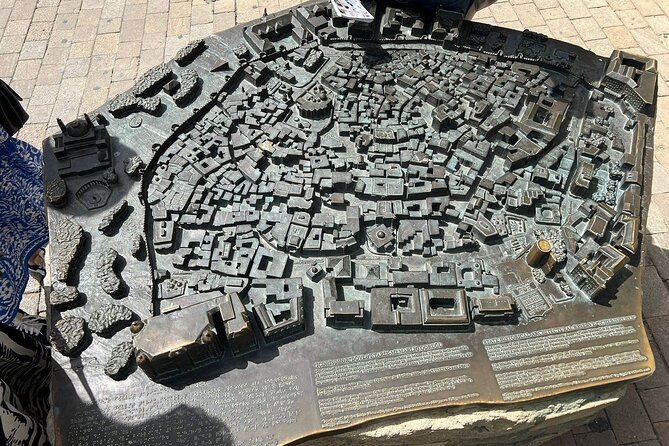
The route includes many smaller places that can easily be missed if you explore alone. The remnants of the Saint Bartholomew chapel offer a reminder that the Old City has not always been defined by one religious tradition.
You’ll also visit the Hadji Bani underground hammam, a 15th-century bathhouse. Its location below street level makes it especially useful for understanding how older buildings used limited space. It is a different kind of stop from the tower and palace, focused on ordinary urban life rather than royal power.
The Open Sky Museum adds another change of pace. The available information does not list every display there, so I would treat it as a chance to see historic material outdoors rather than expect a specific collection.
The Residence of the Bakuvian Khans brings the story back to local rulers and prominent families. The Encyclopedia House and Ismailliya House add more layers to the city’s institutional and architectural story. Ismailliya House now serves as the Presidium of the Azerbaijan Academy of Sciences, linking the old district with the country’s modern intellectual life.
These stops make the walk feel less like a checklist. You move from royal buildings to religious remains, domestic spaces, public institutions, and old commercial sites.
A few more Baku days to weigh up
- Old and Modern Baku Tour ( Day & Night Time)
★ 5.0 · 400 reviews - Full Day Sightseeing Tour of the main Attractions around Baku
★ 4.5 · 388 reviews - Baku: Stunning Walking Tour of Historical and Modern City
★ 4.9 · 270 reviews - Baku Night tour
★ 5.0 · 215 reviews
Caravanserais and Baku’s Silk Road role
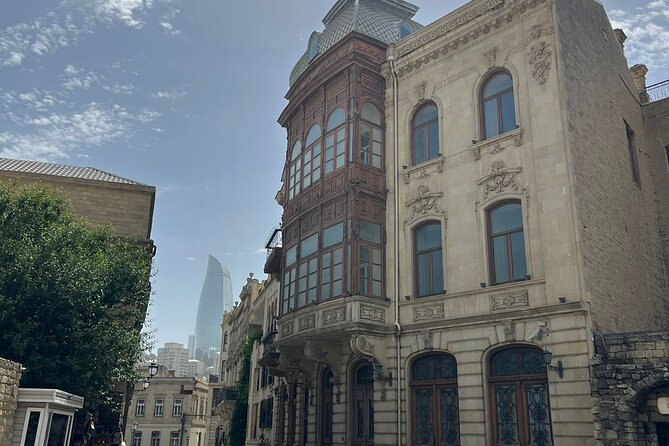
The Multani and Bukhara caravanserais are among the most atmospheric stops. Caravanserais were places where merchants and their animals could rest during long journeys, and these buildings point to Baku’s position along historic trading routes.
You may find the architecture simpler and more enclosed than the palace, but that is exactly the point. The caravanserais show the practical side of commerce. Traders needed secure lodging, storage, and a place to meet other people moving goods across the region.
I like this part of the tour because it turns the Old City from a collection of monuments into a working commercial center. Baku was not only a seat of rulers. It was also a place where travelers paused, exchanged goods, and carried news between regions.
The tour’s local focus helps here. Rather than simply photographing an old doorway, you can ask how the building functioned and why it mattered to the city.
Juma Mosque and the city’s religious life
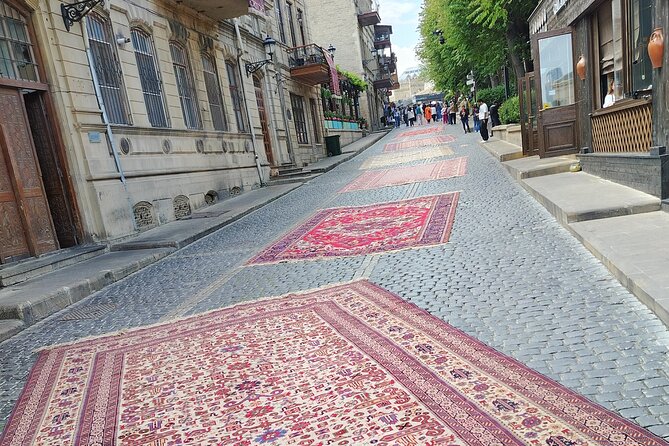
Juma Mosque is described as the biggest mosque in the Old City and is one of its major religious landmarks. The route also presents it as one of the oldest mosques in Azerbaijan, giving you a chance to consider how worship shaped the district’s daily rhythm.
The mosque is more than another attractive facade. It helps explain why so many residential and commercial streets cluster within a short walk of religious buildings. The Old City was a place where prayer, trade, family life, and government operated close together.
You should dress and behave respectfully around religious sites. The information provided does not specify a formal dress code or interior access, so your guide’s instructions on the day should take priority.
The nearby Bust of Aliaga Vahid adds a literary note. Seeing it alongside the mosque and older buildings broadens the tour beyond medieval architecture and points toward Azerbaijan’s cultural figures.
Museums, art, and everyday culture
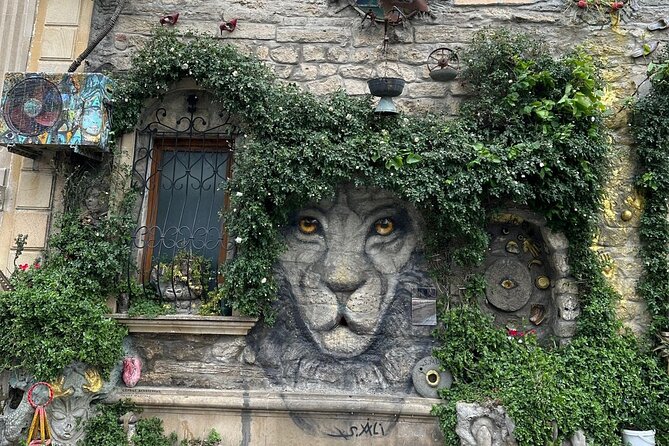
The Miniature Book Museum is a particularly unusual stop. It has been included in the Guinness Book of Records since 2014, according to the tour information. That gives you a small but memorable museum visit, quite literally centered on books that are tiny in scale.
Ali Shamsi Art Gallery offers a modern artistic counterpoint to the older buildings. The tour information identifies the gallery by name, but does not promise a particular exhibition or purchase opportunity. Consider it a chance to see how contemporary creativity fits into the historic quarter.
The route also includes local artisans’ shops, where you might see traditional crafts such as carpet weaving and copper engraving. These visits can be useful if you want to connect the city’s past with skills still practiced today.
Keep your buying decisions relaxed. The value of the stop is seeing the work and asking questions. You do not need to purchase anything to make the visit worthwhile.
A pause for Azerbaijani tea, served in a traditional glass, adds a welcome social moment. The information does not state whether tea is included in the $25 price, so confirm that before assuming it is covered. Either way, the stop gives you time to take in the Old City without hurrying from one sight to the next.
Mugam Club and the final notes of the walk
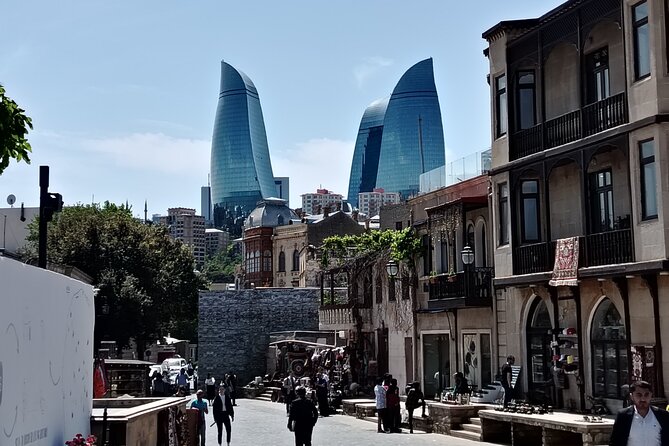
The Mugam Club restaurant and museum is another culturally focused stop. Mugam is a traditional musical form associated with Azerbaijan, and the venue connects food, music, and local identity in one place.
The details do not confirm a performance, meal, or tasting as part of the tour. I would expect to see the restaurant and museum and hear about their role, not assume that entertainment or food is included.
That distinction matters when comparing walking tours. The $25 fee covers a broad set of landmarks and guiding, but the information does not promise admissions to every site, food, or a scheduled musical program. Ask the provider if those details affect your decision.
What the $25 price really gets you
At $25 per person, this is a good-value orientation to Baku’s Old City. You get a guide-led walk through a UNESCO World Heritage site, the Maiden Tower, the Shirvanshahs’ Palace, the old walls, caravanserais, Juma Mosque, museums, and several lesser-known buildings.
The value is strongest if you are visiting Baku for the first time. A guide can connect places that might otherwise feel scattered, explain the district’s trading and royal past, and point out details you could pass without noticing.
The price is less compelling if you want a private luxury tour, a long museum visit at every stop, or a fully specified food and music program. The available information does not give a duration, group size, or exact admission policy, so you should check those points before booking if they are important to you.
The reserve-and-pay-later option keeps your plans flexible. You can book without paying today, and cancellation up to 24 hours in advance brings a full refund.
Practical advice for the walk
Wear comfortable shoes. This is not a suggestion to ignore. The Old City has cobbled streets, and the Maiden Tower includes a spiral staircase.
The meeting point varies depending on the option booked, while the activity ends back at the meeting point. Confirm both before setting out, especially if you are arranging transport or meeting another tour afterward.
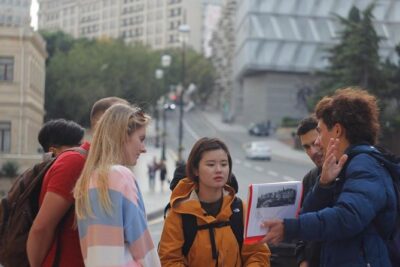
The tour is offered in English and Russian. Guide Heydar leads the experience, and the available feedback describes him as friendly and very well informed. That personal element matters on a history walk, because the quality of the explanations can shape how much you get from the same buildings.
The tour is not suitable for people over 70. If you have concerns about stairs or uneven ground, ask for more detail before reserving.
Who should book Baku’s Ancient Heart?
I would choose this tour if you want a clear introduction to Baku’s oldest district and prefer walking to riding between sights. It suits curious first-time visitors, architecture fans, people interested in Silk Road trade, and anyone who wants local culture alongside major monuments.
It is also a sensible choice if you have limited time in Baku and want several central sights covered in one outing. The route gives you the major landmarks, then adds bathhouses, caravanserais, galleries, religious buildings, and craft stops.
I would look for another option if you need a slow, fully accessible route, a guaranteed meal or performance, or detailed information about exact timing and admission fees before booking. The tour is best approached as a guided Old City walk, not as a luxury package with every extra included.
Should you book it?
Book Baku’s Ancient Heart if you want the Old City explained rather than simply photographed. For $25, the combination of Maiden Tower, Shirvanshahs’ Palace, old walls, caravanserais, mosques, museums, and local stops offers solid value.
Choose it with comfortable shoes, realistic expectations about cobbled streets and stairs, and a quick check of the meeting point and inclusions. If you enjoy small details, local stories, and a guide who can connect royal buildings with ordinary city life, this is a practical way to get your bearings in Baku.
FAQ
Where does the tour start?
The meeting point may vary depending on the option booked. Check the booking details for the exact starting location.
Where does the tour end?
The activity ends back at the meeting point.
How much does the tour cost?
The price is $25 per person.
Which languages are available?
The tour is available in English and Russian.
Who leads the tour?
The experience provider is Heydar.
What should I bring?
Bring comfortable shoes for walking through the Old City and climbing at the Maiden Tower.
Is the tour suitable for people over 70?
No. The tour is listed as not suitable for people over 70 years.
Can I cancel for a full refund?
Yes. You can cancel up to 24 hours in advance for a full refund. You can also reserve and pay later, so no payment is required today.
Just added around Baku
- Wine Tour Baku★ 5.0 · 4 reviews
- Baku Sightseing Tour★ 5.0 · 12 reviews
- Traditional Azerbaijani Cuisine Workshop★ 5.0 · 5 reviews
- The Magnificent Baku Night Tour★ 5.0 · 3 reviews
- Day Trip in Baku★ 5.0 · 6 reviews
- Guided Old City Tour on Baku’s Timeless Charm★ 5.0 · 4 reviews
- Baku Old City Tour★ 4.5 · 12 reviews
- Old City Walking Tour★ 5.0 · 6 reviews
Old City Tours, compared.
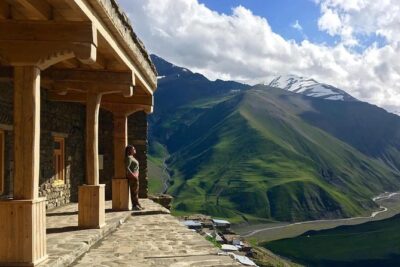
Guba Khinalug & Candy Cane Mountains tour (by Old City Tours)
Read our review →
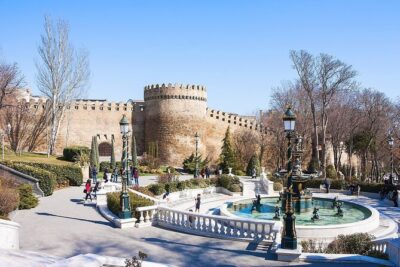
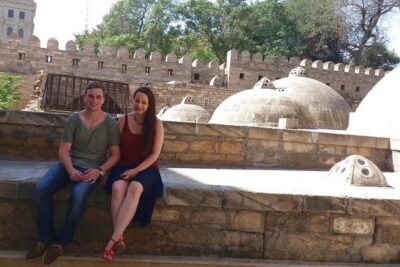
Baku Old City Tour (officially by Old City Tours)
Read our review →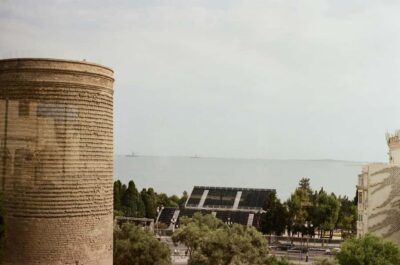
Baku Old City Wonders: A Walking Tour Through Time
Read our review →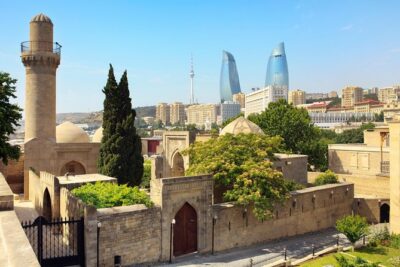
Browse the lists this tour appears in