
Reviewed · OLD CITY TOURS
Baku Oil Heritage & Old Town Walking Tour
Baku makes more sense once you see how oil money reshaped it. This 2.5-hour walk connects the medieval walls of Icherisheher with grand Imperial Russian and oil-boom buildings, showing how a trading town became a wealthy, cosmopolitan capital. The oil story gives the tour its spine, while the Old City supplies the atmosphere.
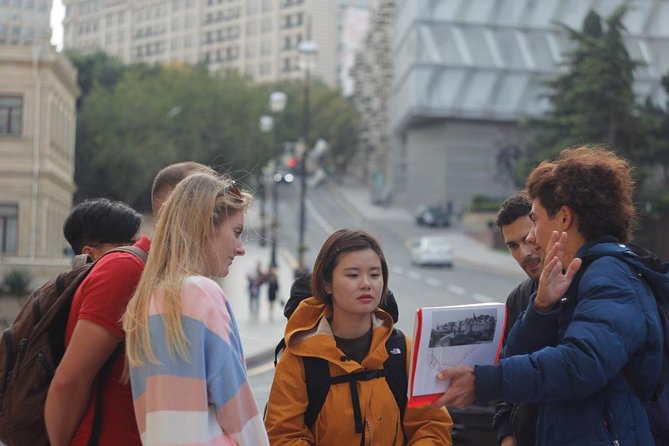
I like the personal guide and the use of historic photos to show what Baku looked like before and during its oil boom. I also like the easy route from Fountain Square through the Old City and along Istiglaliyyat Street, with useful talk about food, Azerbaijani phrases, and what to see next.
The main drawback is that the tour explains the Maiden Tower and Shirvanshahs’ Palace from outside rather than taking you in. At $70 per person, the value depends on how much you want context and conversation from a guide, since admission, lunch, and transport are not included.
Key points to know before you book
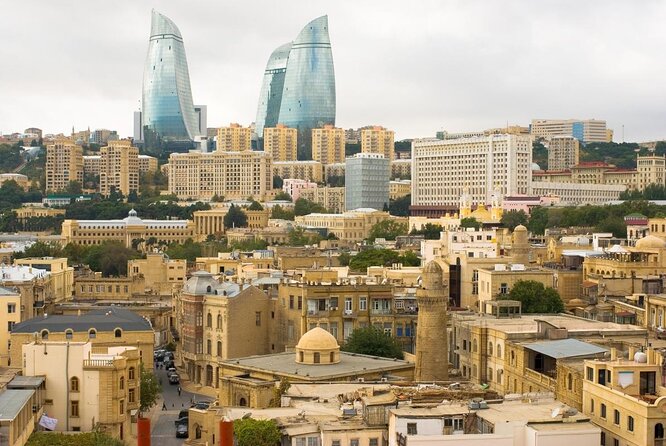
- Oil money changed the city: See the buildings and streets shaped by Baku’s late 19th and early 20th-century oil boom.
- The Old City is a major focus: Walk past the Gosha Gala gate, medieval walls, Maiden Tower, Muhammad Mosque, Shirvanshahs’ Palace, and the Museum of Miniature Books.
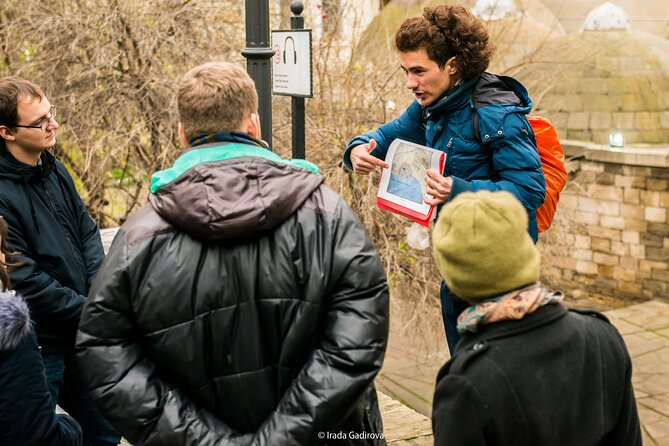
- Historic photos add useful context: The guide uses visual material to help you picture earlier versions of Baku.
- Gani is a frequent guide: He is praised for clear English, humor, strong storytelling, and patient answers. Lina is also named as a guide for an informative Old City introduction.
- There are no major interior visits: The central monuments are explained from outside, so plan separate visits if you want to enter them.
- It is a walking tour with no private transport: Wear comfortable shoes and expect the full 2.5 hours on foot.
Why Baku’s oil story is worth your time
Baku can look like several cities placed side by side. One moment you are in a walled medieval quarter, then you are facing a formal European-style building, and soon after you are walking through broad streets lined with monuments funded by oil wealth.
That contrast is the real subject of this tour. You are not just checking off Baku sights. You are following the city’s change from a fortified settlement and trading center into an oil-powered capital with ambitious patrons, new schools, public gardens, grand residences, and government buildings.
The guide also connects architecture to social change. You hear about oil barons, Russian Imperial rule, Soviet influence, Muslim women’s education, and Azerbaijan’s first independence. That wider setting helps explain why Baku feels culturally mixed and architecturally unusual.
The tour is especially useful near the start of your stay. I would use it to get your bearings, then return later to the buildings or museums that catch your interest. The guide can also point you toward food and other places to see, which gives the walk some practical value beyond its route.
More History & Heritage Tours in Baku
- Baku: Stunning Walking Tour of Historical and Modern City
★ 4.9 · 270 reviews - Best of Baku: 4-Hour City Tour Historic and Modern Landmarks
★ 4.7 · 63 reviews - Baku: Historic and Modern Baku Tour ( Day & NIght Tour)
★ 4.5 · 60 reviews
Starting at Fountain Square
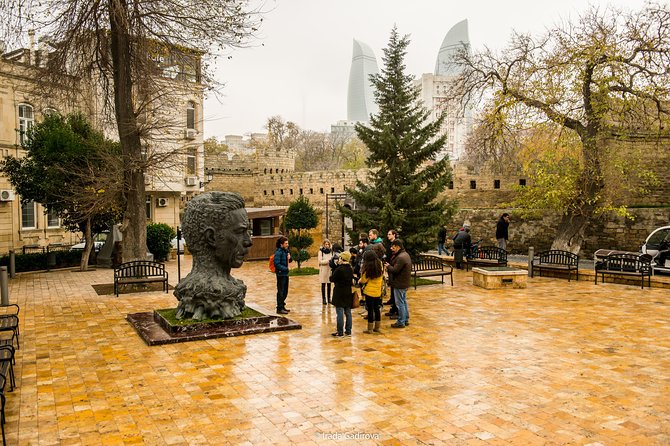
The meeting point is at KFC9RCP+28F on Nizami Street, near Fountain Square. Fountain Square is now a central leisure and entertainment area, but the tour presents it as part of the former trading center that grew during Baku’s first oil boom in the late 19th and early 20th centuries.
That opening is useful because it sets up the main idea: modern Baku was built on older commercial routes and then reshaped by sudden oil wealth. You begin and end here, so the location is easy to remember if you want to continue exploring afterward.
Allow a little time to locate the meeting point. The tour includes mobile ticketing, confirmation is provided at booking, and public transport is nearby. Since no private transportation is included, this is a straightforward city walk rather than a sightseeing trip by vehicle.
Inside Icherisheher, Baku’s walled Old City
The walk then moves into Icherisheher, or Baku Old City. This is the most atmospheric part of the route, with narrow streets, stone walls, old doorways, and a much slower feel than the open streets outside.
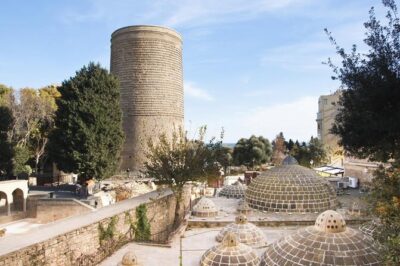
The guide covers the main entrance at Gosha Gala gate and the 12th-century citadel walls. The walls help you understand the shape of the old settlement, while the gate gives a clear sense of how people entered and moved through the fortified town.
At the Maiden Tower, you stop outside for an explanation rather than going in. The same applies to Shirvanshahs’ Palace. This is an important limitation. You receive background and historic photos, but you do not get the interiors, exhibitions, or views that come with paid admission.
The route also includes the 11th-century Muhammad Mosque and a walk through the narrow lanes. The mosque and medieval walls give the Old City a strong historical character, while the lanes provide the simple pleasure of seeing how the quarter is laid out.
The Museum of Miniature Books is another stop on the route. The tour information does not include an admission visit, so treat it as an outside reference unless the guide tells you otherwise. If this museum interests you, ask about visiting it separately.
I like this section because the guide is not forced to rush from one isolated monument to the next. The streets themselves are part of the lesson. Historic photos are particularly helpful here, since they show how much the quarter has changed while preserving its old street pattern.
From medieval walls to oil-boom avenues
After the Old City, the tour turns toward Istiglaliyyat Street, formerly known as Nikolayevskaya and Kommunisticheskaya. This street provides the clearest shift in mood. You leave the medieval lanes and enter the formal city created as Baku expanded beyond its fortress walls.
The guide uses the street to explain how oil barons spent money on public buildings, private residences, schools, gardens, and monuments. Personal pride mattered, too. Some patrons built for public use, while others wanted a lasting symbol of status or a memorial to someone they loved.
The buildings along this stretch include Governor’s Garden, Baku Town Hall, Philharmonic Hall, Palace of Happiness, the Institute of Manuscripts of Azerbaijan, Ismailiyya Palace, the Literature Museum, and the statue of Nizami.
You do not need to be an architecture specialist to enjoy this section. The guide’s job is to connect styles and owners to the city’s social story. Baku’s buildings reflect European influence, Imperial Russian administration, local wealth, and the ambitions of a diverse population.
More ways to walk the Old City:
- Baku Walking Tour (Old City)
★ 5.0 · 127 reviews - Baku Old Town Walking Tour with a Local
★ 5.0 · 64 reviews - Baku Old City Tour (officially by Old City Tours)
★ 4.5 · 46 reviews - Baku Old City Wonders: A Walking Tour Through Time
★ 5.0 · 36 reviews
Philharmonic Fountain and the Ali and Nino connection
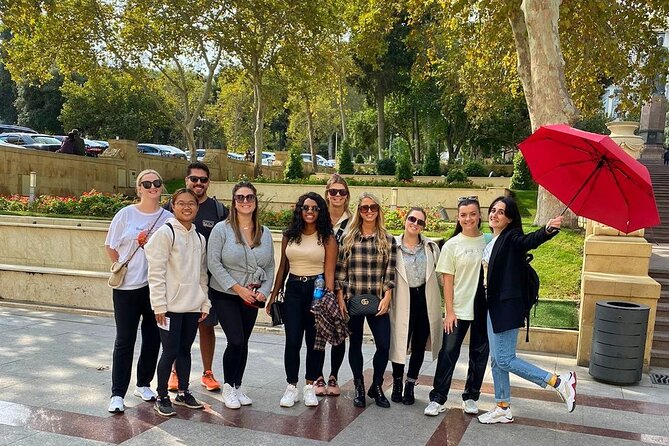
At Philharmonic Fountain, the guide explains one of the gardens created as Baku grew beyond the fortress. This stop is also linked to Ali and Nino, the well-known story set in the Caucasus and associated with Baku.
The book reference gives the place a literary angle. Instead of hearing only dates and building names, you get a sense of how Baku has been imagined through stories about love, identity, and cultural difference.
The stop itself is short, about 10 minutes. That pace works well for an outdoor walking tour, though it means the guide must choose the main points rather than cover every detail.
Baku City Executive Power and European influence
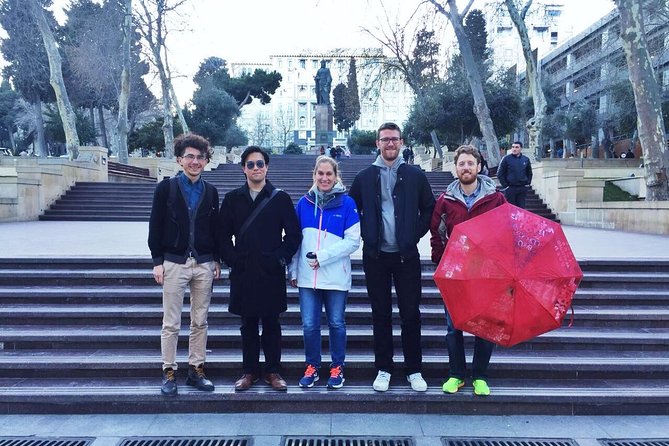
Baku City Executive Power, formerly the town hall, is one of the most imposing oil-boom buildings on the route. It helps explain how oil wealth translated into civic architecture and how European design influences appeared in a city on the Caspian Sea.
The guide uses the building to discuss Baku’s cosmopolitan character and the mix of groups involved in the city’s growth. This is one of the better stops for understanding that the oil boom was not simply a local story. It brought money, businesses, workers, officials, and new ideas from different parts of the region and beyond.
You stop outside for about 10 minutes. That is enough for an explanation and photographs, but not for a detailed architectural study.
Saadet Sarayi and a personal oil-baron story
Saadet Sarayi, or the Palace of Happiness, brings the oil boom down to a personal scale. The story centers on an oil baron and his wife, and the mansion now serves as a marriage registry.
That present-day use gives the building an appealing link between past and present. A private residence funded by oil wealth is still tied to weddings and family life. It is the kind of detail that helps you remember the building after the tour.
This is another exterior stop, with about 10 minutes devoted to the story. If you enjoy buildings with a human plot behind them, this may be one of the more memorable moments on the route.
The former Taghiyev School for Girls
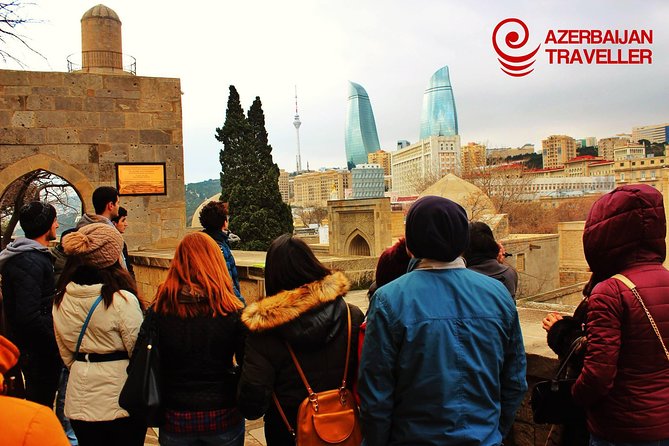
The former Taghiyev School for Girls, now the Institute of Manuscripts of Azerbaijan, is one of the most meaningful stops because it shifts attention from wealthy men and grand facades to education and social change.
The guide explains the school as the first secular school for Muslim women and places it within the wider modernization of Baku and Azerbaijan. That subject adds balance to the oil-boom story. Wealth did not only produce palaces. It also supported institutions that changed who could study and take part in public life.
The building is discussed from outside, and the stop lasts about 10 minutes. I would pay close attention here if you want more than architecture. This is where the tour best shows how the city’s transformation affected everyday life and social expectations.
Ismailiyya Palace and a memorial in stone
Ismailiyya Palace was commissioned by an oil baron in memory of his son. Its Venetian Gothic style makes it one of the most distinctive buildings on the route, and its purpose gives the facade a strong emotional charge.
The building is not just an example of imported design. It is also a memorial shaped by personal loss and public wealth. That combination helps explain why so many Baku landmarks feel grand, dramatic, and highly individual.
The guide discusses the palace from outside for about 10 minutes. As with the other architectural stops, the value comes from the story and setting rather than interior access.
What the guide adds to the walk
The best guide can turn a short city walk into a readable story, and this experience depends heavily on that person. Gani is frequently identified as the guide, with praise for his clear English, humor, strong command of historical detail, and ability to keep a group engaged. He is also described as patient when answering questions and good at connecting architecture with politics, culture, and daily life.
Lina is also named as a guide for an informative introduction to the Old City. Because the guide is not guaranteed by name in the tour details, check who will lead your departure if that matters to you.
Historic diagrams and photos are a practical strength. A building can be impressive in the present, but old images help you see what changed, what disappeared, and how oil wealth altered the city. The personal format also gives you a chance to ask about subjects that interest you, from food and language to Soviet-era changes.
The tour is described as private, yet the additional information gives a maximum of 30 participants. Those details do not fully match. If you are booking for a small party and expect a truly private walk, confirm the group arrangement in advance.
Is $70 a fair price?
At $70 per person, this is not a budget stroll. You are paying for a guide-led historical explanation, not for admission tickets or transportation. Bottled water is included, while lunch and all entry fees are extra.
The price makes better sense if you want a structured introduction to Baku and prefer to ask questions as you go. It is also more attractive for a small group using the guide’s attention well. Group discounts may be available, so check the current terms if several people are booking together.
The value is weaker if you mainly want to enter the Maiden Tower or Shirvanshahs’ Palace. You will need to pay separately and return on your own. I would see this walk as a city orientation and history lesson, then budget for separate museum and monument visits.
Practical details for the 2.5-hour walk
The full experience lasts about two and a half hours and ends back at Fountain Square. There is no private vehicle, so comfortable shoes matter. The route includes paved streets, narrow lanes, and outdoor stops, with no promise of indoor shelter at each location.
Most people can participate, and service animals are allowed. The experience requires good weather, and it also requires a minimum number of participants. If poor weather or low numbers force cancellation, you can choose another date or receive a full refund.
Free cancellation is available up to 24 hours before the local start time. Within 24 hours, the payment is not refunded, and changes are not accepted.
Who should book this Baku walk?
I would recommend it to first-time visitors who want the city’s major historic areas explained in one sitting. It suits people who enjoy architecture, political history, personal stories, and the way cities change over time.
Families can also find it worthwhile. The route is short enough for many older children, and a guide who tells stories with humor can hold attention better than a list of dates. One guide experience specifically included children aged 10 and 12, who enjoyed the walk.
I would hesitate if your main goal is interior sightseeing, a food tour, or a vehicle-based overview. This is a walking lesson in Baku’s past, with several exterior stops and no lunch included.
Should you book the Oil Heritage and Old Town Walking Tour?
Book it if you want Baku to feel connected rather than scattered. The walk links medieval Icherisheher, oil-boom architecture, women’s education, personal wealth, and Soviet-era context in a manageable 2.5-hour route.
The strongest reason to choose it is the guide-led storytelling, especially if you are paired with Gani or Lina. The clearest reason to skip it is the lack of interior admissions. If you accept that tradeoff, $70 can be fair for a focused introduction that helps you decide what deserves a closer look later.
FAQ
How long is the Baku Oil Heritage and Old Town Walking Tour?
The tour lasts approximately 2 hours and 30 minutes.
Where does the tour start?
It starts at KFC9RCP+28F on Nizami Street in Baku, near Fountain Square.
Where does the tour end?
The walk ends back at the meeting point at Fountain Square.
Is the tour private?
The experience is described as a private tour with a personal guide, but the additional information lists a maximum of 30 participants. Confirm the group arrangement when booking if privacy is important to you.
Does the tour enter the Maiden Tower or Shirvanshahs’ Palace?
No. The guide explains both sights from the entrance and uses historic photos, but admission is not included.
What sights are covered in Baku Old City?
The route covers Gosha Gala gate, the 12th-century citadel walls, Maiden Tower, Muhammad Mosque, the narrow Old City streets, Shirvanshahs’ Palace, and the Museum of Miniature Books.
Is transportation included?
No. Private transportation is not included. The tour takes place on foot, and public transportation is available near the meeting point.
What is included in the price?
Bottled water is included. Lunch and admission fees are not included.
Can I cancel for a full refund?
Yes, if you cancel at least 24 hours before the local start time. Cancellations or changes made within 24 hours are not refunded or accepted.
More Walking Tours in Baku
- Baku Downtown Original Walking Tour
★ 5.0 · 36 reviews - Baku: Old City Walking Tour
★ 3.9 · 21 reviews - Coolest Baku Walking Tour
★ 5.0 · 20 reviews - Baku Soviet Architecutre Gudied Walking Tour
★ 5.0 · 14 reviews
Just added around Baku
- Wine Tour Baku★ 5.0 · 4 reviews
- Baku Sightseing Tour★ 5.0 · 12 reviews
- Traditional Azerbaijani Cuisine Workshop★ 5.0 · 5 reviews
- The Magnificent Baku Night Tour★ 5.0 · 3 reviews
- Day Trip in Baku★ 5.0 · 6 reviews
- Baku Old City Tour★ 4.5 · 12 reviews
- Guided Old City Tour on Baku’s Timeless Charm★ 5.0 · 4 reviews
- Old City Walking Tour★ 5.0 · 6 reviews
Old City Tours, compared.
Guba Khinalug & Candy Cane Mountains tour (by Old City Tours)
Read our review →
Baku Old City Tour (officially by Old City Tours)
Read our review →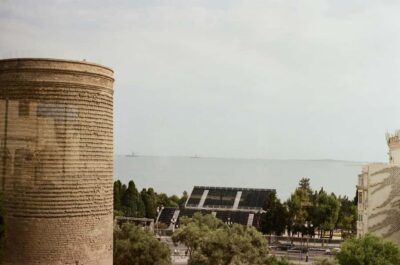
Baku Old City Wonders: A Walking Tour Through Time
Read our review →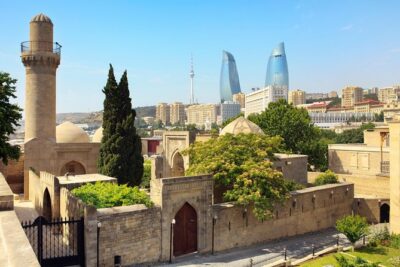
Browse the lists this tour appears in