
Reviewed · GOBUSTAN TOURS
Gobustan-Absheron Tour
Bubbling mud volcanoes, ancient rock drawings, and flames rising from the earth make this one of the most varied day trips from Baku. You move from prehistoric carvings to Soviet-era oil pumps, then on to the fire-worshipping past of Absheron. Gobustan and Absheron show Azerbaijan at its strangest and most memorable.
I like the sensible small-group limit of 18, and I like the range of stops packed into one day. Guides such as Naz, Nazef, Emir, and Mishfig have been praised for strong storytelling and good organization. The main catch is the price information: one section says lunch is included, while the detailed inclusions say it is not. Entrance fees are also listed separately, so confirm the final cost before you pay.
The day is long, usually 9 to 11 hours, and some stops are more impressive than others. You will spend plenty of time in the vehicle, but this is a practical way to see places that are spread across the Gobustan and Absheron regions without arranging several separate trips.
Key things to know before you book
- Mud volcanoes require a rougher ride: An old four-wheel-drive vehicle may take you over the final stretch to the volcanoes.
- Gobustan combines museum time and outdoor walking: Plan for about an hour at the rock art area and another hour around the cultural site and modern museum.
- Fire is the theme of the second half: Ateshgah Fire Temple and Yanar Dag explain why Azerbaijan has long been linked with sacred and natural flames.
- Guides shape the day: Naz, Nazef, Emir, and Mishfig received especially warm praise for history, organization, and adapting explanations to the group.
- Allow for extra charges: Mud volcanoes, the open-air museum, Fire Temple, Yanar Dag, and the Natural History Exhibition are listed as not included.
- The group is capped at 18: That is small enough for questions without promising a private tour.
Why this long day trip works from Baku
Baku is easy to enjoy on foot, but its most unusual sights lie outside the central streets. Gobustan and Absheron cover a broad area, and public transport will not give you the same simple connection between mud volcanoes, prehistoric rock art, a fire temple, and a burning hillside.
This tour handles the transport in an air-conditioned vehicle and provides an English or Russian-speaking guide. The start point is at 1 Azərbaycan Prospekti, Baku 1005, near public transportation. The activity returns to that same meeting point.
The schedule begins in the morning and finishes late in the day. That makes it a strong choice if you have only a few days in Azerbaijan and want to see the country beyond the capital. It is less suitable if you prefer slow museum visits, long meals, or plenty of free time at each sight.
The group size matters. A maximum of 18 people is not the same as a private tour, but it is more manageable than a large coach. Several booking experiences also ended up with very small groups, including one private departure, though you should not count on that happening.
More trips out to the Gobustan petroglyphs:
- Baku: Gobustan, Mud Volcano, Fire Mount, Temple Lunch Entry
★ 4.9 · 3,246 reviews - BEST Gobustan, Volcanoes & Absheron Fire Tour (Group or Private)
★ 5.0 · 1,254 reviews - Gobustan and Absheron tour (All inclusive)
★ 5.0 · 1,014 reviews
Azerbaijan’s first oil well and the road out of Baku
The first short stop is connected to the country’s oil story. The well was drilled in 1846 and first produced oil on July 14, 1848. That early attempt helped push oil production forward, and the area still has pumpjacks built during the Soviet period.
You get about 15 minutes here, so think of it as a quick orientation rather than a full museum visit. The stop adds useful context: Azerbaijan’s petroleum wealth did not begin with modern skyscrapers and offshore platforms. It began with early drilling in this dry region.
The pumpjacks still working nearby make the point more clearly than a plaque would. I like this stop because it connects the older sights to the modern country you see in Baku. If oil history does not interest you, it will feel brief enough not to slow the day.
Mud volcanoes on a moonlike plain
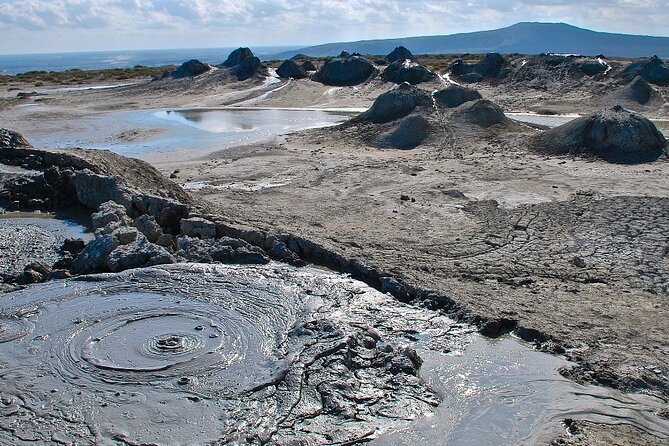
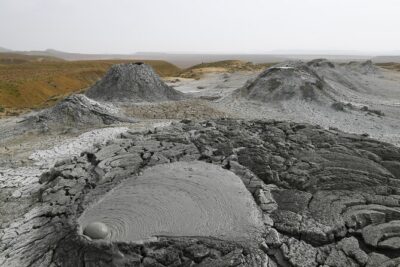
The mud volcanoes are the tour’s most unusual natural stop. Instead of hot lava, these cones push mud and gas from underground, creating a bare, gray-brown setting that can look almost lunar. The area has been active for hundreds of years, and local beliefs once linked it with jinn, or demons.
You spend about an hour here, including the approach along a small trail. The terrain gives you a strong sense of open space, but do not expect a polished national park with paved paths and interpretive signs at every turn. This is a rougher, more elemental stop.
A particularly useful detail from the day is the transport to the volcanoes. An old four-wheel-drive vehicle may handle the final route, which adds character but can also make the ride bumpy. Wear shoes you can walk in and avoid bringing anything you need to keep perfectly clean.
The volcanoes are also weather-dependent in how they look and feel. In dry conditions, the ground can appear stark and exposed. The stop is about geology, local belief, and an odd natural scene rather than a grand viewpoint or a long guided activity.
Gobustan’s prehistoric rock drawings
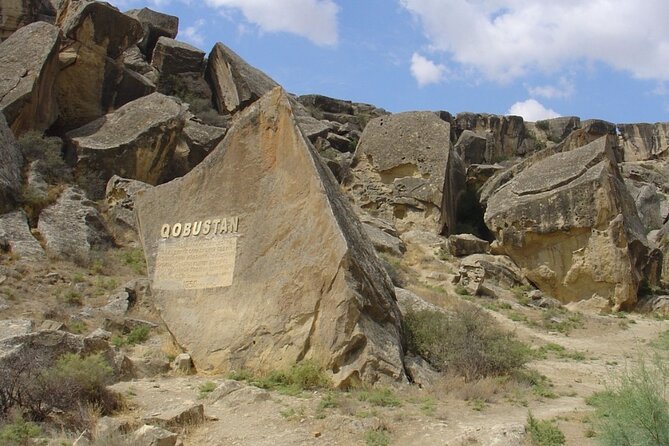
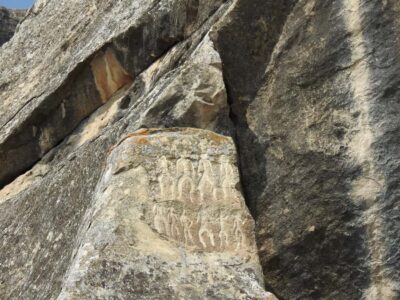
Gobustan gives the day its archaeological center. The rock carvings show scenes from prehistoric life and provide clues about hunting, survival, social order, and daily routines. Your guide explains how early Homo sapiens lived in difficult conditions and why these drawings matter.
You should expect about an hour of walking and listening. The site is more rewarding when the guide gives the images a human story instead of treating them as isolated marks on stone. Look closely, since some carvings may be less obvious than the larger and more familiar figures.
The value here is not simply seeing old drawings. Gobustan lets you think about the people who made them, what they feared, and what they considered worth recording. You will get more from the stop if you are willing to pause and listen rather than rush from one carving to the next.
The outdoor museum admission is listed as extra. That is important when comparing the $29 tour price with other options. Add the ticket cost to your budget, and ask at booking whether the current package handles the payment for you or requires payment on the day.
More days on the Absheron Peninsula:
- Baku: Gobustan Absheron Tour Entry Tickets included
★ 4.9 · 329 reviews - Baku: Gobustan-Absheron Tour with Hotel PICK UP and DROP OFF
★ 4.8 · 170 reviews - Baku: Gobustan/Absheron guided tour with lunch and tickets
★ 4.8 · 158 reviews - Gobustan and Absheron peninsula ( Group or Private ) TOUR ( All inclusive )
★ 5.0 · 130 reviews
The cultural site and the Cro-Magnon story
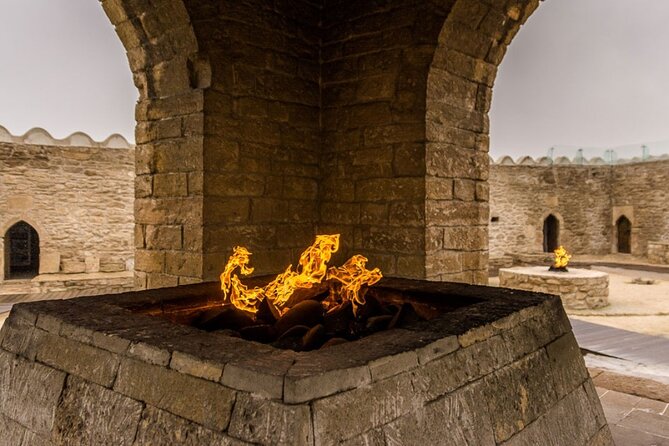
The next Gobustan stop adds a museum element to the outdoor visit. You are shown a modern exhibition about early human life before continuing around the cultural site. The presentation is meant to give context for the carvings and explain what daily life may have looked like in the area.
The description uses the language of a village of early Cro-Magnons untouched by human hands. Treat that as an interpretation of the prehistoric setting, not as a preserved town with intact houses and streets. The main value is the combination of museum information, guide commentary, and outdoor rock art.
About an hour is allowed here. That is enough for an overview, but not for a slow academic visit. I would pay attention to the guide’s explanation of the images and survival skills, then use the walking time to examine the site at your own pace.
This part can feel similar to the previous Gobustan stop, since both focus on prehistoric people and rock art. The distinction is useful: one emphasizes the carvings outdoors, while the other adds a museum and wider cultural context.
Lunch and the question you should settle first
The schedule includes a one-hour meal in Baku at a restaurant called Baku Restaurant. The meal is described as a traditional three-course lunch with tea, and the tour information presents it as a chance to try national Azerbaijani dishes before continuing to Absheron.
Here is the practical complication: the overview and several booking experiences describe lunch as provided, but the detailed included and not included sections say lunch is not included. One booking experience also noted slow service. Ask the operator exactly what the $29 covers, what menu is offered, and if lunch is paid separately.
A set menu can be convenient after a morning of outdoor stops, especially if you do not want to search for a restaurant. It can also limit choice. Vegetarian food is available if requested at booking, so mention that early rather than relying on a last-minute change.
The restaurant stop breaks up the long day. You will want the rest, but a slow meal can push the evening later. If returning to Baku at a fixed time matters, ask how much time is normally allowed for lunch.
Ateshgah, the Temple of Fire
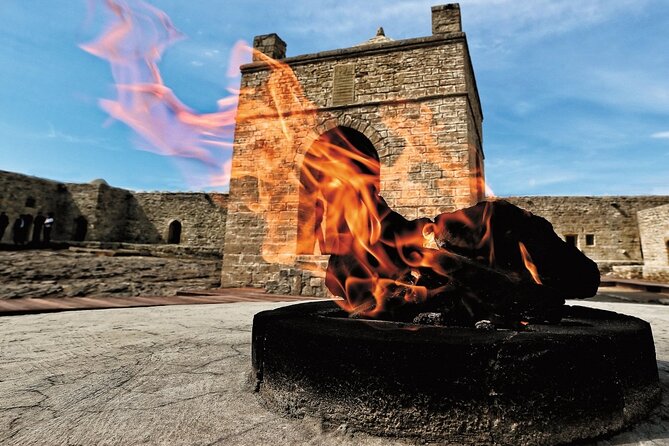
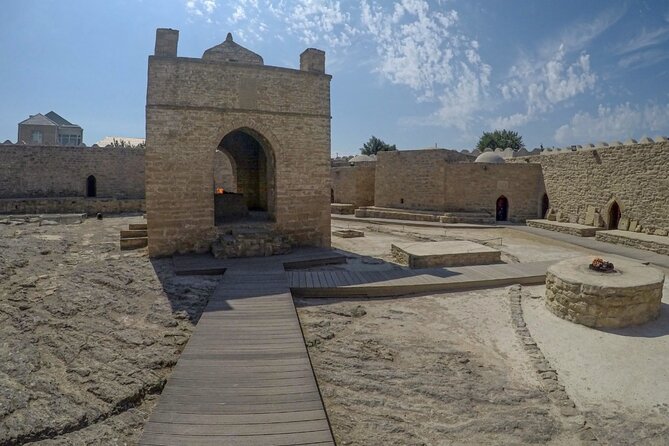
Ateshgah is the historical heart of the Absheron section. The site is linked with the natural flames that once rose from the ground and with fire-worshipping traditions associated with Persian Zoroastrians and Hindu Brahmanites. The temple complex also includes a caravanserai, where merchants could rest while crossing this busy crossroads.
You get about 30 minutes here, which is enough for a focused visit but not a long, unhurried examination of every room. The temple matters because it brings together religion, trade, and geology. Fire was not just a natural oddity. It shaped the identity of the place and drew people from far beyond Azerbaijan.
Your guide can make the difference here. The best explanations connect the temple’s layout with everyday life: where merchants stayed, how fire worship worked, and why this site attracted people over many centuries. The stop is less about a single dramatic view and more about understanding the ideas attached to the flames.
The Fire Temple ticket is listed as extra. Include that cost when judging the value of the package. The tour saves you the trouble of arranging transport between sites, but the advertised base price is not the full cost of every admission.
Yanar Dag and the final flames
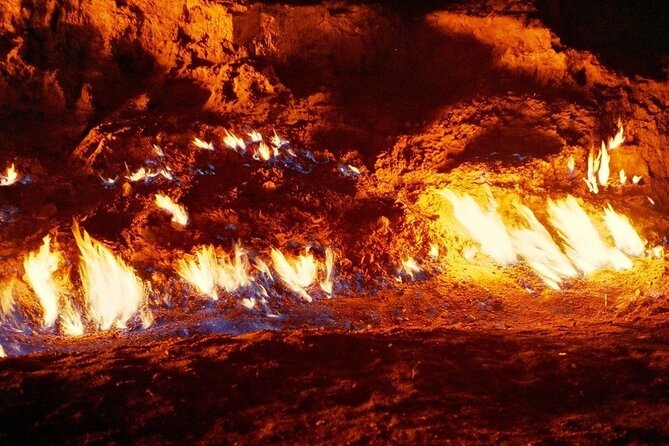
Yanar Dag means Burning Mountain, and the name describes the sight plainly. Flames rise from the ground on the hillside, fed by natural gas. You spend about an hour here, taking in the fire and the view over the surrounding area.
This is a strong final stop because it returns the tour to its central theme. The mud volcanoes showed pressure and gas below the surface, Ateshgah showed how people built beliefs around fire, and Yanar Dag gives you the natural phenomenon itself.
Do not expect a huge mountain fire or a full-day nature walk. The attraction is concentrated in one burning section, with the surrounding view adding context. The stop is brief enough to fit into a busy day, but memorable enough to justify the drive.
Yanar Dag admission is also listed separately. By this point, you may be ready to return to Baku, especially if the day began early. The final ride back gives you time to rest, but the full experience can run close to 11 hours.
Guides, vehicles, and the human side of the day
The strongest part of this experience is likely to be the guide. Names attached to especially positive experiences include Naz, Nazef, Emir, and Mishfig. Naz was praised for useful historical detail, while Nazef was credited with linking past events to the present and adjusting the material to the group. Emir was described as helpful and highly informative.
That does not mean every departure will feel identical. One poor experience focused on a guide who hurried the group and gave explanations in a flat, unpleasant way. This is a useful warning: the sights are spread out, and the guide controls the pace and tone of the day.
The vehicle has air-conditioning, which matters during a long day across exposed terrain. The tour includes professional English and Russian guide service. It does not promise a specific guide, so you should see the names above as examples of strong guide assignments, not a guarantee.
The four-wheel-drive ride to the mud volcanoes may be one of the more entertaining transport moments. It can also be rough. If you have mobility concerns, ask the operator for current details before booking, since the general information only says most people can participate.
Is $29 a good value?
At $29 per person, the base price is attractive for a full day that links several distant sights. Transport, an English or Russian-speaking guide, and the planning between stops give you practical value. You avoid negotiating several rides or trying to build a complicated route yourself.
The calculation changes once you add admission fees. The mud volcanoes complex, open-air museum, Fire Temple, Yanar Dag, and Natural History Exhibition are listed as not included. Lunch is also unclear, despite being described elsewhere as provided.
I would book this at $29 only after confirming the total. Even with several extra charges, the convenience may be worthwhile, especially for a first visit to Baku. But do not compare the headline price with a competing tour until you know which admissions and meal are included in each.
The tour is recommended by 97 percent of booking participants and carries a 4.8 rating from 105 ratings. Those figures point to a generally dependable experience, while the less favorable guide account reminds you that the individual departure still matters.
Who should book this day out?
I would choose this tour if you have limited time in Baku and want a broad introduction to Azerbaijan’s prehistoric, religious, geological, and oil-producing past. It suits curious first-time visitors who prefer a planned day and like having a guide explain what they are seeing.
It is also a good fit for people who want several headline sights without renting a car. Families and mixed-age groups may appreciate the range of short stops, though the long day and uneven ground at the volcanoes should be considered.
I would look elsewhere if you want a relaxed pace, a guaranteed private guide, or a detailed archaeological visit. You may also prefer a shorter tour if you dislike long drives or fixed meal arrangements.
The cancellation terms are friendly: you can receive a full refund if you cancel at least 24 hours before the local start time. Changes or cancellations made within 24 hours are not accepted for a refund.
Should you book the Gobustan-Absheron tour?
Book it if you want the most efficient first look at the strange and varied sights outside Baku. The mud volcanoes, Gobustan carvings, Ateshgah, and Yanar Dag give you four very different experiences in one long day, and a good guide can turn the route into a connected story.
Before booking, confirm three things: the exact guide language, the total admission cost, and whether lunch is included. If those details suit your budget, this is a strong-value introduction to the region. Just bring patience for a long schedule and realistic expectations about the rougher stops.
FAQ
How long does the Gobustan-Absheron tour last?
The tour lasts approximately 9 to 11 hours. It starts in the morning and returns to the meeting point in Baku late in the day.
Where does the tour start and end?
It starts at 1 Azərbaycan Prospekti, Baku 1005, Azerbaijan. The activity ends back at the same meeting point.
What sights are included in the route?
The route includes the first oil well, mud volcanoes, Gobustan rock art, the Gobustan cultural site and museum, Ateshgah Fire Temple, and Yanar Dag.
Are entrance tickets included?
The detailed tour information lists admission to the open-air museum, Fire Temple, Yanar Dag, Natural History Exhibition, and Mud Volcanoes Complex as not included. Confirm the current ticket arrangement before booking.
Is lunch included?
The information is inconsistent. The tour description presents a traditional three-course lunch with tea, but the detailed inclusions list lunch as not included. Ask the provider to confirm this before payment.
Is a vegetarian meal available?
Yes. A vegetarian option is available, but you should request it when booking.
What languages does the guide speak?
The tour includes professional English and Russian guide services.
How large is the group?
The tour has a maximum of 18 people. Some departures may be smaller, but a private tour is not guaranteed.
Can I cancel for a full refund?
Yes. You can cancel at least 24 hours before the experience start time for a full refund. Cancellations or changes made less than 24 hours before the start time are not accepted for a refund.
Just added around Baku
- Wine Tour Baku★ 5.0 · 4 reviews
- Baku Sightseing Tour★ 5.0 · 12 reviews
- Traditional Azerbaijani Cuisine Workshop★ 5.0 · 5 reviews
- The Magnificent Baku Night Tour★ 5.0 · 3 reviews
- Day Trip in Baku★ 5.0 · 6 reviews
- Guided Old City Tour on Baku’s Timeless Charm★ 5.0 · 4 reviews
- Baku Old City Tour★ 4.5 · 12 reviews
- Old City Walking Tour★ 5.0 · 6 reviews
Gobustan Tours, compared.
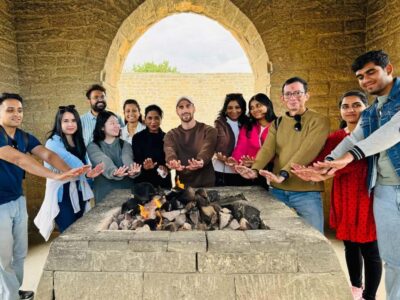
Gobustan, Mud Volcano, Fire Mount, Temple Lunch Entry
Read our review →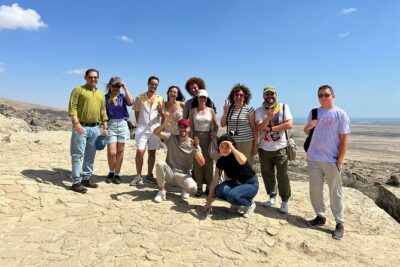
BEST Gobustan, Volcanoes & Absheron Fire Tour (Group or Private)
Read our review →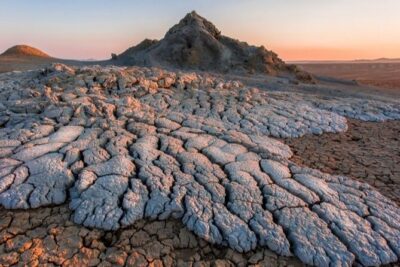
Gobustan, Volcanoes, Fire Temple and Yanardag Day Trip
Read our review →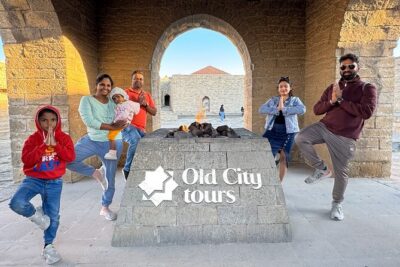
Gobustan & Mud, Fire Temple, Burning Mountain (Group & Private)
Read our review →
Mud Volcan-Fire Temple and Mountain Tour/Entrance inc
Read our review →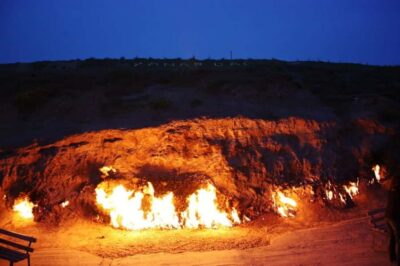
Gobustan Mud Volcanoes Temple & Entry tickets included
Read our review →Browse the lists this tour appears in