
Reviewed · GOBUSTAN TOURS
Baku: Gobustan and Absheron Adventure Tour
A hillside burning from natural gas, mud bubbling out of the earth, and thousands of prehistoric carvings make this one of Baku’s most unusual day trips. The route links Gobustan’s rock art with Absheron’s fire sites, so you get ancient culture and strange geology in one outing.
I like the hotel pickup and the strong guiding. Javid, Kamal, Murad, Aysu, and others have been praised for clear English, historical context, and patient help. The main catch is the low advertised price: entrance fees are extra, and the mandatory mud volcano charge is paid in cash.
Key points to know before booking
- Gobustan’s petroglyphs date back as far as 40,000 years, giving the tour its strongest historical stop.
- The mud volcano visit can feel like a jeep excursion, with rough ground and bubbling gray mud.
- Ateshgah and Yanar Dag explain Azerbaijan’s Land of Fire identity through religion, natural gas, and local tradition.
- The $9 starting price does not cover every admission fee, so budget for Gobustan, the mud volcanoes, Ateshgah, and Yanar Dag.
- The six to seven hour route works best if you have more than two days in Baku and want to see the country beyond the city center.
- Comfortable shoes matter, and an empty bottle lets you take a little mud home as a souvenir.
Why this six-hour route is worth your time
Baku is a polished capital with grand architecture, but Azerbaijan makes more sense once you leave the city. This tour takes you into the dry surroundings of Gobustan and the Absheron Peninsula, where oil, gas, worship, and prehistoric life all meet.
The route is busy, but it is not random sightseeing. Each stop adds a different piece to the story. Gobustan shows early human life. The mud volcanoes reveal the country’s active geology. Ateshgah explains how natural gas shaped religious practice. Yanar Dag turns the same underground fuel into a natural flame.
You can expect roughly six to seven hours, hotel pickup in Baku, air-conditioned transport, and an English or Russian-speaking guide. The pace is designed to cover all the major stops without leaving you stranded at each site for too long. A guide makes a real difference here because several places need context before they become interesting.
The exact guide varies. Past departures have included Javid, Kamal, Murad, Aysu, Ayedan, Berkay, Magsud, and others. The strongest praise has focused on clear English, friendly manner, careful timing, and the ability to explain Azerbaijan’s geography and history in plain terms.
More trips out to the Gobustan petroglyphs:
- Baku: Gobustan, Mud Volcano, Fire Mount, Temple Lunch Entry
★ 4.9 · 3,246 reviews - BEST Gobustan, Volcanoes & Absheron Fire Tour (Group or Private)
★ 5.0 · 1,254 reviews - Gobustan and Absheron tour (All inclusive)
★ 5.0 · 1,014 reviews
Bibi-Heybat Mosque gives the day a quiet start
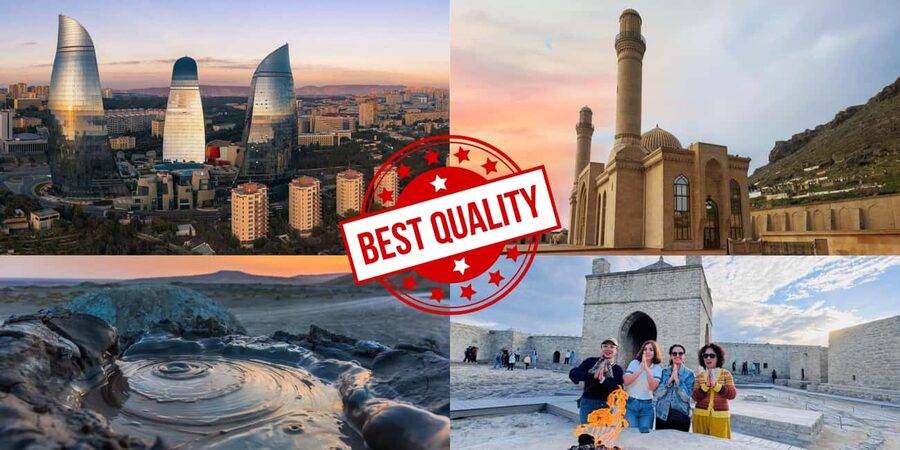
The Bibi-Heybat Mosque is included among the tour highlights and provides a useful introduction to Azerbaijan’s religious culture. It is not the main reason to book this excursion, but it adds an important human element before the prehistoric sites and fire attractions.
You should treat this as a short stop rather than a long architectural visit. The value lies in seeing a working religious landmark connected to the wider culture of the region. Your guide can help explain what you are seeing, which is especially useful if you know little about Azerbaijan before arriving.
Because the day covers many locations, do not expect extended time at every stop. If religious sites matter greatly to you, ask the guide how much time is planned at Bibi-Heybat when pickup begins.
Gobustan’s 6,000 petroglyphs are the day’s strongest history lesson
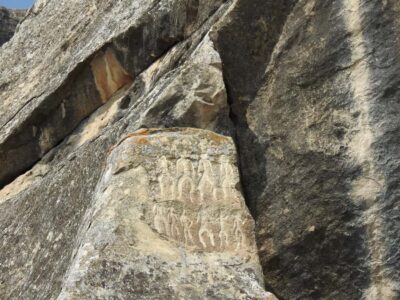
Gobustan National Park is the heart of the tour. Its rock art reserve contains more than 6,000 petroglyphs, some dating back 40,000 years. The carvings show how early people hunted, moved, and represented the world around them.
This is where a guide earns the fare. Rock carvings can look like scratches until someone points out the animals, people, boats, hunting scenes, and patterns. With explanation, the site becomes a record of daily life rather than a collection of weathered stones.
You will also see caves and rocky ground tied to early human settlement. The setting is open and exposed, so bring water and wear shoes with a firm sole. Uneven terrain is part of the visit, and flimsy footwear will make the stop less enjoyable.
I especially like this part of the tour because it gives you something that Baku’s modern center cannot. You are not simply looking at an old building. You are seeing evidence of people who lived here long before written records.
Allow your guide to explain the carvings instead of rushing ahead for photographs. The images are small in places, and their meaning is easier to grasp when someone gives you a little background.
The mud volcanoes turn the road into an off-road adventure
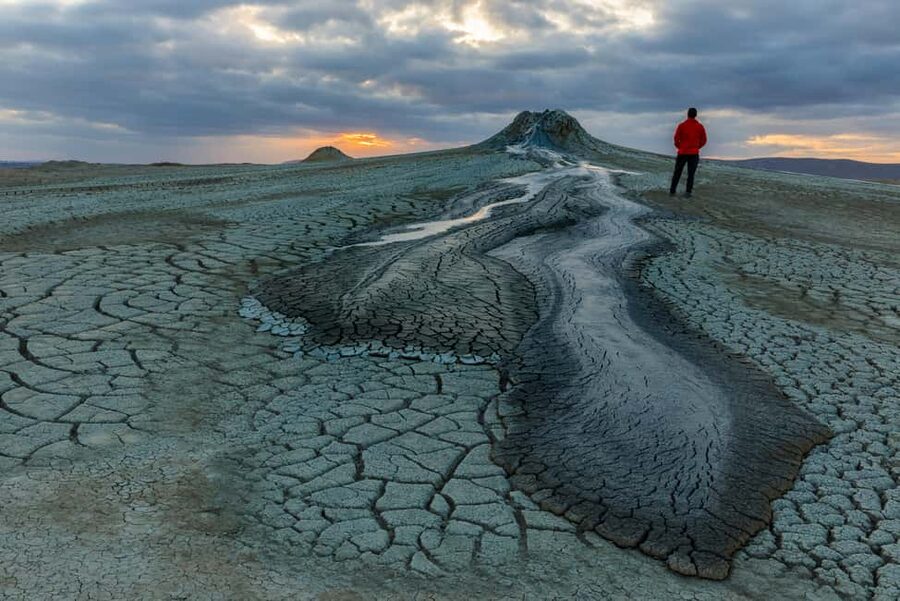
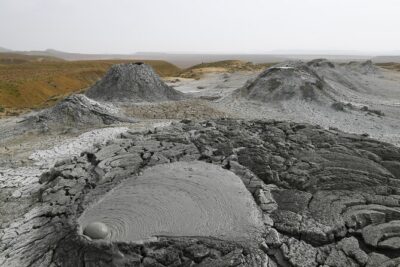
The Gobustan mud volcanoes are among the most unusual stops in Azerbaijan. Gas rises from below ground, causing mud to bubble, hiss, and spread across a bare, otherworldly patch of earth.
This is not the same as visiting a volcano with glowing lava. The attraction is the strange movement of the mud and the knowledge that gases are escaping from deep underground. The result is quiet, messy, and memorable.
The transfer to the mud volcano area can feel like a small jeep safari. That rougher ride is part of the fun, but it also means you should not expect a smooth road all the way to the site. The ground around the volcanoes can be uneven, and shoes may get dusty or muddy.
An empty bottle is recommended if you want to collect a little mud as a souvenir. Keep it modest and follow the guide’s instructions. The mud volcano visit has a mandatory 30 AZN fee, paid in cash, and that charge still applies in rainy weather when the visit is redirected to the Mud Volcanoes Complex.
This is the stop most likely to divide people. If you enjoy odd natural sights and rougher transport, it may become your favorite part. If you prefer polished museums and paved paths, it may feel basic. Either way, it is difficult to find a similar experience close to a capital city.
More days on the Absheron Peninsula:
- Baku: Gobustan Absheron Tour Entry Tickets included
★ 4.9 · 329 reviews - Baku: Gobustan-Absheron Tour with Hotel PICK UP and DROP OFF
★ 4.8 · 170 reviews - Baku: Gobustan/Absheron guided tour with lunch and tickets
★ 4.8 · 158 reviews - Gobustan and Absheron peninsula ( Group or Private ) TOUR ( All inclusive )
★ 5.0 · 130 reviews
Ateshgah Fire Temple connects faith with natural gas
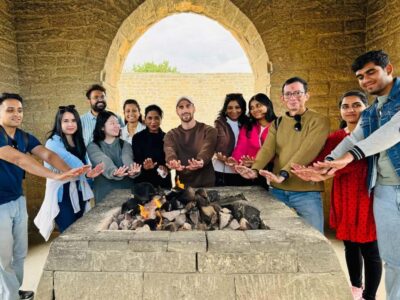
Ateshgah Fire Temple is a former place of worship linked with Zoroastrians and Hindu visitors. The present complex dates to the 17th century, and its central flame was fueled by natural gas.
The site helps explain why fire has such a strong place in Azerbaijan’s identity. This was not simply a flame for decoration. For worshippers, a naturally burning fire carried spiritual meaning and gave the site a powerful sense of place.
The temple itself is more structured and readable than the mud volcanoes. You can walk through the complex, see the central shrine, and learn how religious travelers used the location. Your guide’s explanation is useful here because the site brings together local geology, trade routes, and religious traditions.
One practical point matters: the admission to Ateshgah is not included in the basic $9 price. The stated combined charge for Ateshgah and Yanar Dag is 15 AZN. You can choose an option that includes entrance fees, but check the booking choice carefully before paying.
The temple is a good stop for visitors who want more than scenery. It gives the day a human story and shows how the natural gas beneath the peninsula affected belief and travel.
Yanar Dag is a short, dramatic finale
Yanar Dag, or the Burning Mountain, is a natural gas fire that burns from a hillside. Flames rise directly from the ground, creating one of Azerbaijan’s most recognizable sights.
The effect is strongest when you understand what you are seeing. This is not a staged fire show. It is a natural gas flame that has continued burning for centuries, a reminder of the fuel beneath the Absheron Peninsula.
The visit is usually more visual than the Ateshgah stop. You will want photographs, but give yourself time to watch the flame and listen to the guide’s explanation. Wind and daylight can affect how dramatic the fire looks, so keep expectations sensible. It is a striking feature, but not a huge site that fills an entire afternoon.
Yanar Dag makes a fitting final stop because it ties together the tour’s main ideas. Early people recorded their world in stone. Gas pushes mud from the earth. Fire emerges from the hillside. Azerbaijan’s nickname, the Land of Fire, begins to make practical sense.
The low price needs a careful calculation
The advertised price is $9 per person, which is unusually low for a six to seven hour excursion with hotel pickup, transport, and a guide. At that price, the tour can be excellent value, but only if you add the compulsory costs before comparing it with other options.
The listed fees are:
- Gobustan: 10 AZN
- Mud Volcanoes: 30 AZN, cash and mandatory
- Ateshgah and Yanar Dag: 15 AZN
That totals 55 AZN in entrance charges when paid separately, before lunch. The basic fare therefore is not the complete cost of the day. The experience provider also offers an entrance-fees-included option, which may be easier if you want to avoid carrying cash and paying at several stops.
There is no lunch included. You should plan for that gap, especially because the tour takes most of a day. The supplied information does not specify a particular restaurant or meal arrangement, so do not assume food is part of the package.
The value remains strong if you want to see all four major attractions without arranging separate taxis. You are paying for transport, pickup, and a guide who can connect the sites. The fee becomes less attractive only if you already have a car and prefer to visit each place at your own speed.
Guides and transport shape the day
The vehicle is described as modern, comfortable, and air-conditioned. That matters in an exposed region where the road time between Baku and the sites can add up. Hotel pickup also saves you from finding an early meeting point across the city.
The group size is not specified, so ask if that affects your decision. The service can also arrange private guides on request. That may suit families or small groups who want more control over photo stops and explanations.
Guide quality is one of the tour’s strongest features. Javid has been praised for helping with questions and speaking several languages. Kamal is known for energetic, clear English and an easy sense of humor. Murad has been praised for explaining each stop without rushing, while Aysu and Ayedan have been noted for strong historical explanations.
Magsud has also been credited with explaining Azerbaijan’s history, industry, geography, and relationship with Armenia in an accessible way. Those subjects can be complicated, so a calm guide who avoids jargon is a real advantage.
The experience is not just a driver dropping you at gates. The best guides help you connect the sites, answer questions, and keep the day moving. Still, guide assignments can change, so book for the route and service rather than expecting one named person.
Weather, shoes, and timing matter
Wear sturdy, comfortable shoes. Gobustan and the mud volcano area include uneven ground, and you will enjoy the day more if you can walk without worrying about every step.
Bring water and consider sun protection for the open areas. The tour information specifically suggests an empty bottle for mud, a clever small touch if you want a low-cost souvenir.
Rain can change the mud volcano arrangements. The route may shift to the Mud Volcanoes Complex, but the 30 AZN fee remains payable. This is worth understanding before departure, since wet conditions can change the feel of an outdoor stop.
The tour lasts about six to seven hours, so it is a good choice when you have more than two days in Baku. If you have only one full day, you may prefer to keep your time in the capital. If you have several days, this outing gives you a needed contrast to museums, boulevards, and city architecture.
The pace is generally efficient. You see the main points without spending the whole day at one archaeological site, though visitors who like slow photography or long independent walks may find the schedule a little tight.
Who should book this Baku day trip?
I would choose this tour if you want a broad introduction to Azerbaijan outside Baku and prefer having transport and explanations handled for you. It suits curious first-time visitors, history fans, photographers, families, and anyone intrigued by unusual geology.
It is also a good match for people who enjoy variety. In one day, you move from Islamic architecture to prehistoric carvings, then from mud volcanoes to Zoroastrian and Hindu connections, finishing beside a natural flame.
I would think twice if you dislike uneven ground, outdoor heat, rougher vehicle rides, or extra admission payments. The $9 headline price can also mislead if you do not account for the 55 AZN in stated site fees and the cost of lunch.
Book the entrance-fees-included option if convenience matters more than finding the lowest starting price. You can reserve now and pay later, and cancellation is allowed up to 24 hours in advance for a full refund.
FAQ
How long does the Gobustan and Absheron tour last?
The tour lasts approximately six to seven hours.
Is hotel pickup included?
Yes. Hotel pickup from Baku is included, along with drop-off.
Which languages are available?
The tour is offered in English and Russian. Other languages may be available on request.
Are entrance tickets included in the $9 price?
No. The standard price does not include entrance tickets. You can select an entrance-fees-included option instead.
How much are the listed entrance fees?
Gobustan costs 10 AZN, the mud volcanoes cost 30 AZN in cash, and Ateshgah plus Yanar Dag cost 15 AZN. The stated total is 55 AZN.
Is lunch included?
No. Lunch is not included in the tour price.
Should you book it?
Yes, if you want an efficient, well-explained day beyond Baku and you understand the extra entrance costs. Gobustan and the mud volcanoes provide the most unusual part of the outing, while Ateshgah and Yanar Dag give the day its cultural and visual finish.
The tour’s real strength is the combination of places that would be awkward to connect on your own. Add the air-conditioned transport, hotel pickup, and strong guide reports from people such as Javid, Kamal, Murad, and Aysu, and the overall value is convincing.
Just budget honestly, carry cash for the mud volcanoes, wear proper shoes, and do not expect a quiet museum day. This is a full, varied outing with a little dust, some rough ground, and plenty of reasons to remember Azerbaijan after you leave Baku.
Just added around Baku
- Wine Tour Baku★ 5.0 · 4 reviews
- Baku Sightseing Tour★ 5.0 · 12 reviews
- Traditional Azerbaijani Cuisine Workshop★ 5.0 · 5 reviews
- The Magnificent Baku Night Tour★ 5.0 · 3 reviews
- Day Trip in Baku★ 5.0 · 6 reviews
- Guided Old City Tour on Baku’s Timeless Charm★ 5.0 · 4 reviews
- Baku Old City Tour★ 4.5 · 12 reviews
- Old City Walking Tour★ 5.0 · 6 reviews
Gobustan Tours, compared.
Gobustan, Mud Volcano, Fire Mount, Temple Lunch Entry
Read our review →
BEST Gobustan, Volcanoes & Absheron Fire Tour (Group or Private)
Read our review →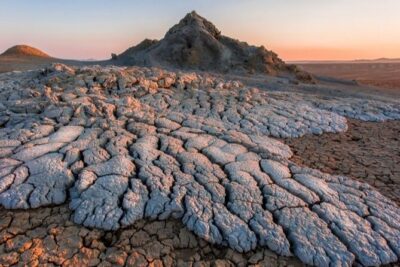
Gobustan, Volcanoes, Fire Temple and Yanardag Day Trip
Read our review →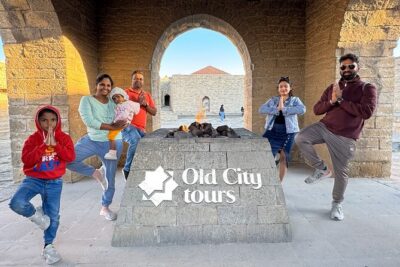
Gobustan & Mud, Fire Temple, Burning Mountain (Group & Private)
Read our review →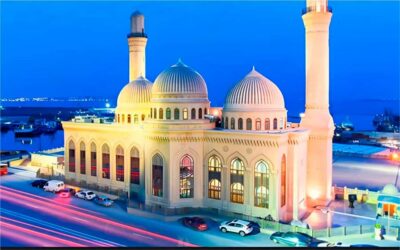
Mud Volcan-Fire Temple and Mountain Tour/Entrance inc
Read our review →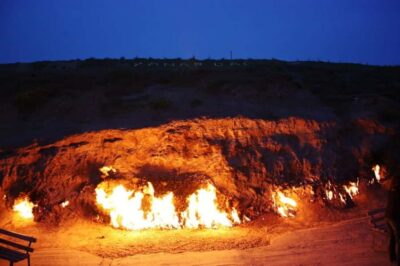
Gobustan Mud Volcanoes Temple & Entry tickets included
Read our review →Browse the lists this tour appears in