
Reviewed · WALKING TOURS
Baku Soviet Architecutre Gudied Walking Tour
Baku’s story is written in layers: oil money, Russian influence, Soviet planning, national revival, and today’s polished city center. This 2.5-hour walking tour links those layers through streets, monuments, theaters, parks, and the Caspian waterfront rather than treating Baku as a string of photo stops.
I like the route for two clear reasons. First, guide Gani brings history down to a human scale, explaining residents, myths, music, literature, and everyday life in clear English. Second, the walk reaches places that are easy to pass without understanding, from Molokan-era Khagani Street to the monumental Government House. The main consideration is simple: you pay $60 for a group walk, and the tour covers a lot of ground in a short time.
Key points to know before you book
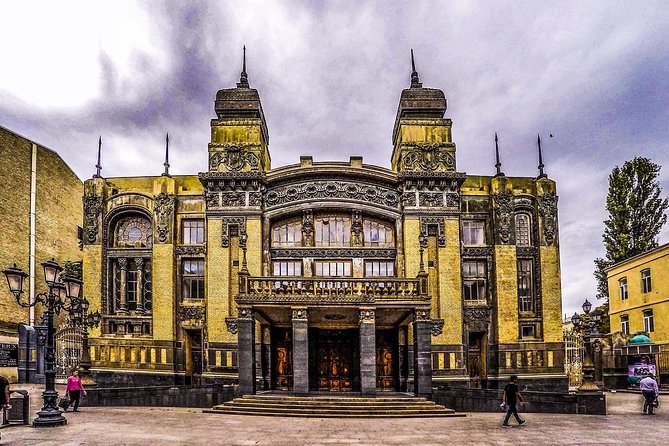
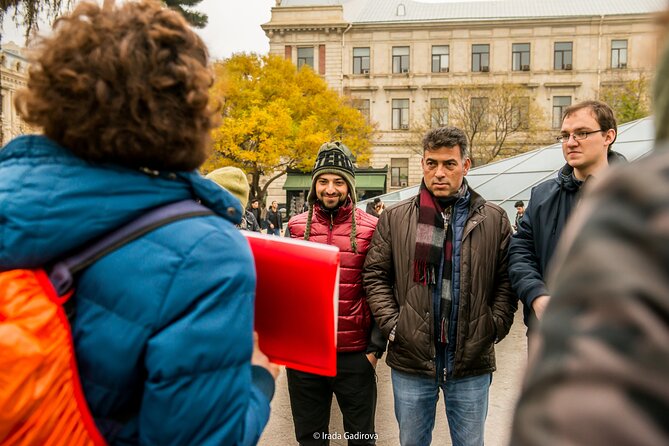
- A human guide makes the difference: Gani is praised for his patient manner, humor, clear English, and willingness to answer questions.
- Nine central Baku stops: The route moves from Fountain Square and Nizami Street through theaters, museums, Government House, and Baku Boulevard.
- History beyond Soviet architecture: Expect discussion of oil wealth, Russian-speaking communities, national identity, music, literature, and modern pop culture.
- A compact afternoon plan: The tour begins at 1:00 pm and lasts about two and a half hours, leaving your evening free.
- Small-group format: The maximum is 15 people, with group discounts available and a mobile ticket accepted.
- Tea closes the walk: A cup of local tea at a coffee shop is included, while lunch and private transport are not.
Why this Baku walk is more than a Soviet architecture tour
The title points you toward Soviet buildings, but the experience is broader. You will see Soviet-era design, especially around Government House and the central streets, but Gani also explains how Baku became an oil city, how Russian communities shaped urban life, and how music and literature helped form Azerbaijani identity.
That wider frame is the tour’s best feature. A building can look grand, severe, or oddly out of place until you know who commissioned it, which period it belongs to, and what it says about power. This route gives you that background while you walk.
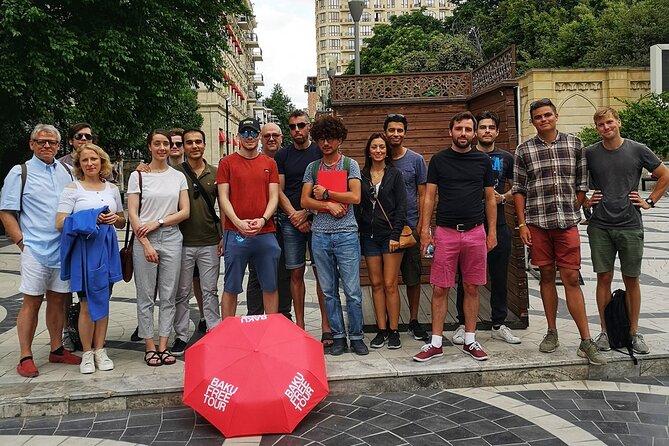
The group limit of 15 is useful here. It is small enough to ask questions without turning every stop into a classroom lecture, though the experience will still depend on the final group size and pace. Previous comments about Gani repeatedly point to his patience, humor, and ability to adjust the walking speed. Those are practical strengths on a city walk, especially when the route contains several stops in quick succession.
The $60 price deserves a careful look. You are not paying for entrance tickets, since the listed stops are outdoor viewing points and admission is free. You are paying for the guide, the route, interpretation, local context, and a small-group setting. If you only want to photograph landmarks, it is expensive. If you have limited time and want Baku explained by someone who knows its streets and stories, the value is stronger.
More walking tours in Baku:
- Baku: Stunning Walking Tour of Historical and Modern City
★ 4.9 · 270 reviews - Baku Oil Heritage & Old Town Walking Tour
★ 5.0 · 232 reviews - Baku Walking Tour (Old City)
★ 5.0 · 127 reviews
Starting at Fountain Square and Nizami Street
The walk begins and ends at Karnaval-353 on Istiglaliyyat in central Baku, near Fountain Square. This is a sensible meeting point because it puts you in one of the city’s main public areas and makes the start easy to find.
Fountain Square is not just a pleasant downtown gathering place. Its importance reaches back to the late 19th and early 20th centuries, when Baku’s first oil boom turned the area into a major commercial street. That connection helps you read the center as an oil-built city, not simply a modern shopping district.
You then move onto Nizami Street, the central shopping and entertainment spine of present-day Baku. About 800 meters of the much longer street is traffic-free, making this one of the easier parts of the walk. Shops, restaurants, concert halls, and theaters keep the area active, and Gani uses it to explain how people spend time in the city today.
I like this opening because it gives you an immediate contrast. Fountain Square connects to the first oil boom, while Nizami Street shows modern city life. The drawback is that these areas can be busy, so staying close to the guide matters.
Nasimi Monument and the Stalinist city center
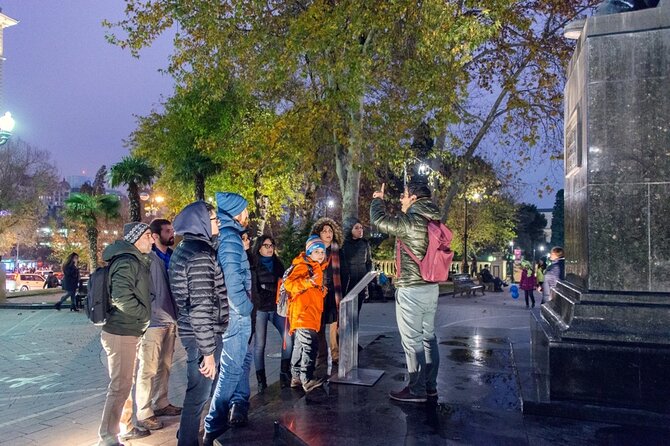
At the intersection of Samad Vurgun and Nizami streets, the tour pauses at the Nasimi Monument. The location also gives you a view of Baku’s 1950s Stalinist architecture.
This is a good point to look up and around rather than focus only on the monument. Stalinist buildings often use scale, symmetry, and heavy decoration to project authority. In Baku, they form part of the visual bridge between the imperial and Soviet periods, even as the city around them has changed.
The stop is scheduled for about 15 minutes. That is enough for an explanation and photographs, but not a long architectural study. If you are especially interested in building details, you may want to keep notes and return later at your own pace.
Nizami Cinema, Qara Qarayev, and the work of culture
The next stop is Nizami Cinema on 28 May Street. The street commemorates Azerbaijan’s first independence declaration in 1918, giving the tour a chance to move from buildings into nation-building.
The statue of Qara Qarayev, one of Azerbaijan’s major classical composers, anchors the discussion. Here the emphasis is on the role of music and literature in shaping Azerbaijani identity. That is an important correction to the usual Soviet architecture focus. Cities are formed not only by government offices and apartment blocks, but also by the artists whose work helps people describe themselves.
You should expect the guide to connect cultural figures with larger political and social changes. Gani’s style, based on the available feedback, is conversational and open to questions, which suits this part of the walk. If you want a tour that sticks strictly to façades, this may feel like a detour. If you want to understand how Azerbaijanis see their country, it adds real value.
A few more Baku days to weigh up
- Old and Modern Baku Tour ( Day & Night Time)
★ 5.0 · 400 reviews - Full Day Sightseeing Tour of the main Attractions around Baku
★ 4.5 · 388 reviews - Baku Night tour
★ 5.0 · 215 reviews - Baku: Caspian Sea Boat Tour with City Skyline Views
★ 4.7 · 207 reviews
The theaters and cultural quarter along Nizami Street
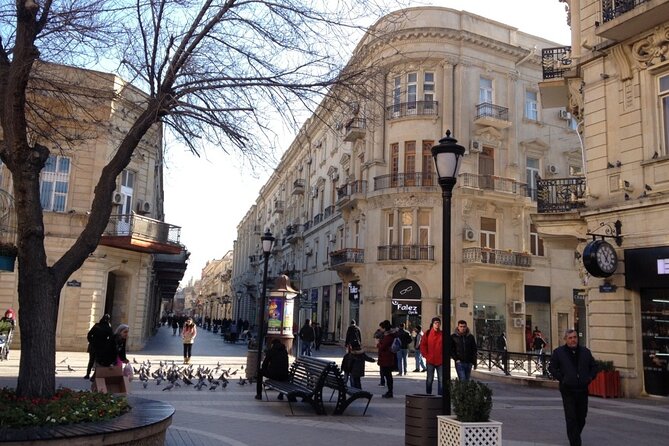
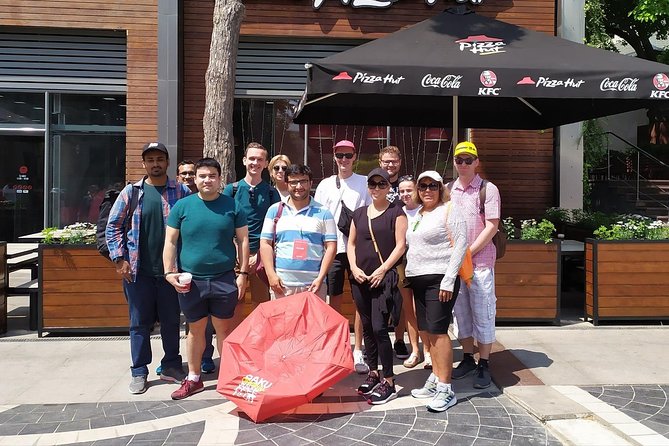
The route continues through the cultural section of Nizami Street, including the Song Theatre, National Library, and Azerbaijan State Academic Opera and Ballet Theater. The walk also brings up Lev Landau, the Nobel Prize winning physicist associated with Baku.
These stops show that the city center is not only about oil wealth or Soviet state buildings. Performance, books, science, and education all appear in the story. The Opera and Ballet Theater is particularly useful as a marker of Baku’s formal cultural life, while the surrounding street keeps the setting connected to ordinary movement through the city.
The schedule allows about 15 minutes at the Opera and Ballet Theater area. Much of the experience is therefore exterior commentary rather than an indoor visit. No entry tickets are included, and the tour data does not promise access inside the buildings. Plan on listening, looking, and taking photographs from public areas.
Khagani Street and the Molokan past
Khagani Street offers one of the more unusual historical turns. The area was once known as Molokanskaya, named for spiritual Christians exiled from Russia to Azerbaijan. The stop includes Khagani Park, formerly Molokan Park, and the Russian Drama Theatre.
This is where the tour examines Russians, the Russian language, and their place in Azerbaijani society. That topic matters because Baku has long been shaped by people arriving from different parts of the Russian Empire and Soviet Union. A short walk through a park becomes a way to discuss language, migration, faith, and identity.
I see this as one of the route’s strongest stops because you are unlikely to understand its significance from the street name alone. It also shows why a guided walk can be more useful than a self-guided list of landmarks. The building is only half the story. The other half is who lived, prayed, spoke, and worked around it.
Taghiyev’s mansion and the oil boom
The National Museum of History of Azerbaijan was once the private residence of Haji Zeynalabdin Taghiyev, often called the father of the nation. The tour tells his rise from poverty to wealth and places that personal story within Baku’s oil boom.
The mansion’s ornate interior and spatial design are part of its importance, but this walking experience does not include an admission visit. You will discuss the building and Taghiyev’s role from outside. If you want to see the interiors, you will need to arrange a separate museum visit.
Even from the street, the stop gives you a useful way to think about Baku’s wealth. Oil money did not simply produce abstract economic growth. It created private palaces, public institutions, new cultural ambitions, and sharp differences between social groups. Taghiyev’s story gives the tour a person at the center of that transformation.
Government House and the scale of Soviet power
Government House is the most direct Soviet-era landmark on the route. Its huge scale and iconic form make it one of Baku’s clearest examples of architecture used to express state power.
You do not need a long lecture to understand the basic message. The building was made to be seen, remembered, and taken seriously. Its size changes the rhythm of the walk after the more intimate streets and cultural stops.
This is also a useful place to compare different kinds of grandeur. Taghiyev’s residence represents private oil wealth, while Government House represents public Soviet authority. Both use architecture to communicate status, but they speak for different systems and different eras.
The stop is scheduled for about 15 minutes. That is enough for context and photos, but not enough for a detailed study of Soviet urban planning. Think of it as a strong chapter in the route, not a specialist architecture seminar.
Finishing beside the Caspian on Baku Boulevard
The final major stop is Baku Boulevard, also called Dənizkənarı Milli Park. The promenade runs along the Caspian shore and dates back to 1909. Its creation is tied to the city’s oil barons, who built mansions along the waterfront while the seafront itself was gradually constructed and extended.
This is a fitting ending because it brings the story back to the source of Baku’s wealth. The waterfront is not simply scenery. It reflects engineering, money, urban planning, and the city’s long relationship with the Caspian.
The tour allows about 20 minutes here, the longest stop on the route. You will have time to take in the open waterfront setting after walking through dense central streets. The route then returns to the original meeting point.
The tour does not include private transportation, so every connection is on foot. That is part of the point, but it also means you should wear comfortable shoes and be ready for city walking. The route is designed for most people, yet anyone with limited walking ability should consider the overall distance before booking.
Tea, timing, and the practical details
The tour starts at 1:00 pm and takes approximately two hours and 30 minutes. The itinerary lists many 15-minute stops, plus 20 minutes at the boulevard, so the pace is steady. You will not be spending an hour inside one museum or monument.
A cup of local tea at a coffee shop is included at the end. Lunch is not included, so plan to eat before the start or after the walk. The afternoon timing makes this easy: you can have lunch beforehand and still keep your evening open for dinner or nightlife.
The tour accepts mobile tickets, and confirmation is provided at booking. Service animals are allowed, and the meeting point is near public transportation. The maximum group size is 15, and group discounts are available.
Free cancellation is offered if you cancel at least 24 hours before the start time. The operator may also cancel if the minimum group size is not reached or if the weather is poor. In those cases, you are offered another date or experience, or a full refund.
Who will get the most from this tour
I would choose this walk for a first afternoon in Baku, especially if you have limited time and want a framework for the city. It works well for anyone interested in architecture, Soviet history, oil wealth, national identity, music, literature, or present-day city life.
It is also a good fit if you prefer asking questions to following a recorded audio guide. Gani’s repeated strengths are his friendly manner, patience, English, local knowledge, and ability to explain both history and nightlife. That makes the walk feel personal rather than purely academic.
You may want something else if your priority is entering museums, touring interiors, or seeing every major monument in depth. The route is mainly an outdoor walk, and the 15-minute stops keep the story moving. You will gain breadth and context, not a detailed inspection of each site.
Should you book the Baku Soviet Architecture Guided Walking Tour?
Book it if you want Baku explained through its streets rather than reduced to a collection of grand buildings. The route connects the first oil boom, Soviet planning, Russian influence, Azerbaijani arts, modern shopping streets, and the Caspian shore in one manageable afternoon.
At $60, it is not the cheapest way to see central Baku. Its value depends on the guide. The strong fit is someone like Gani, who can answer questions, adjust the pace, and explain the human stories behind the architecture. If that is what you want, the small group and wide-ranging route make the price reasonable.
Skip it if you only want a quick photo walk or prefer exploring independently. For a first look at central Baku with clear historical and cultural connections, I would book it near the start of your stay. You will finish with a better sense of where to return, what to see inside, and how the city’s past still shapes its daily life.
FAQ
How long does the Baku Soviet Architecture Guided Walking Tour last?
The tour lasts approximately two hours and 30 minutes.
What time does the tour start?
The tour starts at 1:00 pm.
Where does the tour begin?
It begins at Karnaval-353, Istiglaliyyat, Baku 1005, Azerbaijan.
Where does the tour end?
The tour ends back at the original meeting point.
What places are visited during the walk?
Stops include Fountain Square, Nizami Street, Nasimi Monument, Nizami Cinema, the Azerbaijan State Academic Opera and Ballet Theater, Khagani Street, the National Museum of History of Azerbaijan, Government House, and Baku Boulevard.
Is tea included?
Yes. The tour finishes with a cup of local tea at a local coffee shop.
Is lunch included?
No. Lunch is not included.
How many people can join the tour?
The maximum group size is 15 people. Group discounts are available.
Can I cancel for a full refund?
Yes, if you cancel at least 24 hours before the experience start time. Poor weather or failure to meet the minimum number of participants can also lead to a cancellation with an alternative date or a full refund.
Just added around Baku
- Wine Tour Baku★ 5.0 · 4 reviews
- Baku Sightseing Tour★ 5.0 · 12 reviews
- The Magnificent Baku Night Tour★ 5.0 · 3 reviews
- Traditional Azerbaijani Cuisine Workshop★ 5.0 · 5 reviews
- Day Trip in Baku★ 5.0 · 6 reviews
- Guided Old City Tour on Baku’s Timeless Charm★ 5.0 · 4 reviews
- Baku Old City Tour★ 4.5 · 12 reviews
- Old City Walking Tour★ 5.0 · 6 reviews
Walking Tours, compared.
Stunning Walking Tour of Historical and Modern City
Read our review →
Baku Old City Wonders: A Walking Tour Through Time
Read our review →
Browse the lists this tour appears in