
Reviewed · CITY TOURS
The Best Baku City Tour
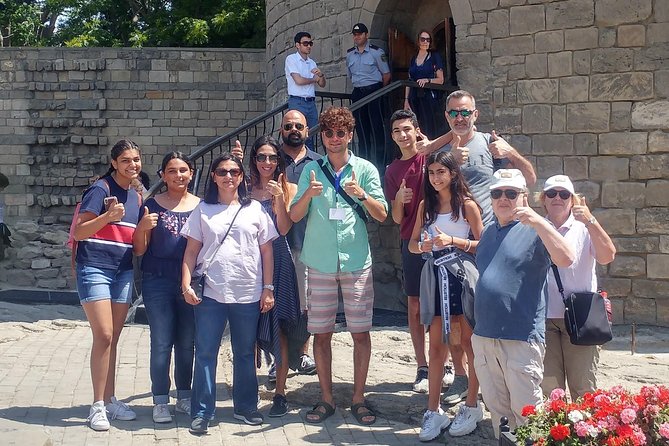
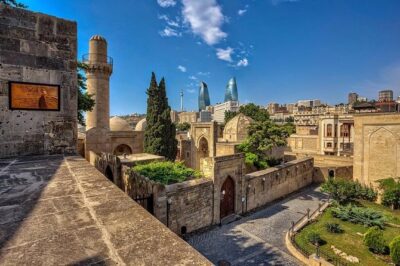
Baku’s appeal comes from its sharp contrast: medieval lanes and stone walls sit close to grand oil-boom mansions, Soviet-era buildings, and the modern Flame Towers. This tour gives you a useful first look at that mix for $22.10, with a private format that can feel more like walking with a local than following a large flag through town.
I like the focus on Icherisheher, Baku’s UNESCO-listed Old City, and the way the route adds less obvious stops such as the Museum of Miniature Books and Palace of Happiness. I also like the chance to ask about present-day Azerbaijan, something several guides, including Abdullah and Mohammad, handle well. The main concern is that the advertised route covers a lot in only three to four hours, and one past booking did not reach many of the listed sights.
Key points to know before booking
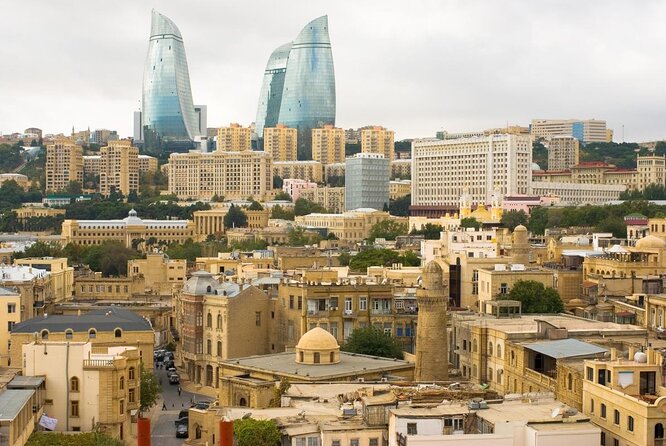
- Old City at the center: You spend substantial time around Maiden Tower, the Palace of the Shirvanshahs, old mosques, and medieval walls.
- Private experience: Only your group participates, so you can ask questions and set the pace within the available time.
- Strong guide element: Abdullah, Mohammad, and Huseyn Ourbakli are named in the feedback, with praise for clear explanations and friendly conversation.
- A useful city overview: The route links old Baku with Fountains Square, the seafront boulevard, grand public buildings, and Highland Park.
- Mostly a walking tour: Moderate physical fitness is required, and Highland Park can involve stairs if you do not use the funicular.
- Good value at $22.10: Admission is included at several stops, though the Maiden Tower and Armenian Church list admission as not included.
Why this short Baku tour works as a first introduction
This is not a single-site tour. It is a broad city walk that tries to explain how Baku grew from a walled Caspian settlement into an oil-rich imperial city and then a modern capital. You will see stone medieval architecture, ornate buildings from the oil boom, Soviet planning, and newer public spaces in one outing.
That range is the tour’s main strength. Baku can feel scattered at first, especially when you move between the Old City and the newer center. A guide helps connect the pieces. The best moments come when a building is not treated as a photo stop, but as a clue to the city’s past.
The timing is brisk. The listed stops add up to more than three hours even before walking between them, and some locations receive only ten minutes. You should expect an overview rather than a slow museum visit. If a particular sight matters most to you, tell your guide at the start.
The experience begins and ends at Icherisheher, the Old City metro area. That is a sensible meeting point because the walled center is the hardest part of Baku to understand on your own. The tour is private, but the booking information does not promise a dedicated vehicle. Plan for a substantial amount of walking.
A few more Baku days to weigh up
- Old and Modern Baku Tour ( Day & Night Time)
★ 5.0 · 400 reviews - Full Day Sightseeing Tour of the main Attractions around Baku
★ 4.5 · 388 reviews - Baku: Stunning Walking Tour of Historical and Modern City
★ 4.9 · 270 reviews
Maiden Tower and the mystery inside the old walls
The Maiden Tower is the clearest symbol of old Baku. Its dark, rounded stone form rises near the southern edge of Icherisheher, facing the Caspian. Nobody can say with certainty when it was built, what its first purpose was, or how it acquired the name Qiz qalasi, or Maiden Tower.
That uncertainty gives the stop its appeal. You are not simply looking at a dated monument with a tidy explanation. The tower carries several layers of Baku’s past, and a good guide can explain the competing ideas without pretending the mystery has been solved.
The scheduled visit is only about ten minutes, and admission is not included. That means you should think of this as an exterior introduction unless your guide and timing allow more. If you want to climb the tower or see its interior, check the current opening arrangements and cost before booking.
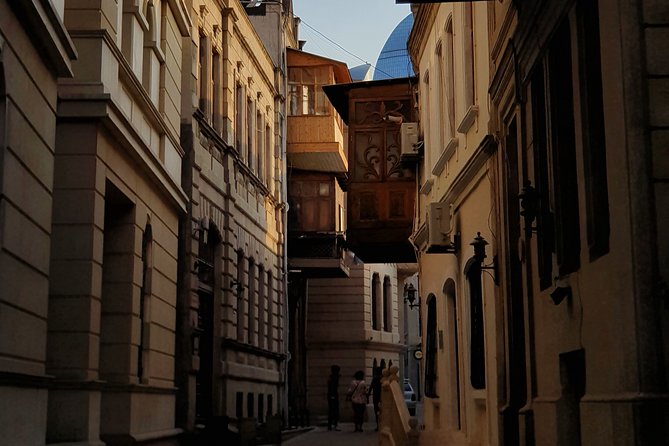
From here, the Old City becomes the main setting. Its defensive walls, narrow streets, courtyards, and stone buildings reward a slower pace, yet the itinerary keeps moving. Wear shoes that can handle uneven paving.
The Palace of Happiness and Baku’s oil-era fortunes
The Palace of Happiness offers a change of mood. It was built by millionaire Murtuza Mukhtarov as a Valentine gift for his second wife, modeled after a building she had admired in Italy. Mukhtarov came from a modest background and made his fortune supplying equipment to Baku’s growing oil industry.
The story is unusually personal for an architectural stop. It shows how the oil boom transformed Baku and how local elites adopted European styles to signal wealth, taste, and status. The building also gives you a glimpse of the ambitious social world that developed around the oil business.
You get about ten minutes here, and admission is included. That is enough for an explanation and photographs, but not a detailed architectural study. I like this stop because it adds a human story to a city often presented only through rulers, wars, and monuments.
A school, a parliament, and women’s education
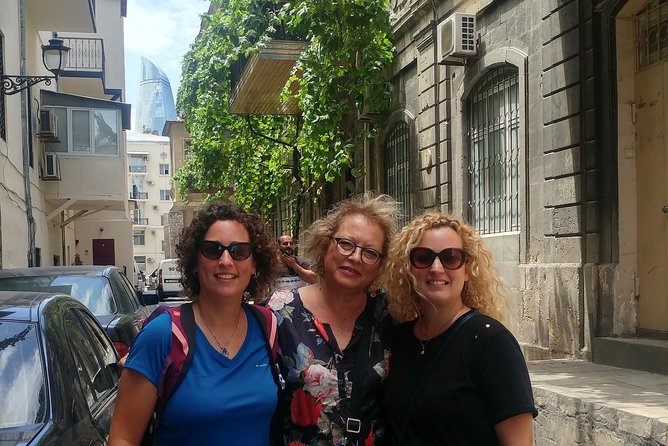
The former Taghiyev School for Girls, now the Institute of Manuscripts of Azerbaijan, has an important civic story. From 1901 until 1918, it operated as the Empress Alexandra Russian Muslim Boarding School for Girls.
In 1918, philanthropist Haji Zeynalabdin Taghiyev gave the building to the Parliament of the first Democratic Republic of Azerbaijan. That parliament was the first European-style parliament in the Muslim world, though the new republic lasted only 23 months before the Bolshevik invasion in April 1920.
The stop lasts about fifteen minutes, with admission included. It is one of the places where the guide’s explanation matters more than the exterior. Look for the connection between education, philanthropy, national identity, and the short-lived democratic republic.
This is also a useful reminder that Baku’s story is not only medieval. The city changed quickly in the late nineteenth and early twentieth centuries, and the buildings around you reflect that speed.
More city tours around Baku:
- Baku: Caspian Sea Boat Tour with City Skyline Views
★ 4.7 · 207 reviews - Baku City Group Tour
★ 4.9 · 197 reviews - City Tour in Baku
★ 5.0 · 180 reviews - Baku Walking Tour (Old City)
★ 5.0 · 127 reviews
The Museum of Miniature Books
The Museum of Miniature Books is one of the route’s most unusual stops. It began in 2002 and displays a collection assembled over three decades by Zarifa Salahova, the sister of artist Tahir Salahov. The collection contains more than 6,500 books from 64 countries.
You may see miniature editions connected with writers such as Gogol, Dostoyevsky, Pushkin, Chukovsky, and Barto, along with books from Azerbaijan, Russia, Georgia, Ukraine, Belarus, Central Asia, and Europe. The small scale changes how you look at books. Instead of reading for long, you study bindings, type, illustrations, and tiny physical details.
About twenty minutes are set aside, and admission is included. This is a good stop for people who enjoy odd collections and quiet indoor museums. It is less important if you are determined to spend every minute on major architecture, but it gives the tour character and breaks up the outdoor walking.
Muhammad Mosque and the damaged minaret
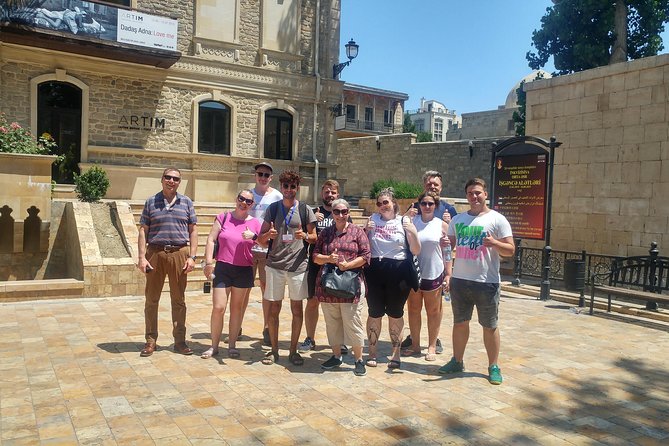
Muhammad Mosque, also called Siniggala Mosque, dates to the eleventh century. Its second name refers to the damaged minaret. In 1723, during the Russo-Persian War, Russian warships bombarded Baku after the city refused to surrender. One shell struck the minaret, and a storm pushed the ships back out to sea.
The local population interpreted the storm as divine punishment, and the damaged tower became part of the mosque’s identity. The tale blends military history, faith, and local memory, which is exactly the sort of story a walking guide can bring to life.
The visit lasts about ten minutes, with admission included. You should treat it as a brief exterior or orientation stop rather than a long mosque visit. Religious sites may have their own access rules, and the route does not promise extended interior time.
Icherisheher and the Palace of the Shirvanshahs
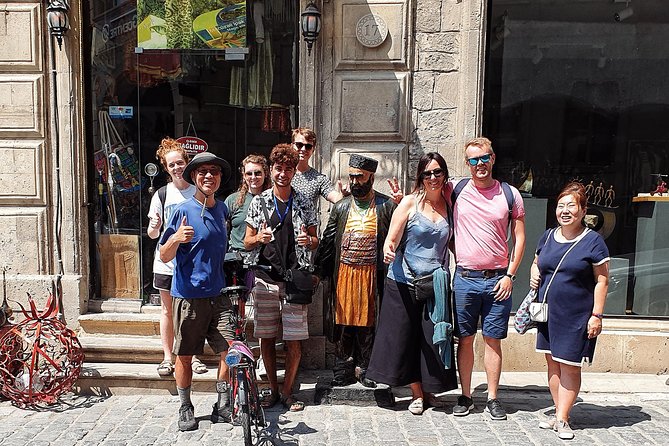
The Old City is the heart of the experience. Icherisheher is Baku’s oldest district, surrounded by defensive walls and recognized by UNESCO along with the Maiden Tower and Palace of the Shirvanshahs in 2000.
The route gives you about forty minutes in the Old City, then another twenty minutes at the Palace of the Shirvanshahs. The palace complex includes courtyards, pavilions, rooms, a crypt, cistern, bathhouses, mosque, and other structures. Even a short visit helps you see that this was not just one grand residence, but a working royal compound.
I like this part best for first-time visitors because it puts Baku’s older identity within reach. You can move from a quiet lane to a formal courtyard in seconds. The stonework also makes a useful contrast with the ornate nineteenth-century buildings outside the walls.
Do not expect to inspect every room in detail. The complex is large, and twenty minutes passes quickly. If this is your main reason for booking, ask the guide if the route can give it extra attention.
Fountains Square and the grand public buildings
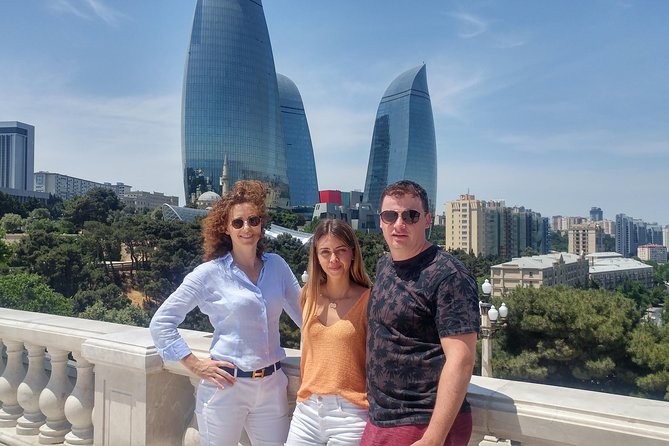
Fountains Square is a natural transition from the Old City to central Baku. Its fountains were first developed during the Soviet period, and the square now gathers restaurants, shops, hotels, boutiques, and people out for a walk.
The attraction here is not one monument. It is the chance to see how Baku uses public space. After the quiet lanes of Icherisheher, the open square and nearby Nizami Street show the city’s everyday social side.
The route also passes the Baku City Executive Power building, completed in 1904 by Polish architect Iosif Goslavsky. Red brick from Italy, colored marble, Baroque decoration, and the city emblem give the building a grand appearance. Three golden torches on the emblem represent Azerbaijan as the land of fire.
The former Armenian Church of St. Gregory the Illuminator is another brief stop. Built in 1887, it survived the Soviet anti-religious period but closed after the Armenian population left Azerbaijan during the Nagorno-Karabakh conflict. It is no longer open to the public, and admission is not included. The stop is best understood as a reminder of Baku’s complicated multicultural past, not as a church visit.
The nearby Juma Mosque has served as a religious site since the twelfth century, though the current building dates to 1899 and was funded by Baku philanthropist Khadja Shikhali Dadashev. The site may have earlier connections to fire worship, and the surviving arches have fueled debate about its older use. Again, the guide’s context is the real value.
Caspian Boulevard and Highland Park views
Baku Boulevard runs along the Caspian shore. Established in 1909, it grew during the period when oil wealth reshaped the city and the waterfront was gradually built up. The parkway stretches for several kilometers and links the city to the sea.
The route lists two boulevard visits, each around fifteen minutes. That may mean the waterfront is used as a connection between other stops, or that the timing changes on the day. You should not expect a long seaside stroll unless the guide has room in the schedule.
Highland Park is the best place for a broad view of Baku and its bay. You can see the city from above, with the Flame Towers forming the modern backdrop. The park also includes the Alley of Martyrs and lies near the country’s parliament.
The listed time is thirty minutes. Reaching the park can involve the funicular from the boulevard, which takes seven to eight minutes, or a long stair climb. The tour information does not state whether the funicular fare is included, so ask before setting out. The stairs and uneven walking make the moderate fitness note worth taking seriously.
How good is the $22.10 value?
At $22.10 per person, this is inexpensive for a private three to four hour introduction to Baku. You are paying mainly for the guide’s time, local explanation, and route planning. Several admissions are included, including the Museum of Miniature Books, Palace of Happiness, and some historic sites.
The Maiden Tower and Armenian Church list admission as not included, although the church is closed to the public. The description also lists some stops as free, so you should not assume every possible ticket or funicular ride is covered.
The value depends on your expectations. If you want a tightly timed tour that enters every building and follows the published route without changes, the short duration may disappoint. If you want orientation, historical context, and a chance to ask questions, the price is strong.
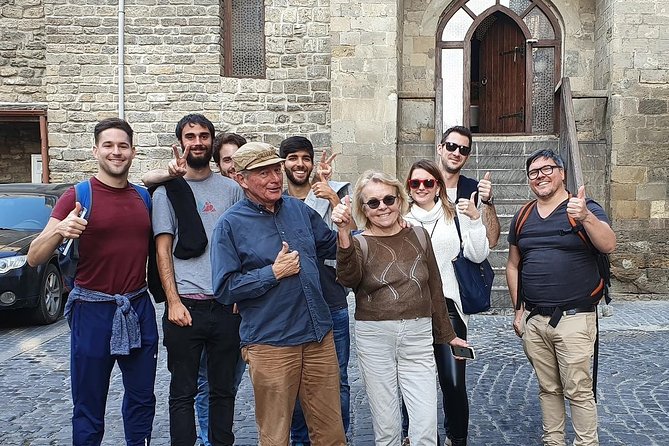
The private format is especially useful for a solo visitor, couple, or small family. You are not sharing the guide with a large group, and the experience can be more conversational. Past feedback highlights guides who explain both Baku’s past and current life, which is a major reason to choose this over a basic sightseeing circuit.
Guide quality and the route’s main weakness
The guide can shape this experience more than any single monument. Abdullah is praised for clear explanations, friendly conversation, and helping people understand both historic and present-day Azerbaijan. Mohammad is described as adding a look at how people live beyond the main tourist area, while Huseyn Ourbakli is noted for patient, clear explanations.
One booking had a poor experience, including lateness and disagreement over historical detail. Another specifically said the route did not visit many of the advertised sites. The provider acknowledged the gap and apologized. That matters because the itinerary is ambitious for the available time.
I would confirm the meeting time and planned stops by message before the day of the tour. If you have only one priority, such as the palace or Highland Park, say so early. The tour begins at Icherisheher and ends there, but the precise order and time at each stop may change.
Who should book this Baku walk?
I would choose this for a first visit, a short stay, or a stopover when you want a quick sense of Baku’s structure. It suits people who enjoy history, architecture, city views, and conversation more than those seeking a long museum visit.
It is also a good fit if you want to understand the relationship between old Baku and the modern capital. You see medieval walls, an oil millionaire’s palace, a former girls’ school, public squares, the Caspian shore, and Highland Park in one compact outing.
You may want something else if you dislike walking, have limited mobility on stairs, or need guaranteed access to every listed sight. The route contains many short stops, and a few sites are exterior-only or have admission limits.
FAQ
How long does The Best Baku City Tour last?
The tour lasts approximately three to four hours.
Where does the tour begin?
It begins at Icherisheher in Baku, Azerbaijan.
Where does the tour end?
It ends back at the Icherisheher meeting point.
Is this a private tour?
Yes. Only your group participates in the activity.
How much does the tour cost?
The listed price is $22.10 per person.
Is admission included?
Admission is included at several stops, including the Palace of Happiness, former Taghiyev School for Girls, Museum of Miniature Books, Muhammad Mosque, Baku Old City, Baku City Executive Power, and some other listed sites. The Maiden Tower and Armenian Church list admission as not included.
Does the tour require much walking?
Yes. A moderate level of physical fitness is required. Highland Park can involve a long stair climb, though it can also be reached by funicular or public transportation.
Can I use a mobile ticket?
Yes. The experience includes a mobile ticket.
What happens if the tour is canceled because of weather or too few participants?
You will be offered a different date or experience, or a full refund. For a personal cancellation, you must cancel at least 24 hours before the start time for a full refund.
Should you book The Best Baku City Tour?
Book it if you want an affordable, private overview led by a guide who can explain Baku beyond its postcard buildings. The Old City, miniature book museum, Palace of the Shirvanshahs, Caspian Boulevard, and Highland Park make a well-rounded first outing.
Go in with realistic expectations. This is a brisk introduction, not a detailed inspection of every monument, and the route may not always include every advertised stop. Confirm your priorities in advance, allow for walking and stairs, and choose this tour for its human explanation of Baku as much as for its list of sights.
Just added around Baku
- Wine Tour Baku★ 5.0 · 4 reviews
- Baku Sightseing Tour★ 5.0 · 12 reviews
- Traditional Azerbaijani Cuisine Workshop★ 5.0 · 5 reviews
- The Magnificent Baku Night Tour★ 5.0 · 3 reviews
- Day Trip in Baku★ 5.0 · 6 reviews
- Guided Old City Tour on Baku’s Timeless Charm★ 5.0 · 4 reviews
- Baku Old City Tour★ 4.5 · 12 reviews
- Old City Walking Tour★ 5.0 · 6 reviews
City Tours, compared.
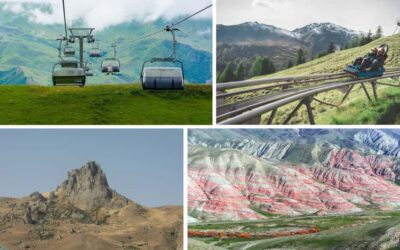
Guba, Shahdag, Laza & Lunch w/ Free City & Night Tour
Read our review →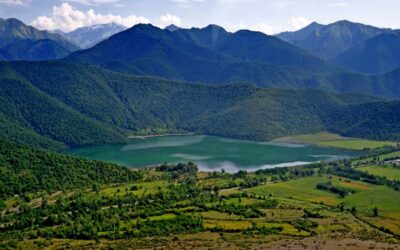
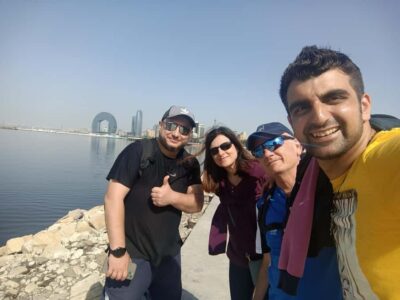
Stunning Walking Tour of Historical and Modern City
Read our review →
Guba Khinalug & Candy Cane Mountains tour (by Old City Tours)
Read our review →
Browse the lists this tour appears in